



Victorian Portico Mantel Clock
These Victorian portico mantel clock examples bring architectural symmetry and precise timekeeping to a room, driven by heavy French influences and striking classical proportions.
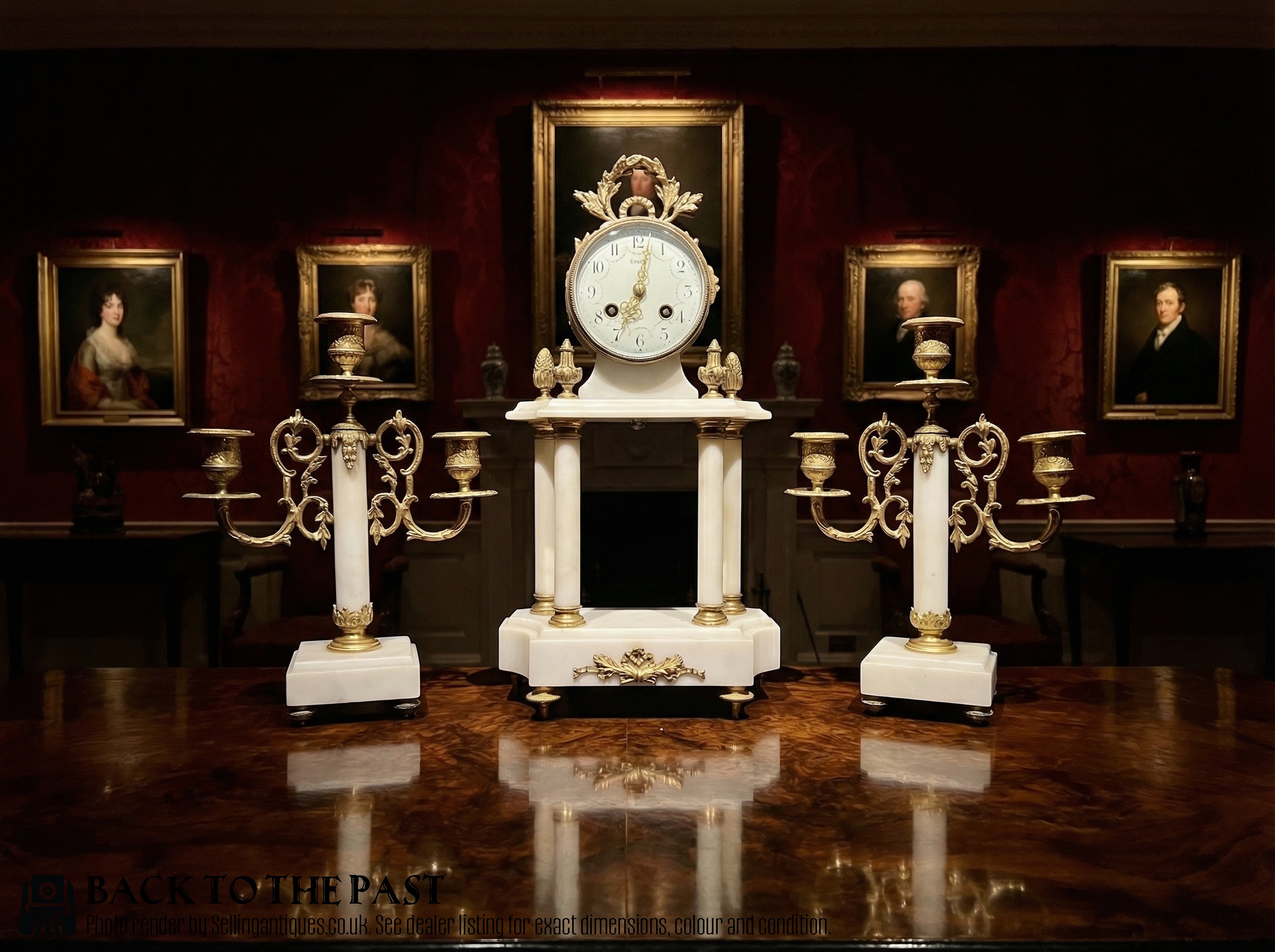
Victorian Portico Mantel Clock
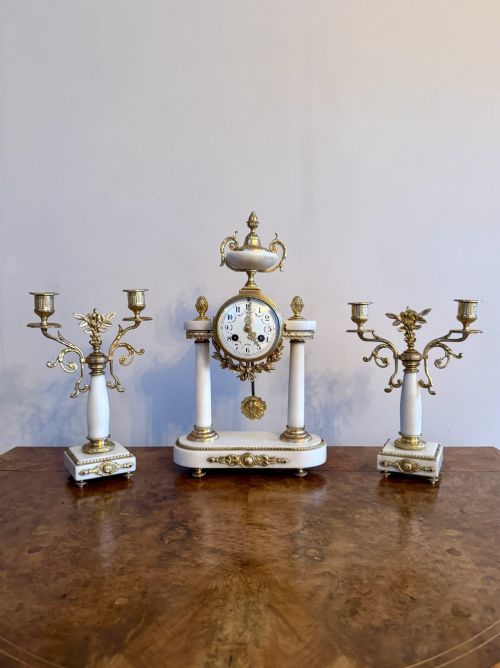
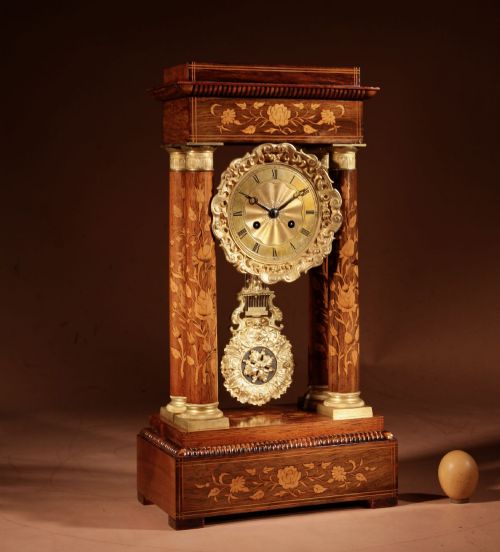
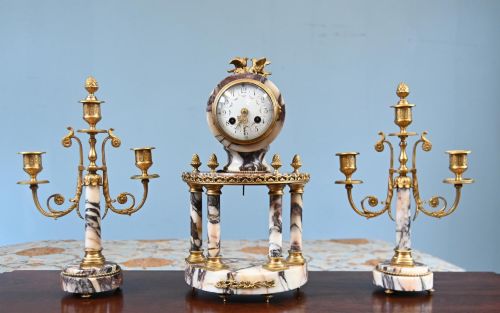
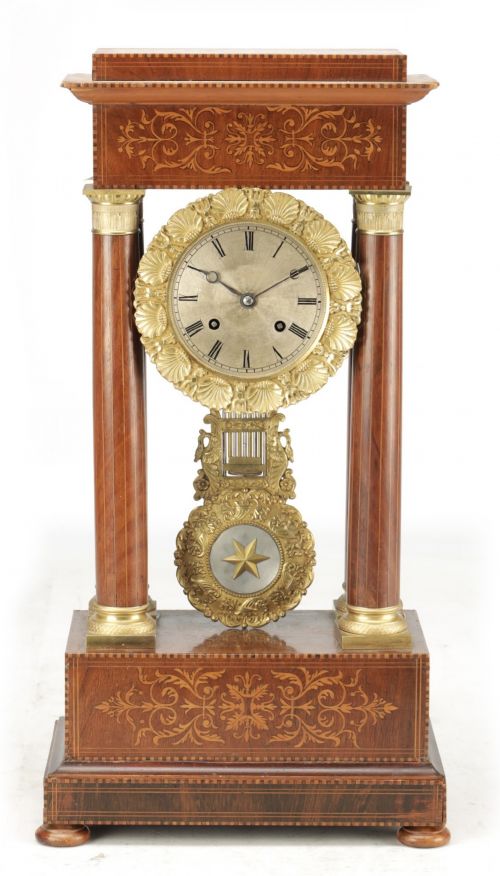
When you search for a victorian portico mantel clock, you are looking at architectural timepieces defined by distinctive vertical support pillars framing the central pendulum. The pieces on this page span the nineteenth century, including specific dates such as 1840, 1860, 1870, 1875, 1880, and 1890.
The dominant origins and styles present are heavily French, including French Empire Revival, French Restoration, Louis XVI Revival, Napoleon III, and Louis XV Revival alongside Victorian pieces. Forms range from standalone mantel clocks and timepieces to complete three-piece clock garnitures accompanied by pairs of candelabras or protected beneath glass domes.
How they were made
Cabinet makers utilised rich timbers such as rosewood and ebonised wood, frequently incorporating fine inlay work with lemon wood and boxwood. These wooden frames contrast with metallic structural elements.
Gilding and metalwork define the decorative vocabulary, using ormolu and gilt bronze alongside polished brass. Dials commonly feature enamel finishes to display the hours behind protective glass.
Victorian Portico Mantel Clock Retail Price Guide 2026
Typical asking prices for victorian portico mantel clock among the pieces listed under this phrase on Sellingantiques today, from the lower quarter to the upper quarter. They describe what is for sale here now, not the wider market.
Listings feature rosewood, ebonised wood, boxwood, and lemon wood alongside ormolu, gilt bronze, brass, enamel, and glass.
What varies in quality
The refinement of the woodwork separates standard examples from exceptional pieces, particularly where intricate lemon wood inlay or rosewood veneers are employed. Finer pieces demonstrate meticulous matching of timber grain and precise joinery around the structural pillars.
Metal ornamentation creates another distinction, as hand-chased ormolu and gilt bronze mountings display sharper relief and deeper lustre than simpler brass castings. Complete garnitures that retain their matching candelabras or original glass domes represent the more substantial end of the range.
The Victorian Portico Mantel Clock Glossary
- Portico clock
- A clock featuring an architectural case supported by two or more columns or pillars resembling a classical portico. This design became especially popular in nineteenth-century French and Victorian horology.
- Ormolu
- Finely ground high-carat gold mercury-gilded onto a bronze object. The technique produces a rich, durable metallic finish found on decorative mounts.
- Clock garniture
- A set comprising a central clock flanked by matching decorative objects such as candelabras or urns. These matched sets were designed to create a symmetrical display on a mantelpiece.
- Ebonised wood
- Timber treated to resemble ebony, usually through staining and polishing dark. It provides a stark, dramatic contrast against bright brass or ormolu mounts.
- Timepiece
- A clock that tells the time without a striking mechanism for the hours. Many portico clocks were built as simple timepieces rather than full striking clocks.
Victorian Portico Mantel Clock: Frequently Asked Questions
What is a portico clock?
A portico clock is an architectural timepiece where the dial and movement are suspended or housed within a frame supported by vertical pillars. The overall design mimics classical temple architecture.
These pieces were built to serve as grand decorative centrepieces on large mantelpieces in Victorian and nineteenth-century interiors.
How do I identify a clock garniture?
A clock garniture consists of a main clock paired with matching side ornaments, such as candelabras, designed to sit together as a decorative set.
They share identical materials, styles, and decorative motifs to create visual balance on a fireplace or sideboard.
Where were these clocks made?
The majority of these architectural clocks originate from French workshops adhering to revival styles such as Louis XV, Louis XVI, and the French Empire. They were subsequently imported and traded heavily within the Victorian market.
English retailers and buyers favored these continental movements and architectural cases for sophisticated domestic interiors.
How should I care for an antique clock?
Place the clock on a stable, level surface away from direct sunlight and dramatic temperature fluctuations to protect the wood and veneer. Winding and setting should be handled gently according to the specific mechanical requirements of the movement.
Professional servicing every few years ensures the brass gears and springs continue to function without excessive wear.