





Victorian Porcelain Dogs
Victorian porcelain dogs bring character to a mantelpiece through modelled pairs of spaniels, greyhounds and poodles.
Victorian Porcelain Dogs
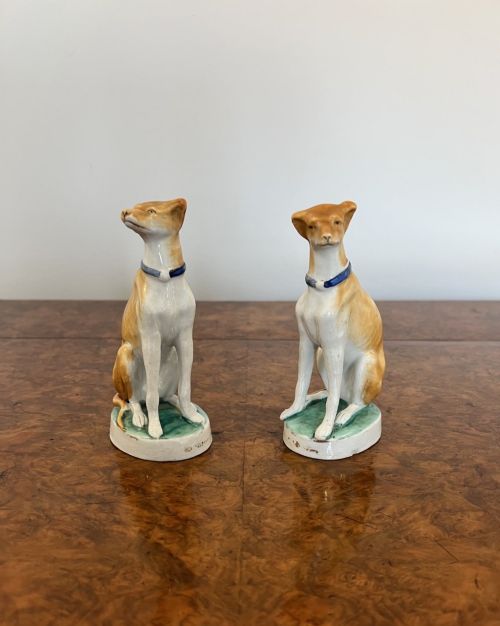
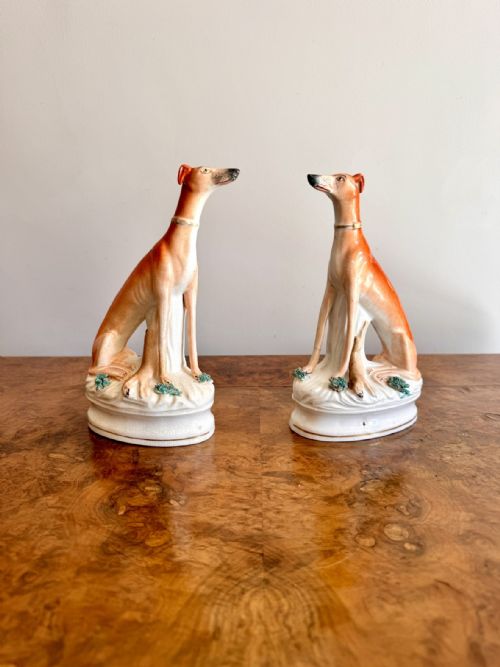
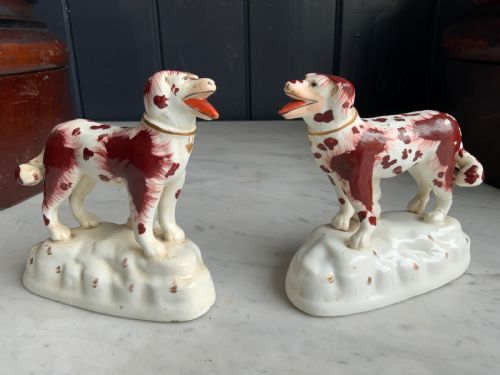
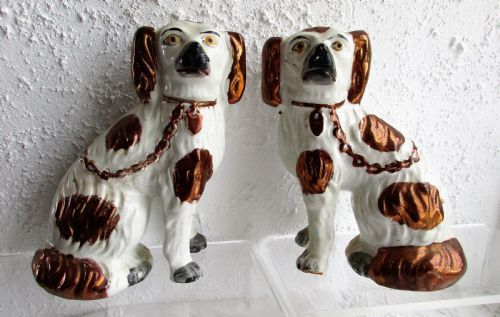
Victorian porcelain dogs appear mostly as symmetrical pairs designed for display on mantelpieces and side tables. The spaniels, greyhounds and poodles reflect nineteenth-century domestic tastes for animal subjects modelled in pottery and porcelain.
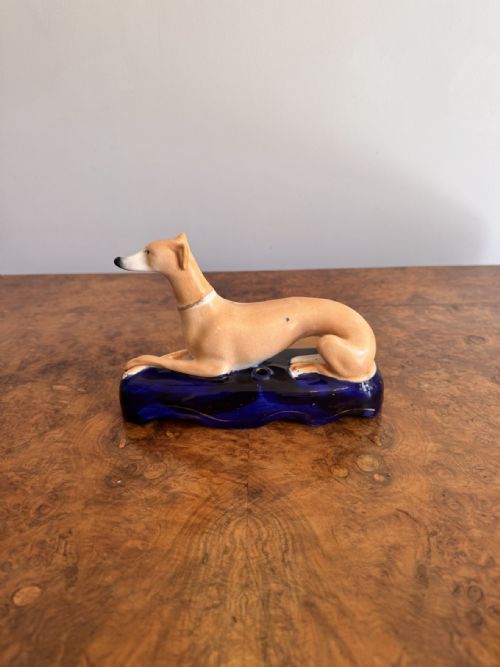
Makers produced both miniature versions and grander sculptures, sometimes incorporating practical functions such as quill holders or inkwells. Figures range from plain white Staffordshire specimens to brightly painted examples decorated with gilt and enamel highlights.
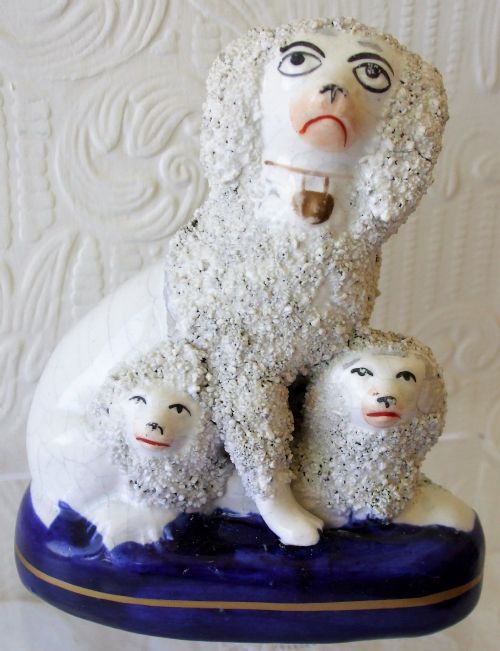
The evidence spans the nineteenth century, taking in Regency survivals, Victorian Staffordshire pottery and later continental porcelain. Buyers encounter various breeds, from seated spaniels to poodles with pups.
Materials and construction
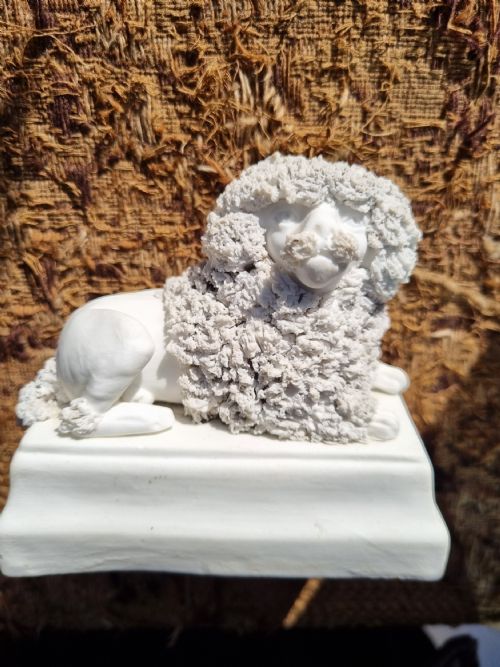
Many Staffordshire pieces relied on slip-casting or press-moulding techniques before decorators applied surface colours and glazes. Parian ware required specialist porcelain casting to achieve the smooth, marble-like texture seen in sculptural groups.
Victorian Porcelain Dogs Retail Price Guide 2026
Typical asking prices for victorian porcelain dogs among the pieces listed under this phrase on Sellingantiques today, from the lower quarter to the upper quarter. They describe what is for sale here now, not the wider market.
Several poodles come accompanied by attentive pups, proving that Victorian ceramic dogs appreciated family life just as much as their owners.
Distinctions in craftsmanship
The presence of crisp gilt work, well-defined eyes and careful application of coloured glazes indicate better workshop standards. Pairs that match closely in size and posture command greater interest than mismatched survivors.
Thomas Parr·John Durham·James Dudson
The Victorian Porcelain Dogs Glossary
- Parian ware
- A fine-grained, unglazed porcelain resembling white marble, developed during the nineteenth century for sculptural figures.
- Staffordshire pottery
- Earthenware figures and groups produced by numerous potteries in the English Midlands, famous for mantelpiece dogs.
- Quill holder
- A desk accessory featuring a modelled figure with an integrated trough or aperture to hold writing feathers.
- Enamel
- Opaque coloured decoration applied over the glaze and fired at a lower temperature to achieve rich surface hues.
Victorian Porcelain Dogs: Frequently Asked Questions
How do I spot genuine Staffordshire dogs?
Authentic pieces exhibit the weight and density of nineteenth-century earthenware or porcelain, alongside hand-applied enamel painting rather than modern transfer printing.
Look for crazing in the glaze and signs of age on the unglazed bases, which distinguish genuine period figures from later reproductions.
Why are most dogs found in pairs?
Makers designed mantelpiece dogs to sit symmetrically at either end of a fireplace or shelf, reflecting Victorian interior design conventions.
Single figures do survive, but matching pairs remain the standard format for Staffordshire and continental pottery groups.
Did these figures serve any purpose?
While primarily decorative, some Victorian models integrated practical functions into their design, such as inkwells or quill holders for the writing desk.
Others were strictly ornamental, intended to display loyalty and domestic comfort in the Victorian parlour.