



Victorian Porcelain Dish
These pieces bring painted bird scenes, Imari patterns and gilt-edged borders to the table in a durable ceramic form.
Victorian Porcelain Dish
A victorian porcelain dish encompasses serving trays, cabinet plates, tureens and footed bowls originating from English and continental potteries. Most examples on this page date through the nineteenth century, reflecting the decorative tastes of the Victorian period.
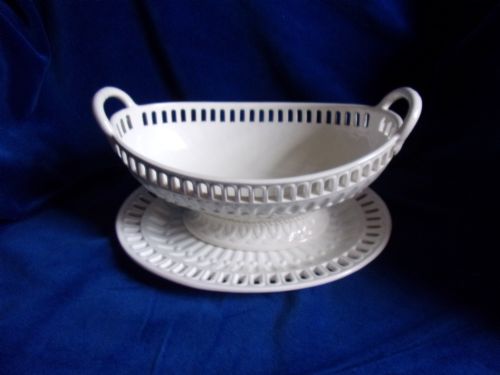
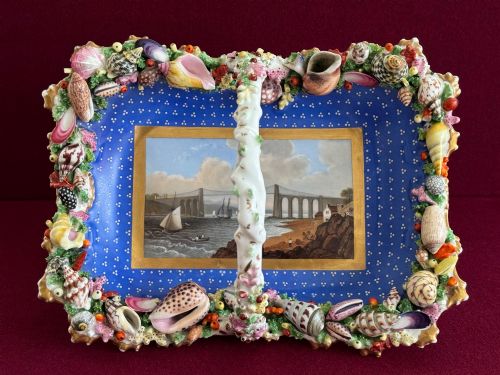
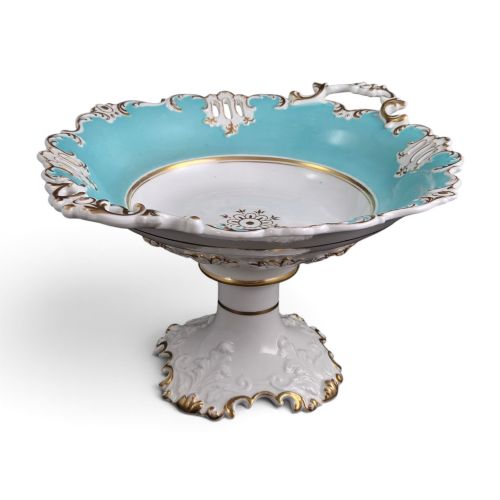
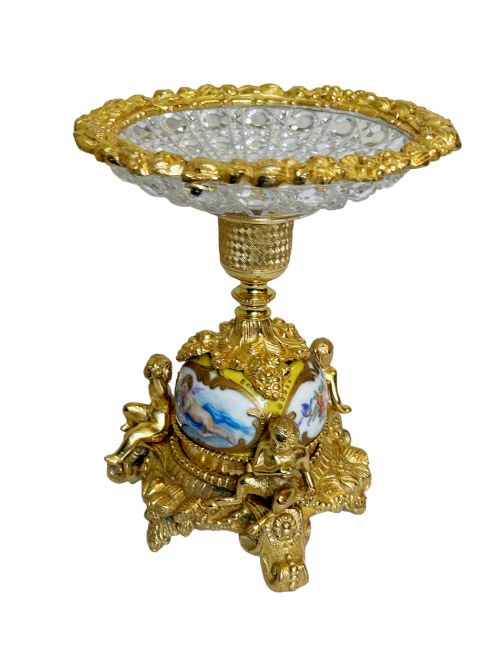
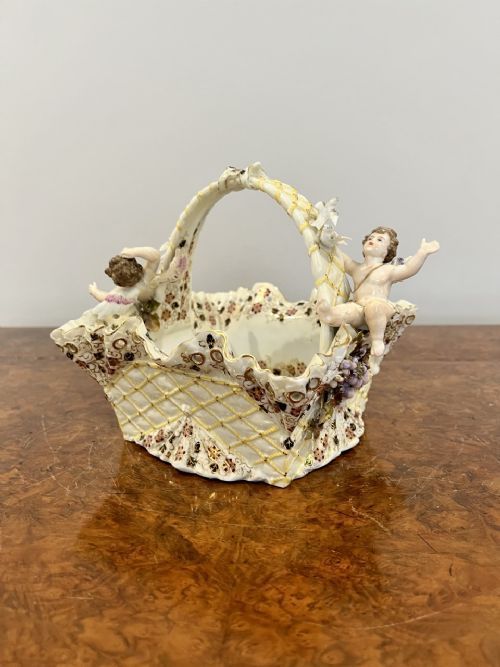
Makers ranged from Coalport and Minton to Meissen and Royal Worcester, producing items intended for formal dessert courses or display. Forms vary from simple round plates to reticulated baskets and shell-shaped dishes.
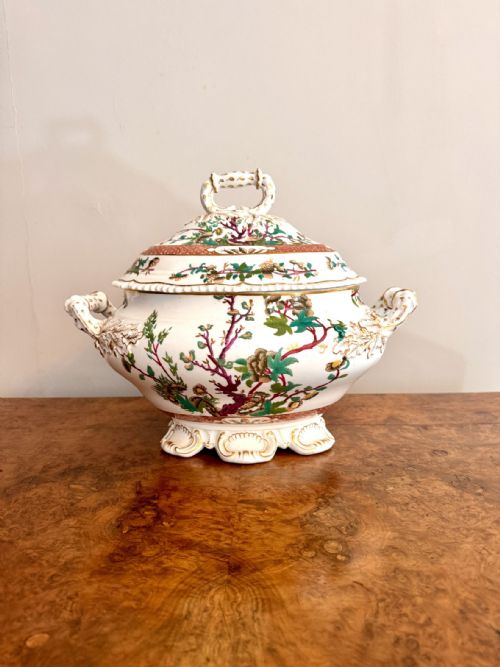
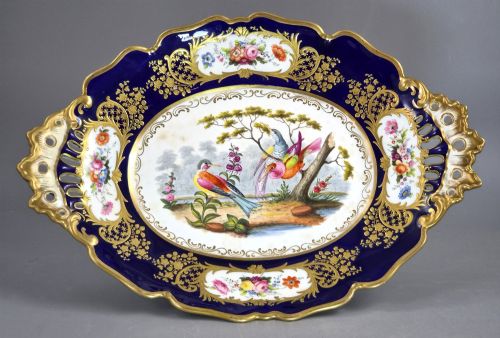
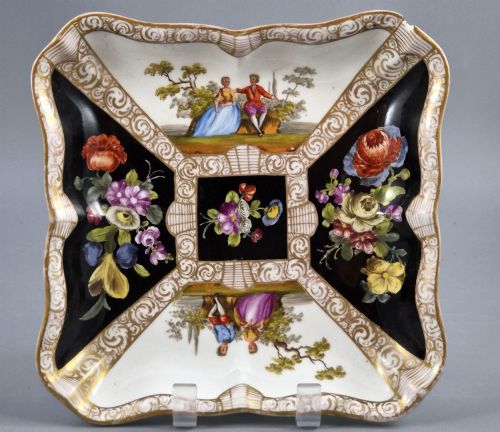
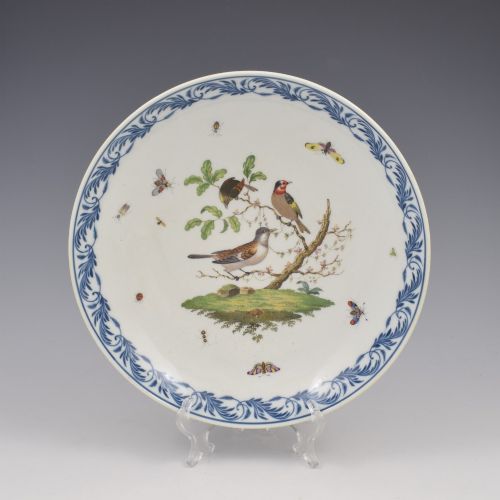
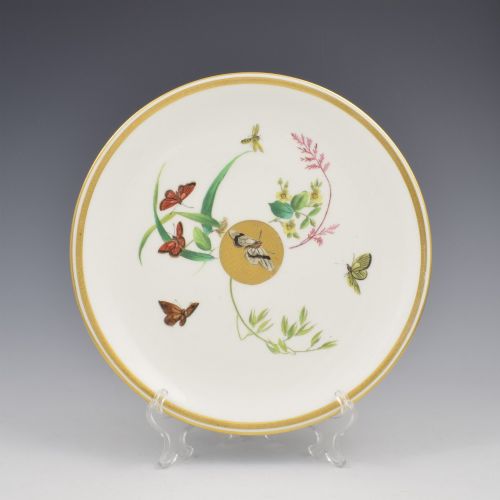
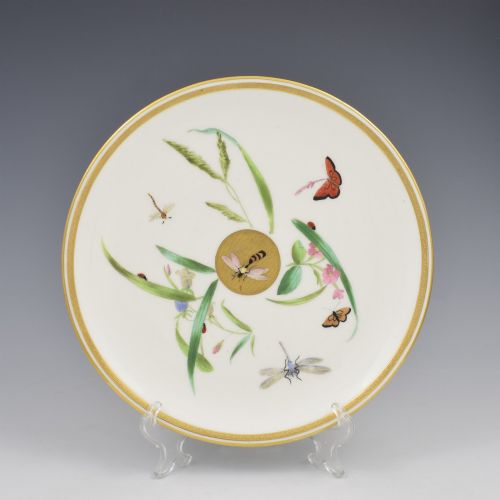
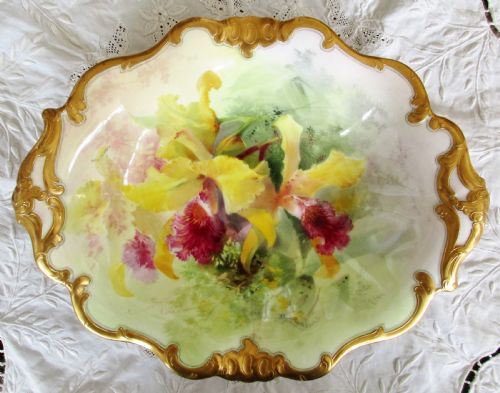
Earlier nineteenth-century pieces often display hand-painted botanical or ornithological subjects, while later examples show the influence of Japanese Imari designs and Aesthetic Movement styles.
Materials and Technique
Potters relied on porcelain, bone china and earthenware bodies, shaped by hand or pressed in moulds to achieve forms like baskets and pedestalled tureens. Glazes provided a smooth white ground ready for enamelling and gilding.
Decoration involved hand-painted polychrome scenes of birds, flowers and figures, supplemented by gold leaf and gilt detailing. Firing fixed the pigments beneath or above the glaze, depending on the palette and factory method.
Victorian Porcelain Dish Retail Price Guide 2026
Typical asking prices for victorian porcelain dish among the pieces listed under this phrase on Sellingantiques today, from the lower quarter to the upper quarter. They describe what is for sale here now, not the wider market.
Several plates feature hand-painted garden birds that gaze across the porcelain with mild suspicion.
Judging Quality
Quality rests in the precision of the hand-painted details, particularly on ornithological and figurative subjects attributed to named artists or major factories like Meissen and Coalport. Crisp moulding on reticulated borders and baskets indicates careful workshop production.
The application of gold leaf and the vibrancy of enamel colours distinguish standard production ware from finer cabinet pieces. Intact gilding and well-preserved painted scenes separate well-kept examples from heavily used service items.
Coalport·Meissen·Royal Worcester·Davenport·Minton·Royal Doulton·Copeland and Garrett·John Ridgway·Carlton Ware
The Victorian Porcelain Dish Glossary
- Cabinet plate
- A decorative plate intended for display in a cabinet rather than for daily dining use. These often feature detailed hand-painted scenes and gilt borders.
- Bone china
- A type of soft-paste porcelain containing bone ash, developed in England to create a durable, milky-white ceramic body.
- Imari
- A style of decorative ceramic ornament featuring cobalt blue, iron red and gold, inspired by Japanese export wares of the Edo period.
- Reticulated
- Having an openwork or net-like pattern formed in the ceramic body, commonly seen on Victorian dessert plates and baskets.
- Tureen
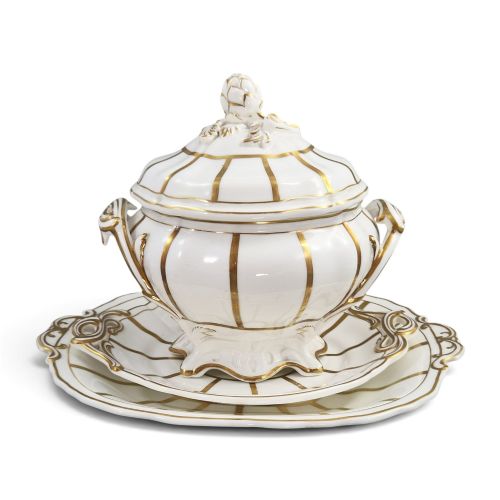
- A deep covered bowl used for serving soups, sauces or vegetables, often supplied with a matching stand or ladle.
Victorian Porcelain Dish: Frequently Asked Questions
How were these dishes used originally?
Dishes and tureens served during formal Victorian dessert courses, holding fruit, sweetmeats or sauces at the table. Cabinet plates and decorative baskets were often displayed on sideboards or hung on walls.
Over the course of the nineteenth century, dining rituals became more elaborate, leading to larger matching dessert sets and specialised serving vessels.
How do I date a Victorian porcelain dish?
Dating relies on factory backstamps, registration marks, pattern numbers and stylistic clues such as colour palettes and moulding shapes. Aesthetic Movement and Imari styles point toward the later decades of the century.
Comparison with documented factory shapes and artist signatures helps narrow the production window further.
Can I use these antique dishes for food?
While these pieces were made for culinary use, many collectors prefer to keep them for display to preserve the hand-painted enamels and delicate gilding. Nineteenth-century glazes and pigments may also show wear from modern dishwashers.
Gentle hand washing is recommended if they are used for serving on special occasions.
What is the difference between a plate and a tureen?
Plates are flat or shallow vessels meant for individual portions or serving dry items like fruit and small cakes. Tureens are deep, bowl-shaped vessels equipped with lids for serving liquids or warm sauces.
Tureens frequently include matching stands and ladles as part of a larger dining service.