



Victorian Pink Glass Bowl
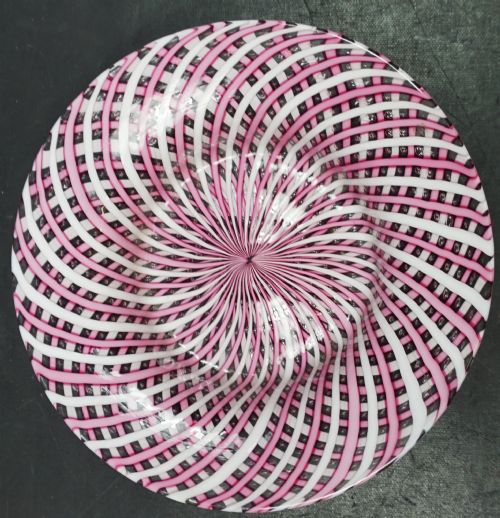
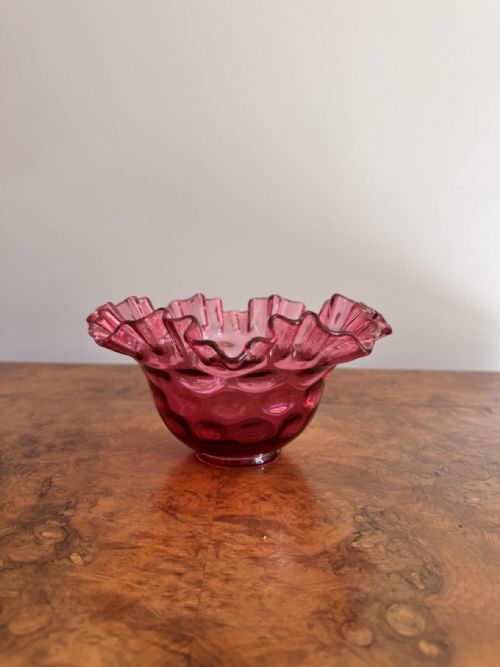
These Victorian pink glass bowl pieces bring rich cranberry tones and decorative metal mounts to a table.
Victorian Pink Glass Bowl
When you search for a victorian pink glass bowl, you encounter tablewares and decorative pieces shaped in rich cranberry or pink opaque glass. Most examples on this page date from the Victorian and Edwardian eras, spanning from the late nineteenth century into the early twentieth century.
The forms vary from simple jam dishes and preserve bowls to frilled vessels, epergnes, and components of oil lamps or jugs. Many of these glass bowls are paired with silver plated stands, pierced spoons, or silver gilt baskets.
Makers such as Thos. Webb & Sons also produced specialised art glass lines like Burmese ware, which incorporated hand painted details. Buyers generally find that these bowls function primarily as decorative table centerpieces.
How they were made
The glass itself relies on specific mineral additives to achieve its distinctive pink and cranberry hues during the blowing process. Artisans shaped the hot metal into fluted, frilled, or smooth profiles, occasionally applying enamel or hand painted motifs to the surface.
Mounts and stands required separate metalworking techniques, utilising silver plate, silver gilt, brass, and pierced work to support the delicate glass vessels securely.
Victorian Pink Glass Bowl Retail Price Guide 2026
Typical asking prices for victorian pink glass bowl among the pieces listed under this phrase on Sellingantiques today, from the lower quarter to the upper quarter. They describe what is for sale here now, not the wider market.
Some preserve dishes come equipped with tiny pierced spoons designed to rescue errant fruit from deep syrup.
What varies in quality
Quality rests in the depth of the glass colour, the crispness of any frilled or shaped rim, and the standard of the hand painting where present. Pieces that retain their original matched silver plated stands or specialised metal mounts hold greater integrity.
The distinction between standard table glass and works by documented makers like Thos. Webb & Sons lies in the refinement of the glass body and the precision of the enamel decoration.
Thos. Webb & Sons
The Victorian Pink Glass Bowl Glossary
- Cranberry Glass
- A rich pinkish-red glass coloured by the addition of gold chloride to the molten batch. It forms the primary material for most pieces in this category.
- Epergne
- A large table centrepiece featuring a central bowl with attached horns or subsidiary vases for holding fruit or flowers. They often incorporate matching cranberry glass.
- Burmese Ware
- A shaded art glass shading from pale yellow to pink, developed and produced by makers such as Thos. Webb & Sons. It has a matte or glossy surface finish.
- Silver Plating
- A thin layer of silver applied to a base metal mount or stand to provide a bright reflective finish. It supports glass preserve dishes and jam bowls.
- Silver Gilt
- Silver that has been coated with a thin layer of gold on its surface. This finish appears on baskets and mounts paired with pink glass vessels.
Victorian Pink Glass Bowl: Frequently Asked Questions
What is a Victorian pink glass bowl used for?
These bowls served various domestic functions, primarily holding preserves, jam, or sweetmeats on the dining table. Many were also designed as decorative centrepieces or components of larger epergnes and oil lamps.
Over time, their role shifted entirely to ornamental display, where their bright cranberry colour adds warmth to a room.
How do I identify a Victorian cranberry glass bowl?
Look for the characteristic deep pinkish-red coloration that runs evenly through the blown glass body. Many period examples feature frilled rims and come fitted into contemporary silver plated stands or baskets.
Examining the manufacturing marks or the style of the metal mount helps confirm the late nineteenth-century origin.
Are these bowls dishwasher safe?
These antique glass vessels require careful hand washing in lukewarm water with mild soap. The delicate glass and associated silver plated mounts cannot withstand modern machine washing.
Harsh detergents can damage both the metallic stands and any hand painted enamel decoration on the surface.