
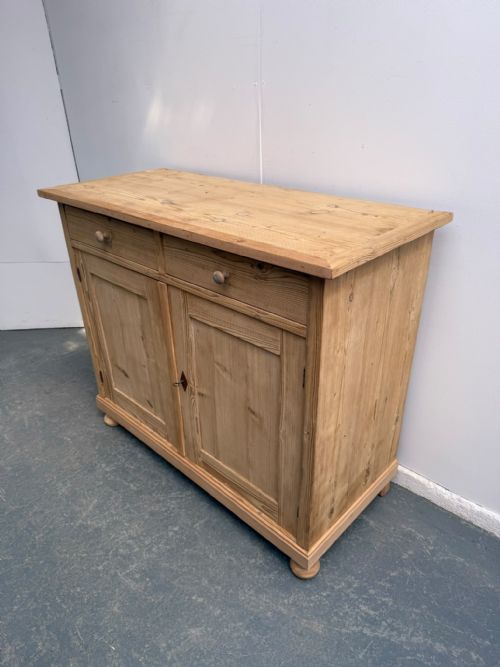
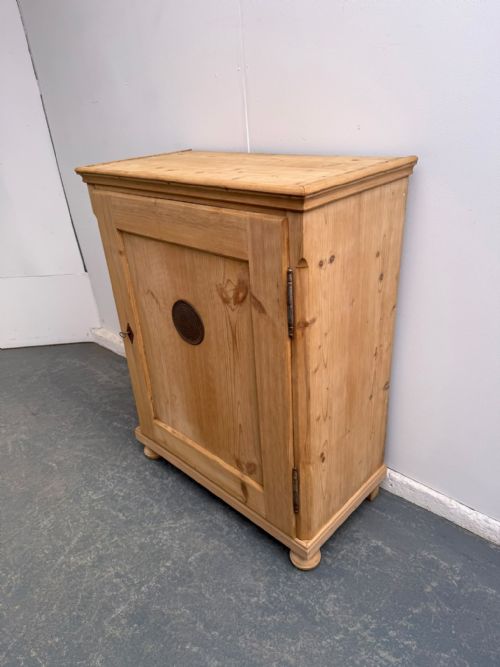
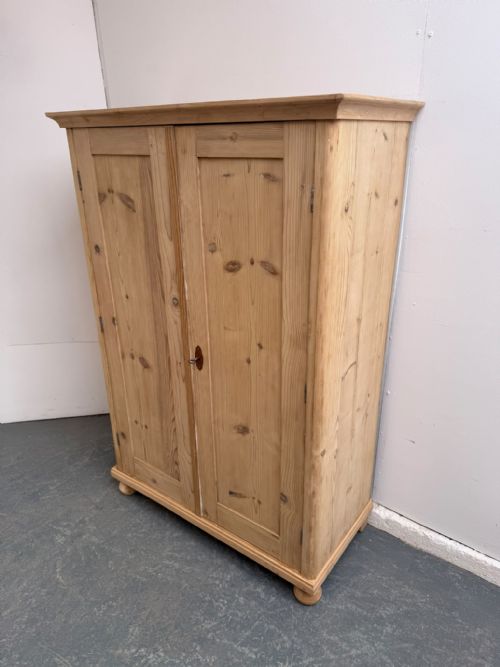


Victorian Pine Side Cupboard
A victorian pine side cupboard offers robust domestic utility and honest character, bringing straightforward nineteenth-century storage to modern rooms.
Victorian Pine Side Cupboard
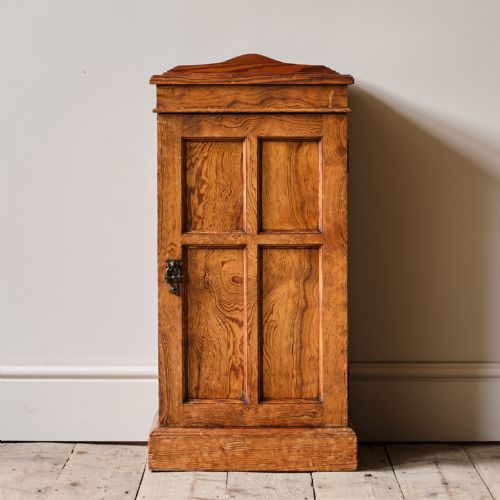
A victorian pine side cupboard encompasses a varied group of utilitarian furniture made during the nineteenth century, ranging from compact bedside cabinets to substantial dresser bases and shop fittings. Buyers frequently encounter smaller pot cupboards, bedside tables, and single-door or multi-door storage cabinets originating from English and Hungarian workshops.
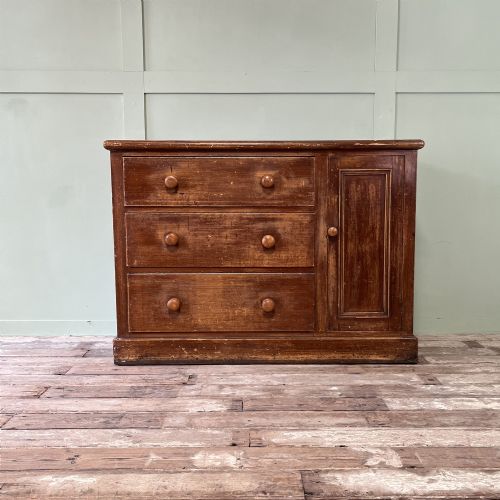
The selection on this page demonstrates the wide functional scope of nineteenth-century pine furniture, including taller two-door two-drawer dresser bases and specialised multi-drawer shop fittings. Pieces appear in various states of finish, from stripped wood ready for waxing to painted surfaces in black, blue, grey, white, and cream.
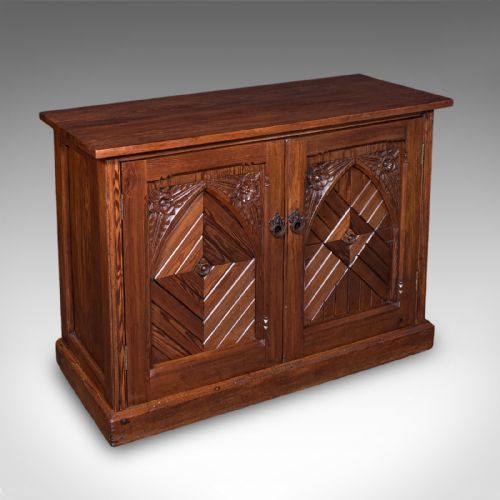
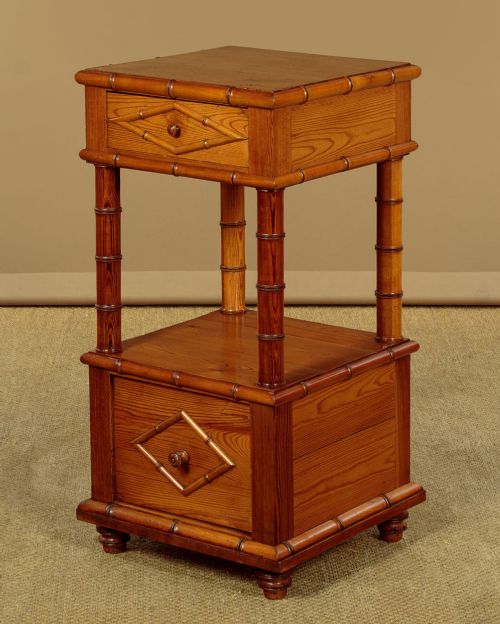
Stylistic variations span simple rustic farmhouse pieces to more decorative examples featuring Gothic Revival influences, faux bamboo turnings, columned corners, or carved details. Whether serving as a bedside table or a kitchen storage unit, each item reflects the practical needs of nineteenth-century households and commercial spaces.
Materials and construction
Makers relied primarily on pine, including Oregon pine and European varieties, frequently pairing the softwood carcass with secondary hardwoods such as oak for internal elements or structural stability. Metal and iron hardware, alongside brass components, provided functional support for doors, drawers, and hinges.
Surface treatments varied significantly between original factory finishes and later alterations, with many items retaining historic layers of paint or being prepared for modern waxing. Specialised forms like shop fittings and bedside cabinets display detailed carpentry techniques, including faux bamboo turnings, architectural columns, and carved decorations.
One twenty-five drawer shop fitting proves nineteenth-century shopkeepers had an admirable obsession with tiny, categorised bits and bobs.
Factors of quality
Quality in a victorian pine side cupboard rests on the integrity of the timber, the strength of the original joinery, and the preservation of authentic surface finishes. Superior pieces maintain their original structural proportions and functional hardware without excessive replacement of parts.
The presence of untouched original paint finishes, whether cream, white, blue, or black, elevates a piece above standard stripped examples. Refined details such as columned supports, carved panels, or specialised multi-drawer configurations demonstrate higher craftsmanship than plain utilitarian equivalents.
The Victorian Pine Side Cupboard Glossary
- Pot cupboard
- A small bedside cabinet originally designed to house a chamber pot behind a single door. These compact units often feature a drawer above the main cupboard space.
- Dresser base
- The lower section of a kitchen dresser, featuring a combination of drawers and cupboards beneath a solid top surface. They served as primary work and storage hubs in nineteenth-century kitchens.
- Shop fitting
- Commercial furniture built for nineteenth-century retail environments, such as multi-drawer counters and storage units. These pieces utilised durable pine construction to withstand heavy daily use.
- Gothic Revival
- A nineteenth-century design style drawing inspiration from medieval architecture. Characteristics include pointed arches, heavy mouldings, and structural verticality.
- Faux bamboo
- A decorative technique where wood is carved or turned to imitate the segmented stalks of natural bamboo. It gained popularity during the late nineteenth century.
Victorian Pine Side Cupboard: Frequently Asked Questions
What is a pot cupboard?
A pot cupboard is a small nineteenth-century bedside cabinet originally built to conceal a chamber pot. These compact pieces typically feature a single door and an upper drawer.
Today, buyers utilise them as convenient bedside tables or small accent storage units in living spaces and hallways.
How do I care for waxed pine?
Waxed pine surfaces require gentle cleaning with a soft, dry cloth to remove dust. Avoid harsh chemical cleaners that strip the protective wax coating.
Applying a traditional beeswax polish periodically helps maintain the lustre and protects the wood from drying out.
Are painted finishes original?
Some nineteenth-century pine furniture retains its original factory or workshop paint, which often shows desirable patination and wear. Other pieces have been painted or stripped by later owners.
Examining the underlying layers and surface texture helps determine whether a paint finish dates to the nineteenth century or represents a later decorative application.
Where were these cupboards made?
These utility pieces originate from various regions, with many examples documented from English and Hungarian workshops. Local carpenters and larger commercial joineries produced them for domestic and retail use.
Design characteristics and timber choices often provide clues to a piece's specific geographic origin.