




Victorian Pine Plate Rack
A victorian pine plate rack is a functional country kitchen staple that brings honest utility and warm timber grain to a modern wall.
Victorian Pine Plate Rack
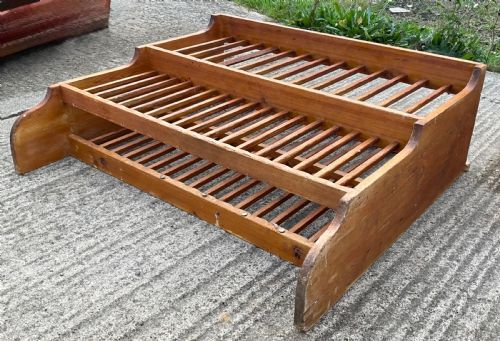
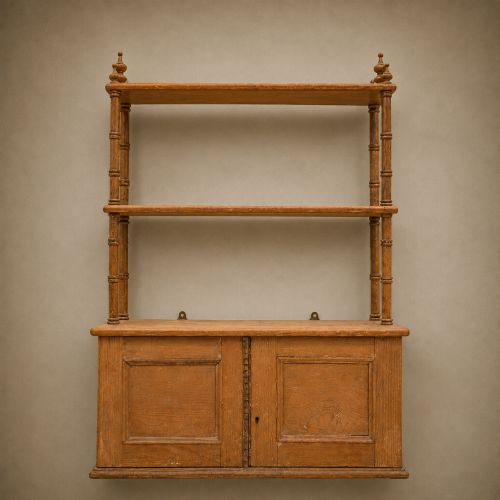
A victorian pine plate rack provides open shelving specifically designed to store and display ceramic plates upright in domestic kitchens. These wall-mounted or dresser-integrated racks reflect the practical demands of nineteenth-century households where everyday crockery needed to air and remain within reach.
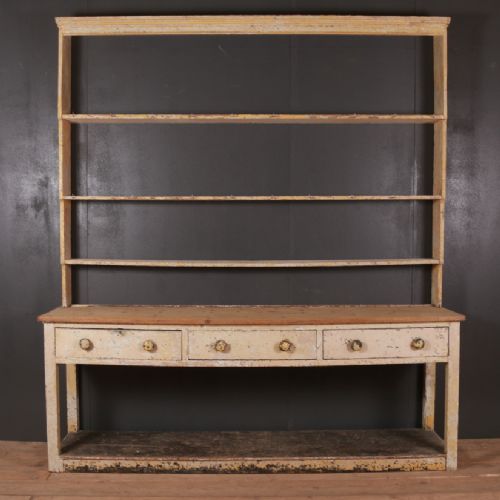
The versions most commonly met on this page are constructed from solid timber with traditional groove-and-slat plate supports. They appear both as standalone wall shelves and as the upper sections belonging to larger cottage dressers.
Originating from regional English and Welsh vernacular traditions, these pieces range from simple utilitarian boards to grander farmhouse configurations. Their presence in a room grounds the space with a distinct historic domestic character.
How they were made
Makers utilised native softwoods, primarily pine, selected for its workability and straight grain, often supplemented by oak or mahogany in more substantial structural elements. Boards were joined using traditional carpentry methods such as dovetails and pegged mortise and tenon joints to withstand daily domestic use.
Surfaces frequently show historical traces of paint, stripped finishes, or bare scrubbed timber resulting from decades of vigorous cleaning in busy country kitchens. Metal or brass fixings and hinges provide the structural support for integrated cupboards and hanging mechanisms.
Victorian Pine Plate Rack Retail Price Guide 2026
Typical asking prices for victorian pine plate rack among the pieces listed under this phrase on Sellingantiques today, from the lower quarter to the upper quarter. They describe what is for sale here now, not the wider market.
Listings span the eighteenth, nineteenth, and early twentieth centuries, featuring regional pine, oak, and mahogany alongside painted wood finishes.
What varies in quality
The distinction between standard utility pieces and finer examples rests upon the proportion, timber selection, and joinery refinement. Superior racks display carefully balanced shelf heights and harmonious board widths rather than hurried, purely utilitarian construction.
Original untouched surfaces with desirable patination command greater appreciation than heavily altered or excessively stripped timbers. The presence of integrated cupboards, dental moulding, or regional architectural details elevates a piece from simple storage to notable vernacular furniture.
The Victorian Pine Plate Rack Glossary
- Plate rack
- A wall-mounted or dresser-based shelving unit featuring vertical slats or grooves designed to hold plates upright. This arrangement allowed wet tableware to drain and dry efficiently in historical kitchens.
- Potboard
- A lower open shelf built into the base of a Welsh or country dresser. Traditionally, this shelf held heavy iron pots and copper kitchenware off the damp flagstone floor.
- Vernacular furniture
- Domestic pieces made by local regional cabinetmakers and joiners using traditional methods and native materials. These items prioritized practical local utility over high-style London fashions.
- Breakfront
- A cabinet or dresser design where the central section projects forward from the flanking wings. This architectural arrangement adds visual depth and shadow to larger case furniture.
- Scrubbed pine
- Timber that has been repeatedly cleaned with water and abrasive brushes over generations, resulting in a pale, matte surface texture. This finish is characteristic of hardworking farmhouse kitchen tables and shelving.
Victorian Pine Plate Rack: Frequently Asked Questions
How were plate racks used?
Plate racks served as the primary storage system for everyday ceramics in nineteenth-century kitchens. Plates slotted vertically between wooden dowels or slats, allowing washed tableware to air dry safely before the next meal.
Beyond simple drying, these racks kept heavy earthenware crockery visible and accessible to cooks working in busy domestic spaces.
How do I hang a heavy pine rack?
Secure hanging requires locating the structural timber studs within your wall behind the plaster. Because nineteenth-century pine carries considerable weight, use heavy-duty steel brackets or mirror plates screwed directly into the wall framework.
Distribute the load evenly across multiple fixing points to ensure the piece safely supports the weight of heavy ceramic plates.
Can I put these racks in a modern kitchen?
These racks integrate naturally into contemporary spaces by introducing warm timber textures and practical vertical storage. They function effectively above food preparation zones, breakfast bars, or dining tables for everyday crockery display.
Ensure the wall construction can bear the combined weight of the timber frame and your modern ceramic collection.
How do I tell regional styles apart?
Regional differences often appear in the choice of secondary woods, backboard construction, and cornice mouldings. Welsh vernacular pieces frequently display deeper proportions and robust potboard bases suited to larger country houses.
English country examples tend toward straightforward utilitarian layouts using local pine and simpler joining techniques without elaborate ornamentation.