


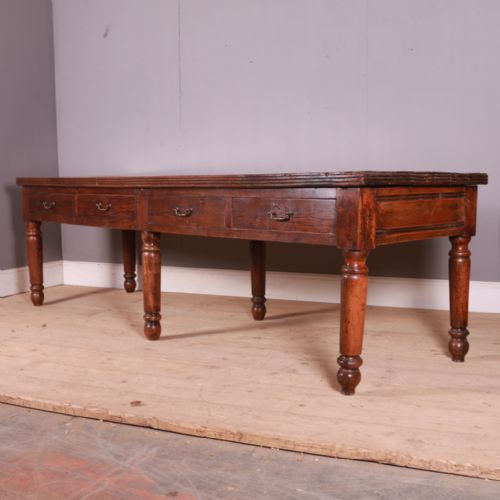
Victorian Pine Island
These Victorian pine island pieces bring honest utility and character to a room, offering robust surfaces shaped by decades of domestic or commercial work.
Victorian Pine Island
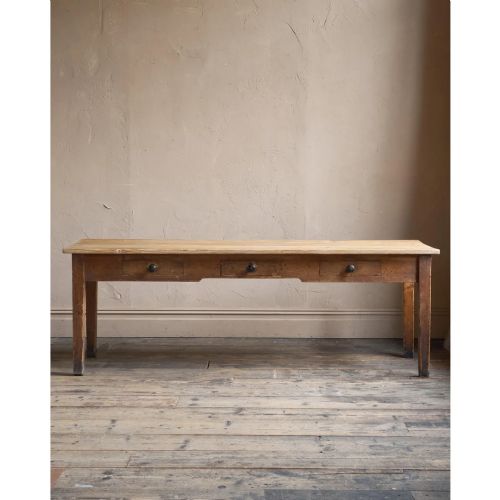
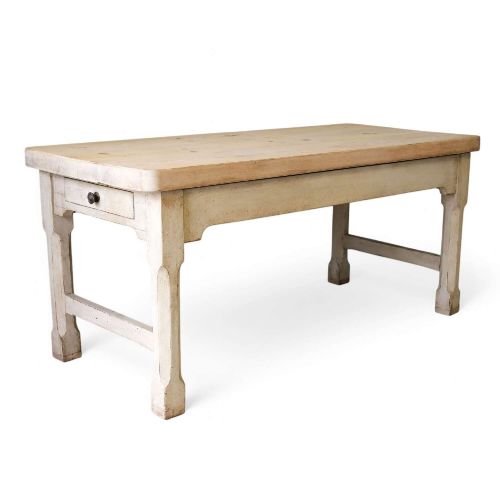
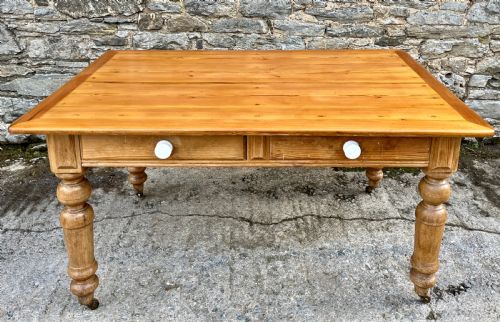
When you search for Victorian pine island, you are looking at utilitarian tables, counters, and prep surfaces built to handle heavy daily labour. These forms range from large kitchen prep tables and scullery pieces to drapers counters and haberdashery units.
The versions most likely to meet you on this page are generous nineteenth-century farmhouse and kitchen tables, often featuring practical drawers and sturdy legs. Many carry the marks of real service, showing layers of old paint or warm waxed timber.
Origins vary between English country houses and broader European workshops, encompassing rustic farmhouse and industrial mill styles. Each piece serves as a functional centrepiece that anchors a modern kitchen or retail space with historical weight.
Materials and construction
Solid pine forms the primary body of these pieces, selected for its accessibility and dependable strength in busy workspaces. Secondary timbers such as elm, beech, sycamore, and oak appear in high-wear components like table tops and framing.
Construction methods prioritise durability above all else, utilising thick planks joined to withstand constant preparation and trade use. Surface finishes range from natural waxed grain to layers of original or later paint, recording the practical history of each object.
Materials recorded across the inventory include solid pine alongside secondary timbers like elm, beech, sycamore, oak, brass, and iron.
Factors of quality
The distinction between standard examples and superior pieces rests on the integrity of the timber and the honesty of the surface finish. Solid construction without excessive modern intervention preserves the historical value of a working table.
The Victorian Pine Island Glossary
- Scullery Table
- A heavy-duty work table traditionally used in the scullery or back kitchen for messy food preparation and washing tasks. These pieces usually feature thick pine tops and robust legs built for heavy daily labour.
- Haberdashery Island
- A large retail counter fitted with numerous small drawers designed to store and display dry goods or sewing notions. They are prized for their banks of drawers and exceptional storage capacity.
- Drapers Counter
- A long shop counter utilised in textile and cloth trade shops for measuring and cutting fabrics. They often provide expansive flat surfaces ideal for modern kitchen island use.
- Bread Slide
- A pull-out shelf integrated into a dresser base or prep table, originally used for cooling or preparing dough. This functional element adds desirable movement and character to the timber base.
- Work Table
- A general term for unpretentious tables built purely for utility in workshops, kitchens, or retail spaces. They typically lack decorative carving, relying instead on honest joinery and practical proportions.
Victorian Pine Island: Frequently Asked Questions
What is a Victorian pine island?
A Victorian pine island typically refers to a large nineteenth-century work table, shop counter, or prep table repurposed for modern kitchen use. These pieces originate from domestic sculleries, bakeries, and retail shops where sturdy timber surfaces were essential.
They are defined by their utilitarian construction, often featuring deep drawers, thick pine tops, and aged surfaces that display decades of use.
How were these tables originally used?
These pieces served as heavy-duty work surfaces in nineteenth-century domestic and commercial environments. Scullery and prep tables handled food preparation, while drapers and haberdashery counters displayed goods in retail shops.
Their robust construction allowed them to endure constant cutting, kneading, and trade work without failing.
How do I care for a antique pine top?
Antique pine surfaces benefit from regular maintenance using traditional beeswax or natural oils to nourish the dry timber. Avoid excessive moisture and use boards or trivets to protect the historic grain from daily heat and liquid.
Embrace minor marks and dents as part of the piece's working history rather than attempting complete refinishing.
How can I tell an older pine table apart?
Examine the construction methods, such as hand-cut joints, timber shrinkage, and the natural patina built up over generations of use. Older pieces often display structural wear patterns that match their stated nineteenth-century period.
Original paint layers, iron hardware, and secondary hardwoods like elm or beech further indicate genuine age.