
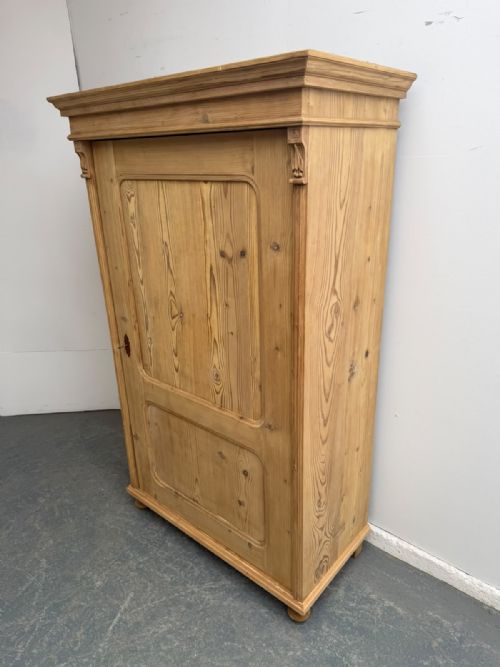
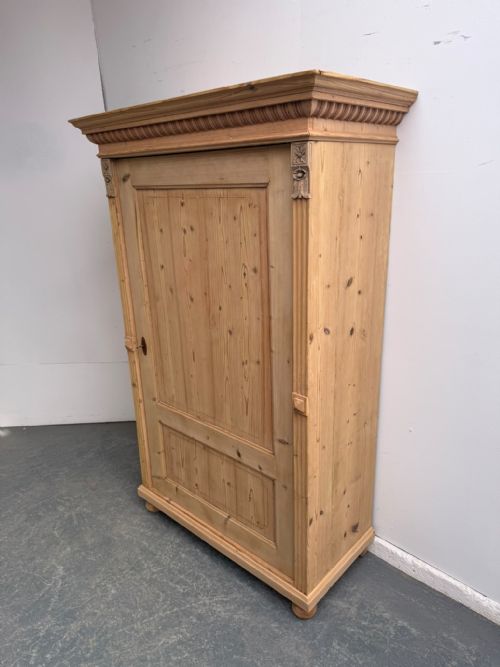
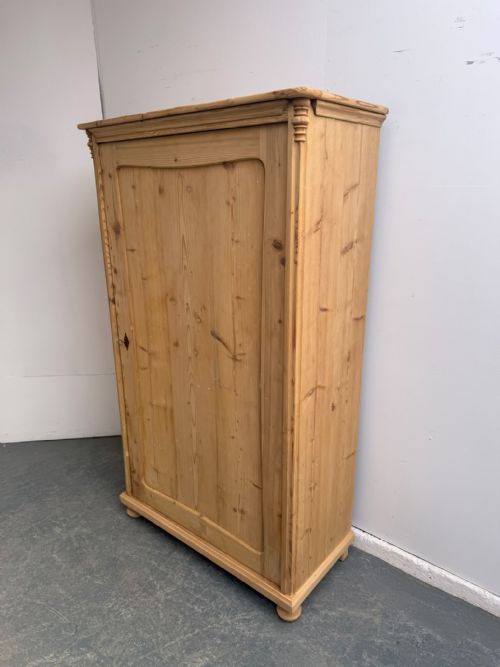
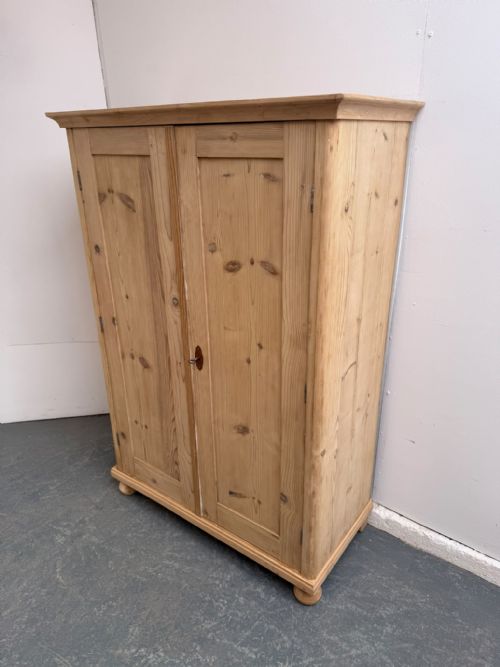
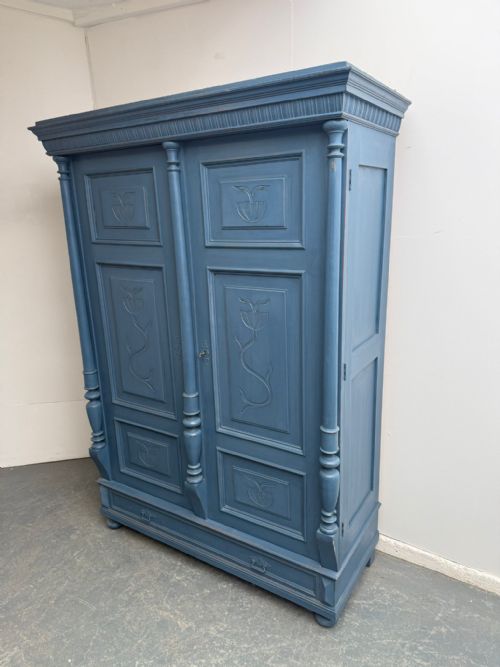


Victorian Pine Hall Cupboard
When you need a victoran pine hall cupboard, you are looking at substantial timber storage built to hold coats and boots.
Victorian Pine Hall Cupboard
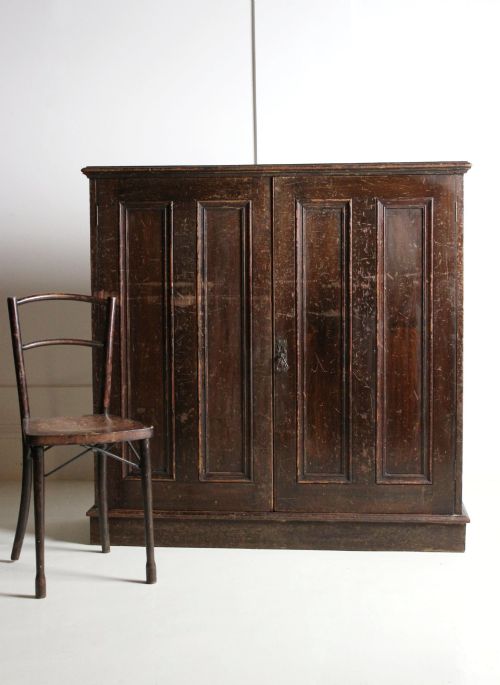
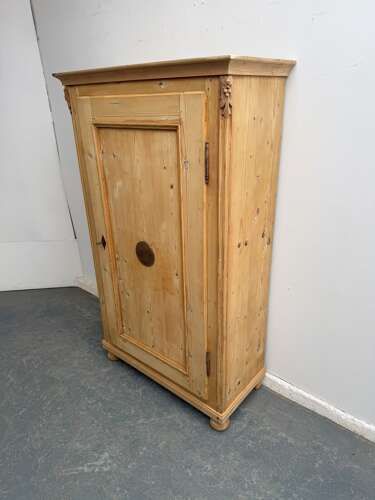
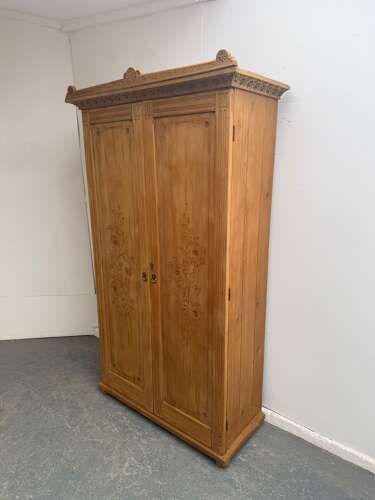
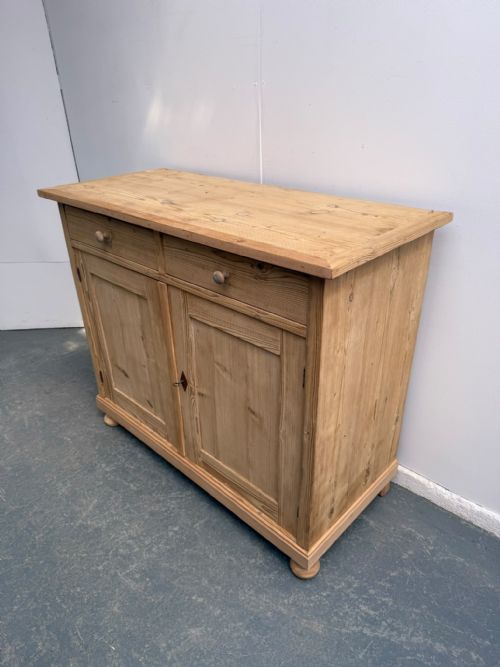
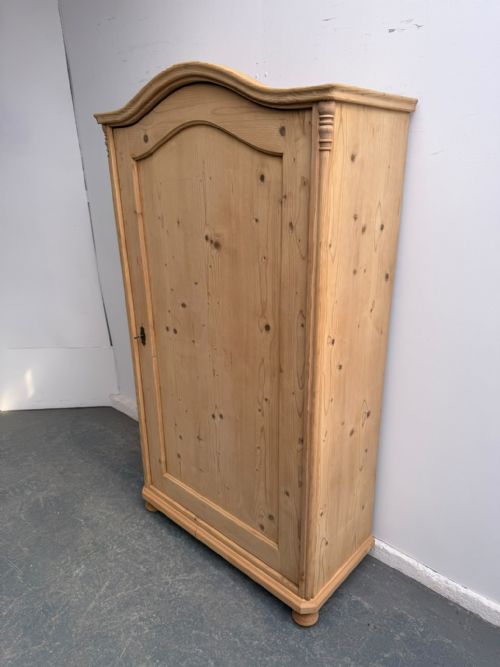
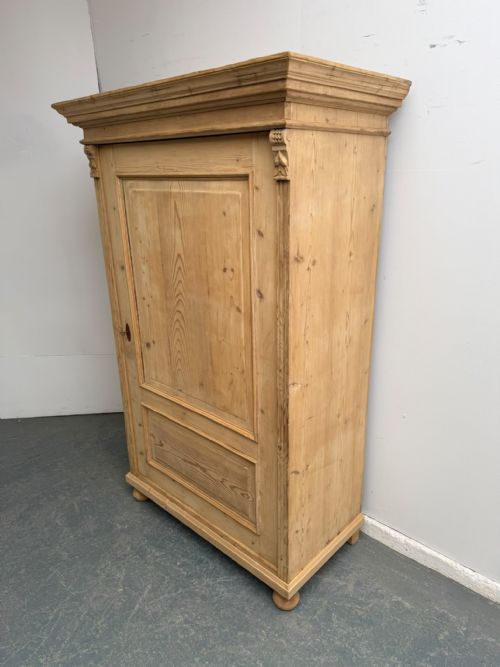
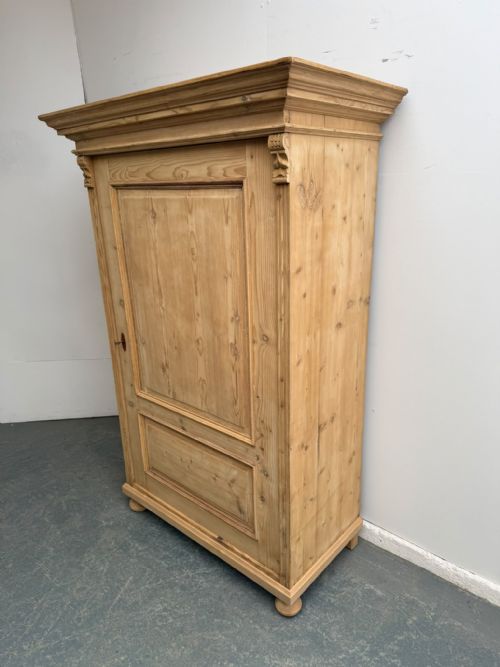
A victorian pine hall cupboard is a practical wooden storage piece designed for entryways and passages, appearing primarily in nineteenth-century and early twentieth-century examples. The selection ranges from single-door units to wider two-door wardrobes, often retaining shallow depths to fit narrow hallways.
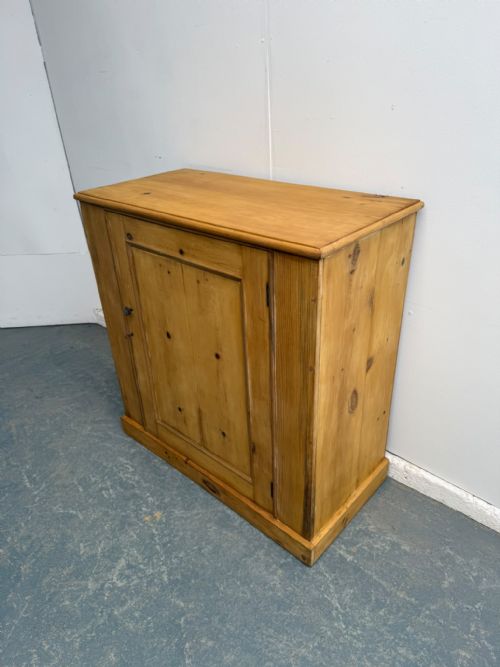
Most pieces show simple domestic utility, combining doors, drawers, and interior shelving or hanging space. Buyers frequently encounter single-door cupboards alongside tall hall wardrobes and low wide storage units.
Originating largely from British and European domestic settings, these items carry the marks of everyday utility rather than formal parlour display. Many survive in stripped pine finishes ready for waxing or painting, while others keep traces of original blue, grey, or painted surfaces.
How they were made
Construction relies primarily on solid pine and pitch pine timbers, shaped into panels, frames, and shelves. Joinery combines traditional techniques with hardware such as iron, brass, and metal hinges or latches.
Surface finishes vary between natural waxed pine, stained pine, and painted coats. Some pieces feature carved details, arched panels, or fielded door designs that add decoration to the utilitarian structure.
Victorian Pine Hall Cupboard Retail Price Guide 2026
Typical asking prices for victorian pine hall cupboard among the pieces listed under this phrase on Sellingantiques today, from the lower quarter to the upper quarter. They describe what is for sale here now, not the wider market.
Several cupboards retain child-sized proportions, built specifically to store the garments of younger household members.
What varies in quality
Depth and proportion dictate the utility of each piece, with shallow formats offering distinct advantages for restricted entrance spaces. The balance between timber thickness and overall agility determines how well the structure holds up to daily opening and closing.
The integrity of original fixings, from hinges to drawer runners, separates standard utilitarian storage from finer examples. Surviving original paint finishes or neatly executed carved detailing elevate the character of individual pieces far beyond plain utility.
The Victorian Pine Hall Cupboard Glossary
- Fielded
- A panel with bevelled edges that sit recessed within a heavier surrounding frame. This technique prevents wood from splitting as it expands and contracts.
- Dresser base
- A low cabinet surface typically fitted with drawers or cupboards below. These pieces often served utilitarian storage roles in kitchens and hallways.
- Skeleton cupboard
- A specialised cabinet frame designed without solid enclosed sides or doors in certain sections. The term denotes a stripped-down structural form.
- Chiffonier
- A compact sideboard or low cabinet equipped with drawers and doors. They became popular during the nineteenth century for dining and hallway storage.
- Pitch pine
- A dense, resinous variety of pine known for its durability and prominent grain pattern. It provided extra strength for heavy-use furniture.
Victorian Pine Hall Cupboard: Frequently Asked Questions
Where should I place a hall cupboard?
These cabinets suit narrow corridors, entryways, and landings where floor space is limited. Their shallow profiles allow them to stand against walls without blocking passageways.
Inside, they accommodate coats, boots, and everyday household items, keeping hallways clear of clutter while adding traditional timber character to the space.
How do I care for waxed pine?
Waxed surfaces require occasional re-waxing to maintain a protective barrier against moisture and dust. Buffing the timber with a soft cloth preserves the soft sheen.
Keep these pieces away from direct heat sources and strong sunlight to prevent the pine from drying out or splitting over time.
Can I paint a stripped pine cupboard?
Many of these pieces are prepared for painting and take new coats well. Applying a suitable primer ensures the pine tannins do not bleed through lighter topcoats.
Original painted finishes should be assessed carefully before altering, as historic pigment layers add significant character and historical value.
How do I tell nineteenth century pine apart from later pieces?
Nineteenth-century examples often display hand-cut joinery marks, forged iron hardware, and tighter grain patterns in the timber. Later pieces from the early twentieth century tend to show more standardised machining.
Examining the backboards and interior construction reveals the manufacturing methods characteristic of different periods.