
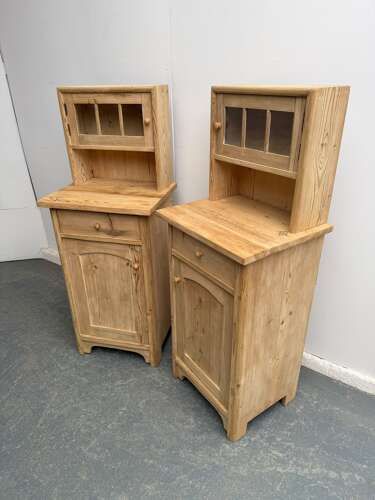


Victorian Pine Bedside Cabinet
A victorian pine bedside cabinet provides practical bedside storage, bringing nineteenth-century utility and character to a bedroom.
Victorian Pine Bedside Cabinet
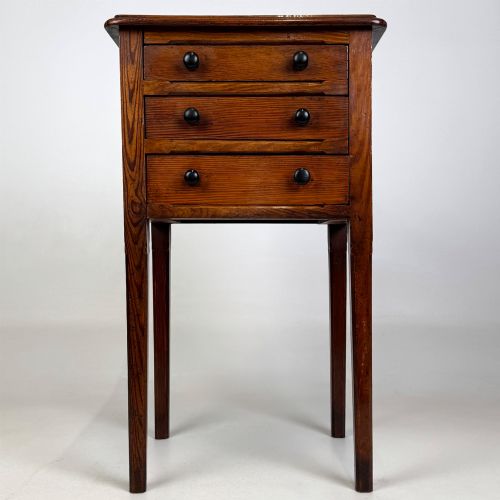
A victorian pine bedside cabinet is a functional piece of nineteenth-century bedroom furniture designed to hold night-time necessities. These items appear primarily as single cupboards, pot cupboards, and small chests of drawers sitting beside the bed.
The pieces on this page span the Victorian period, including items dated from eighteen sixty through to nineteen hundred. English and French country examples sit alongside Gothic Revival and Aesthetic Movement variations.
Most pieces utilise plain or waxed timber, though painted finishes in black, blue, and grey also occur frequently. Buyers frequently encounter pairs as well as single cabinets intended for restoration or immediate placement.
What varies in quality
The standard of construction distinguishes simpler utilitarian storage from finer decorative work. Cabinet makers employed more sophisticated detailing such as carved elements, columned pillars, and upstands on select commissions.
Original material integrity and surface treatment dictate the character of each piece. Cabinets retaining unblemished marble tops, original painted finishes, or matching pairs demonstrate greater desirability among collectors.
Listings include nineteenth-century materials such as pine, pitch pine, and Oregon pine, often paired with marble tops or ceramic elements.
J. Shoolbred
The Victorian Pine Bedside Cabinet Glossary
- Pot cupboard
- A small bedside cabinet originally designed to house a chamber pot behind a single door. These compact units form a major category of nineteenth-century night storage.
- Pitch pine
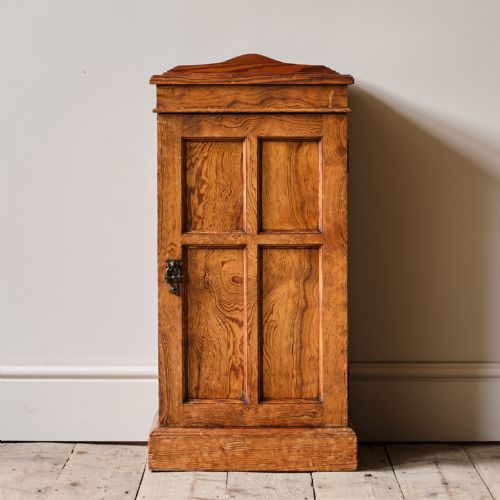
- A dense, resinous softwood timber utilised in nineteenth-century cabinet making for its durability and prominent grain pattern. It provides a sturdy carcase for bedroom furniture.
- Faux bamboo
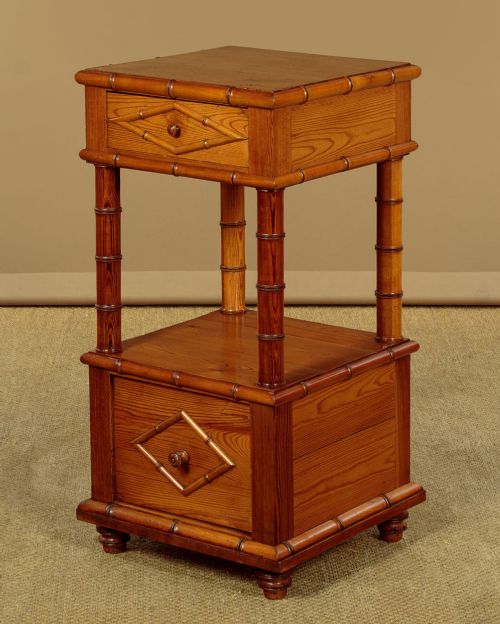
- A decorative technique where timber is carved or painted to imitate natural bamboo stalks. This style gained popularity during the late nineteenth century, notably within Aesthetic Movement pieces.
- Upstand
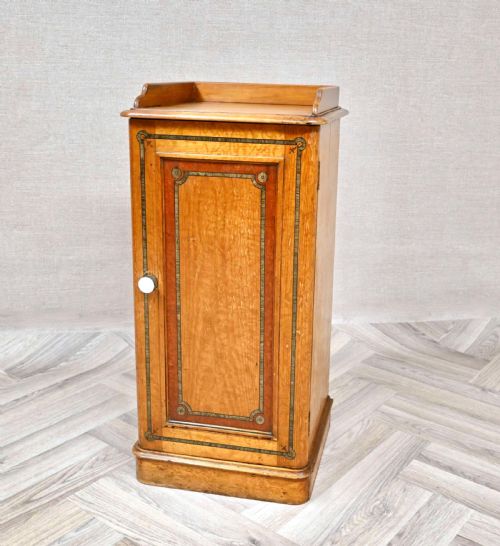
- A vertical raised backboard attached to the top edge of a cabinet surface. This feature prevents items from slipping off the rear of the unit.
Victorian Pine Bedside Cabinet: Frequently Asked Questions
What is a victorian pine bedside cabinet used for?
These cabinets served historically to hold a chamber pot and bedside essentials within nineteenth-century bedrooms. Today, they function as practical nightstands providing enclosed storage space beside a bed.
Their compact dimensions make them suitable for holding lamps, books, and small personal items in modern sleeping quarters.
How do I identify a nineteenth-century piece?
Examination of the timber, construction methods, and joinery reveals the age of the cabinet. Nineteenth-century pieces utilise solid pine or pitch pine with hand-cut joints characteristic of the period.
Stylistic markers such as plinth bases, panelled doors, and period specific hardware help confirm the nineteenth-century origin.
Are these cabinets found in pairs?
Matching pairs do appear among nineteenth-century bedroom furniture, though single cabinets occur more frequently. Pairs usually originate from larger bedroom suites produced during the Victorian era.
Finding matching bedside storage from the nineteenth century requires looking for coordinated pairs sharing identical timber grain and dimensions.
What finishes are common on these cabinets?
Waxed timber surfaces showing the natural grain of pine or pitch pine represent a frequent finish. Painted examples also appear, featuring grey, blue, or black paint alongside simulated wood graining.
Some superior specimens incorporate marble tops or decorative carving to elevate the visual appearance of the bedroom furniture.