
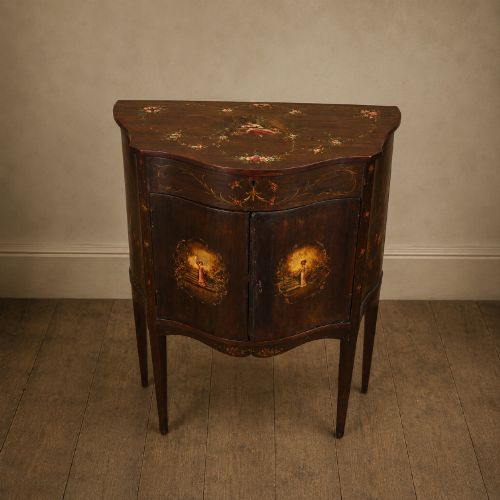
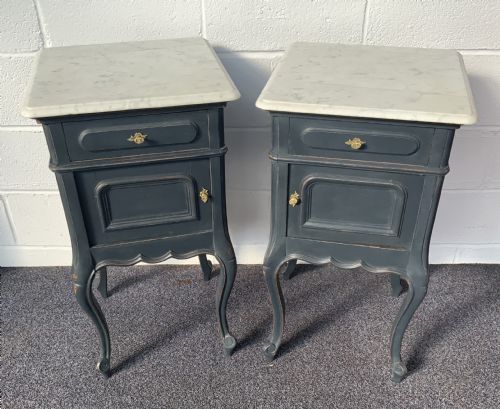
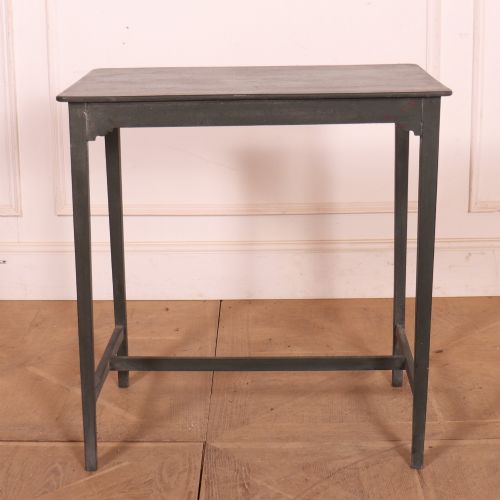


Dark Painted Nightstand
A dark painted nightstand brings rich tone and historic utility to the bedroom, grounding the room with solid pine or oak and layers of historic paint.
Dark Painted Nightstand
A dark painted nightstand encompasses practical bedside cabinets, side tables, and small cupboards designed for nightly use beside the bed. The examples seen here span the Victorian era, the nineteenth century, nineteen-twenty, and the eighteenth century, showing how utility furniture evolved across generations.
The versions most commonly met on this page are Victorian pine or oak bedside cabinets finished in dark paint, alongside French and English lamp tables and occasional pieces. These items often feature single doors, tiers, or marble tops paired with painted wooden frames.
Origins stretch from English country workshops to French chateau styles, nineteenth-century continental designs, and eighteenth-century Dutch pieces. Buyers encounter various forms including washstands, side cabinets, and compact cupboards that served utilitarian purposes in historic homes.
How they were made
Construction relies heavily on sturdy timbers such as pine and oak, providing a robust carcass for daily domestic service. These woods are frequently shaped by hand, incorporating carved details, columns, or serpentine fronts on select Victorian pieces.
Surfaces receive layers of paint, ranging from historical hues to specific modern tones like railings and downpipe grey applied over older pine and oak. Hardware such as brass fittings and ceramic elements complete the construction, alongside functional additions like inset marble tops.
Materials recorded across the inventory include pine, oak, painted wood, marble, brass, and ceramic.
What varies in quality
Quality rests in the integrity of the timber framework and the historical authenticity of the painted surface. Pieces that retain their original structural joinery alongside honest, aged paint finishes stand apart from lesser or altered examples.
Refinement of form also dictates the tier of the piece, visible in the balance of proportions, the presence of carved mouldings or columned details, and the quality of fitted materials like marble tops or brass hardware.
Melissa White
The Dark Painted Nightstand Glossary
- Bedside cabinet
- A small enclosed piece of furniture designed to sit beside a bed, usually featuring a single door or cupboard space. It keeps personal items tucked out of sight.
- Serpentine
- A gently undulating curved shape seen on the front edges or tabletops of finer cabinets. This shaping requires skilled carpentry to execute smoothly.
- Washstand
- A historic piece of furniture originally built to hold a basin and pitcher for morning washing, often adapted today as a bedside table or side cabinet. They frequently feature protective splashbacks or marble surfaces.
- Sheraton Revival
- A late nineteenth-century design style drawing on the lighter, neoclassical geometries of eighteenth-century cabinetmaker Thomas Sheraton. It often incorporates painted decoration and delicate proportions.
Dark Painted Nightstand: Frequently Asked Questions
How do I clean a painted nightstand?
Dust the surface regularly with a soft, dry cloth to prevent dirt accumulation. Avoid harsh chemical cleaners that can damage historic or layered paint finishes.
For stubborn marks, use a damp cloth with mild soap and dry the wood immediately afterward. Protecting the surface from standing water preserves the integrity of both the paint and the underlying pine or oak.
Are these nightstands historically antique?
The selection includes pieces originating from the eighteenth century, the Victorian period, and nineteen-twenty. Each era carries distinct construction methods and design characteristics.
Evaluating the timber, joinery style, and paint application helps determine the age of an individual cabinet. Consulting the listed period for each item confirms its historical placement.
Can I use a lamp table as a nightstand?
Lamp tables and occasional tables function very well beside a bed, offering a stable surface for lighting and nighttime essentials. Their open tiers or compact tabletops suit smaller bedrooms where enclosed storage is unnecessary.
Consider the height of the table relative to your mattress to ensure comfortable access at night. Many historic side tables share similar dimensions with traditional bedside cabinets.
What wood is underneath the paint?
The underlying timber on these pieces is typically solid pine or oak. These durable woods formed the standard structural basis for utility furniture across the eighteenth and nineteenth centuries.
Paint was frequently applied to ordinary softwoods or hardwoods to provide a decorative finish. Over time, these painted layers wear down organically to reveal the texture of the wood beneath.