


Victorian Piecrust Table
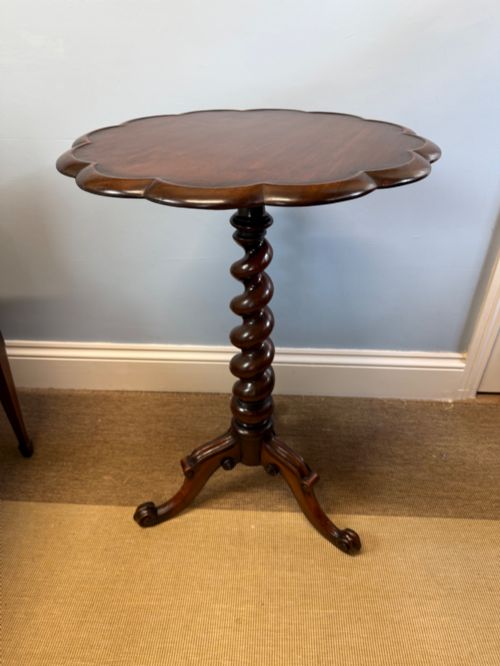
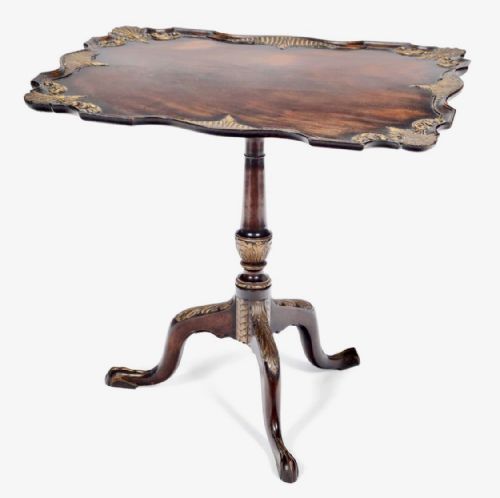
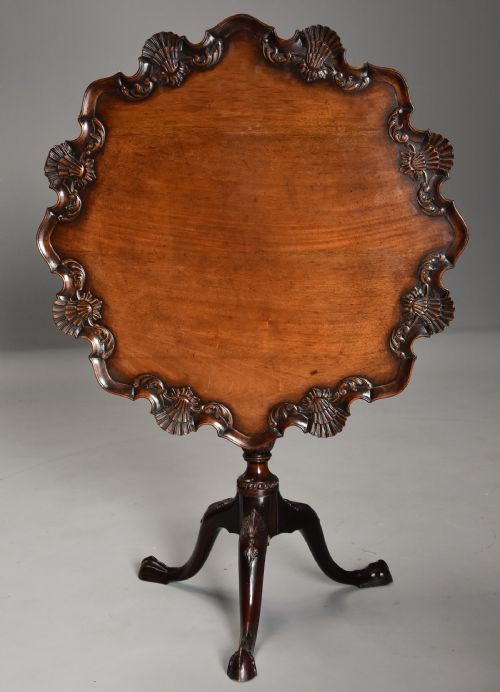
A victorian piecrust table brings genuine nineteenth-century character to a room with its signature scalloped edge and clever tilt-top mechanism.
Victorian Piecrust Table
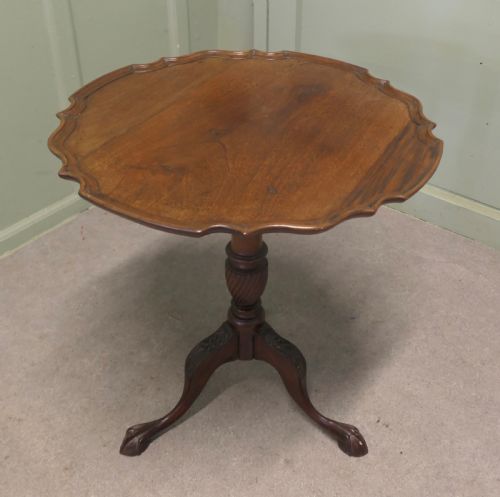
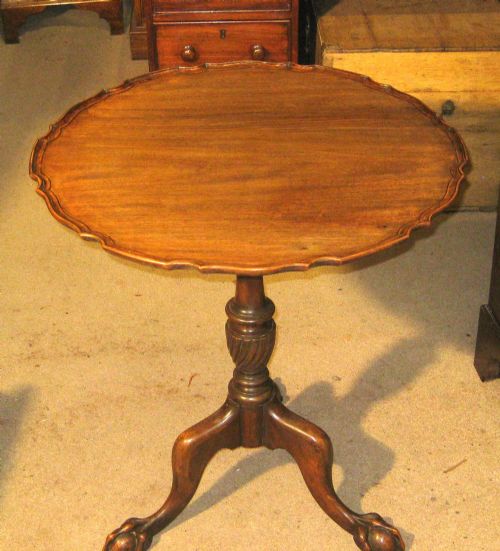
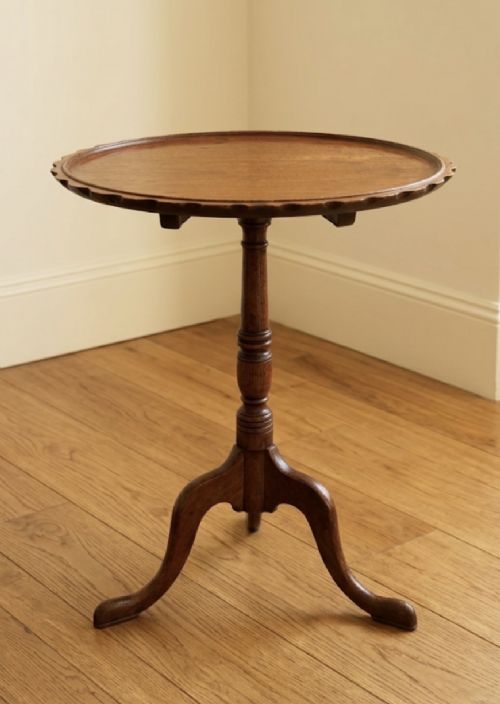
Most examples found in these listings rely on a tilt-top or snap-top mechanism supported by a turned pillar and a tripod base with three legs. This intelligent design allows the table to be tipped upright and stored flat against a wall when not in use.
While the core of the inventory dates from the nineteenth century, variations stretch from Regency roots into later revivals like Chippendale style and Georgian style. Alongside standard tripod formats, buyers encounter occasional variants such as corner tables, two-tier revolving trays, and campaign pieces.
Materials and Construction
Cabinetmakers relied heavily on mahogany and burr walnut to construct these tables, often selecting figured timber for the top to showcase rich natural grain patterns. Oak, teak, hardwood, and brass fittings appear across specific regional or campaign variants.
The distinctive raised edge required careful hand-carving from a solid thick blank of timber or precise shaping around the perimeter. Central turned pillars joined sturdy tripod legs, sometimes incorporating parcel gilt highlights or bobbin turning for decorative depth.
Listings feature woods ranging from mahogany and burr walnut to oak, teak, and brass-fitted campaign pieces across the nineteenth century.
Judging Quality and Execution
Quality rests on the crispness of the carved scalloped rim and the selection of timber used for the top, where figured mahogany and burr walnut elevate a piece significantly. Superior tables display balanced proportions between the top and the supporting tripod base.
Mechanics matter just as much as appearance, particularly the snugness and stability of the tilt-top snap mechanism. A finer table sits firmly on its three legs without wobble and operates smoothly when pivoted.
S & H Jewell London
The Victorian Piecrust Table Glossary
- Piecrust edge
- A raised, carved circular tabletop border shaped into undulating curves resembling pastry work. This decorative moulding requires skilled hand-carving from the solid timber.
- Tilt-top
- A hinged table mechanism allowing the surface to pivot vertically into a flat position for storage. It is also known as a snap-top table.
- Tripod base
- A support structure consisting of three legs radiating from a central turned pillar. This design ensures stability on uneven historical flooring.
- Burr walnut
- Timber taken from the wart-like growths on walnut trees, yielding highly figured grain patterns. Cabinetmakers prized it for high-status occasional tables.
- Parcel gilt
- A decoration method where specific carved details or edges receive a thin application of gold leaf. It highlights structural contours against dark mahogany.
Victorian Piecrust Table: Frequently Asked Questions
What is a piecrust table used for?
These tables served primarily as portable stands for holding wine glasses, lamps, or small personal items in nineteenth-century reception rooms.
Because of their compact footprint and tipping mechanism, they easily moved around a room or stood against a wall when floor space was needed.
How do I spot a tilt-top mechanism?
Look beneath the tabletop where a clever catch or block secures the surface to the central pillar. Releasing this catch allows the entire top to pivot upright on its hinge.
Original mechanisms should operate smoothly and lock securely into the horizontal position without excessive play.
Are all piecrust tables Victorian?
While the core of the pieces dates to the Victorian era and the mid-nineteenth century, the form borrows heavily from earlier eighteenth-century Georgian and Chippendale styles.
Revival pieces continued to be made into the late nineteenth century and early twentieth century, echoing earlier craftsmanship.
How do I care for burr walnut and mahogany?
Keep these antique timber surfaces away from direct sunlight and strong heat sources to prevent the wood from drying out or warping. Regular dusting with a soft, dry cloth is sufficient to maintain the polished finish.