




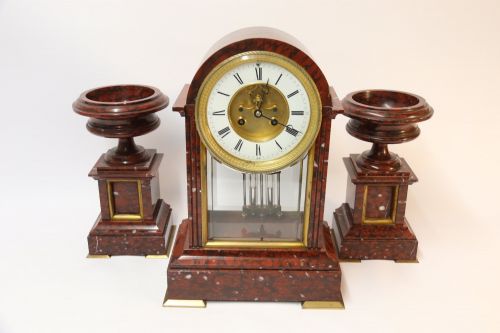


Victorian Pendulum Mantel Clock
A victorian pendulum mantel clock brings precise 19th-century timekeeping and striking presence to a mantelpiece, combining brass, marble, and mahogany.
Victorian Pendulum Mantel Clock
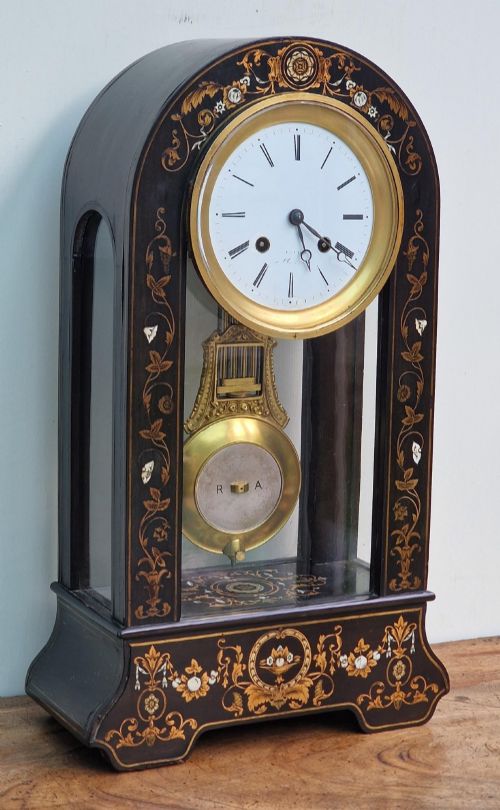
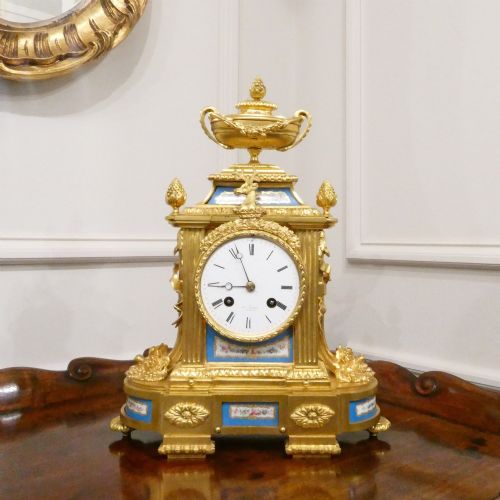
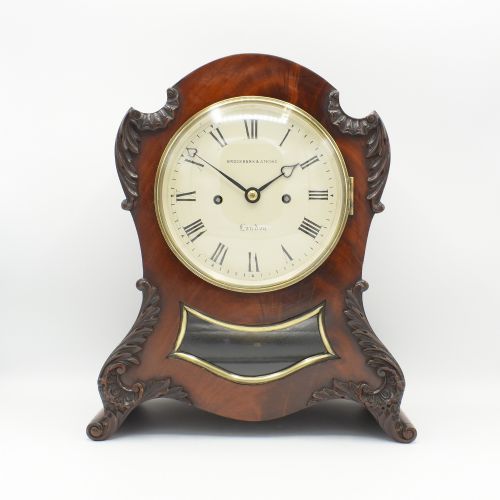
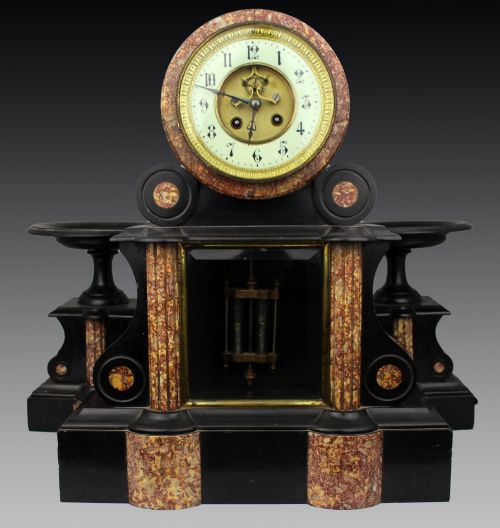
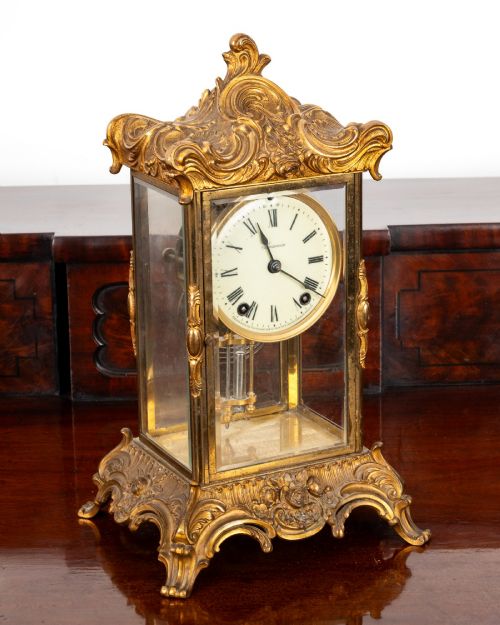
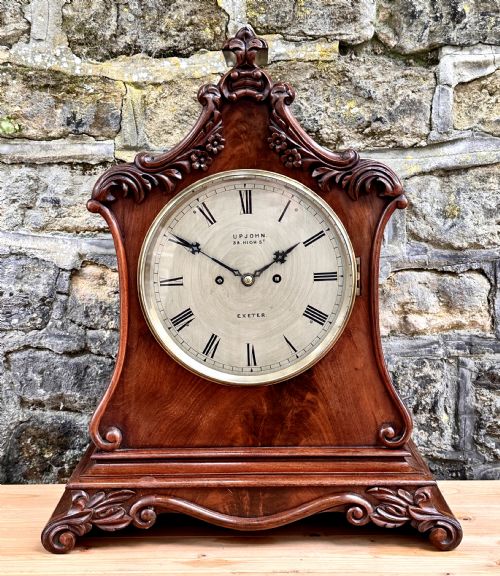
When you search for a victorian pendulum mantel clock, you encounter upright timepieces designed to sit steadily on a shelf or mantel. These pieces span various forms, including architectural marble cases, ornate French ormolu designs, and compact mahogany bracket clocks.
The versions most frequently met on this page belong to the wider nineteenth-century period, encompassing both British domestic workshop traditions and imported French gilt brass or four-glass movements. Makers utilised materials like slate, porcelain, and glass alongside traditional timber frames to create substantial focal points for Victorian interiors.
Regional styles vary noticeably across the selection, ranging from heavy marble garniture sets to lighter brass-framed timepieces. Each type reflects the prevailing aesthetic tastes of the era, from Louis XVI revival ornamentation to crisp geometric slate housings.
Materials and construction
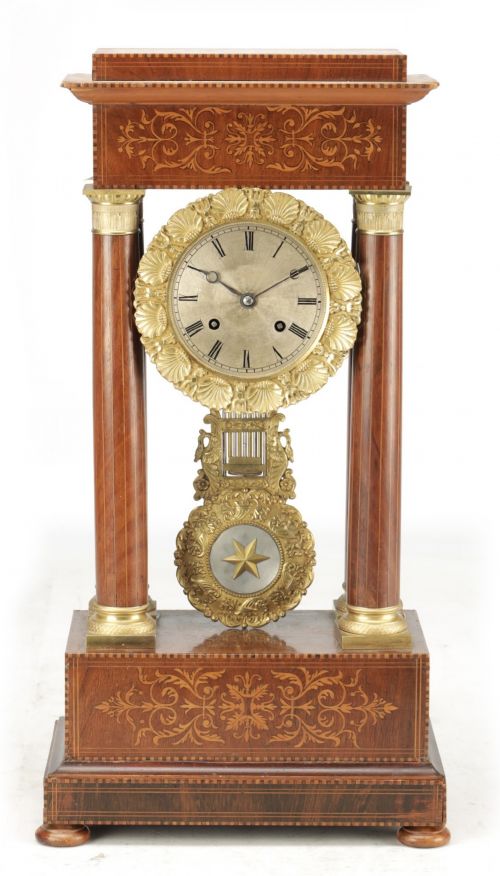
Clockmakers constructed heavy housings using natural stone, slate, and solid mahogany, often enriching the exterior surfaces with marquetry inlay, gilt bronze, or ormolu mounts. Dial faces combined painted enamel numerals with intricate brass bezels and protective glass covers.
Interior mechanical assemblies relied on durable brass plates, steel pivots, and suspended pendulums to regulate movement over eight-day or fourteen-day striking cycles. Twin fusee movements and delicate escapements required precise calibration by skilled horologists to maintain accurate time.
Victorian Pendulum Mantel Clock Retail Price Guide 2026
Typical asking prices for victorian pendulum mantel clock among the pieces listed under this phrase on Sellingantiques today, from the lower quarter to the upper quarter. They describe what is for sale here now, not the wider market.
Several French models incorporate cheerful bronze doves perched atop the marble case, quietly watching the pendulum swing below.
Evaluating craftsmanship
The upper tier of these clocks is distinguished by substantial cast bronze mounts, hand-painted porcelain dials, and signed movements from renowned makers such as Samuel Marti or Japy Frères. Heavier marble and slate cases with matching garniture sets represent significant manufacturing effort.
Simpler models utilise plain timber or basic brass casting, showing less intricate architectural detail and standard commercial movements. The presence of specialised complications, such as double fusee mechanisms or four-glass panel construction, separates standard timepieces from exceptional examples.
Japy Frères·Henry Marc·Brockbanks and Atkins·Ansonia New York·Samuel Marti·Mappin and Webb·Thomas A Paris·Geo Carter Hackney·D Munsey of Cambridge·Le Roy et Fils
The Victorian Pendulum Mantel Clock Glossary
- Garniture set
- A matched decorative arrangement consisting of a central clock flanked by matching ornamental side pieces or vases. These sets were designed to sit symmetrically on a mantelpiece.
- Fusee
- A conical pulley used in mechanical clocks to maintain even driving force as the mainspring unwinds. This mechanism improves timekeeping consistency across the running cycle.
- Four-glass clock
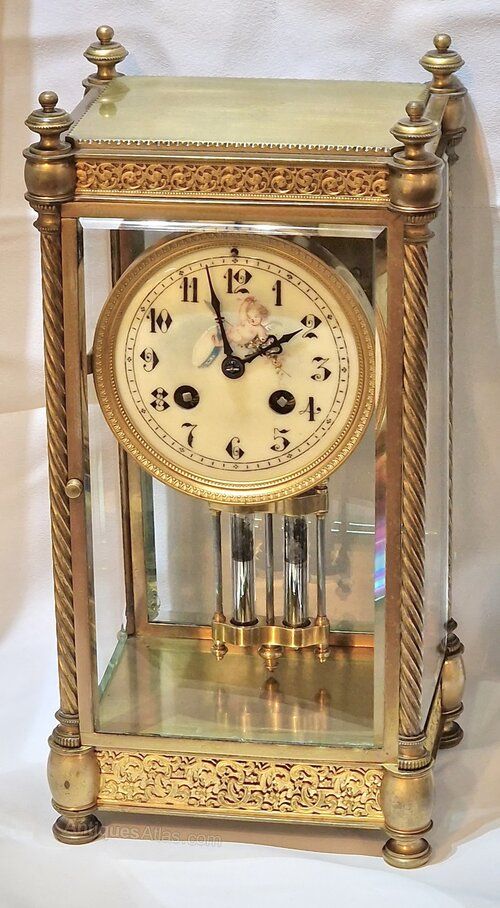
- A timepiece housed in a brass or gilt frame with glass panels on all four sides, allowing a clear view of the pendulum and internal movement.
- Ormolu
- Finely chopped high-karat gold applied to a bronze base metal through a mercury amalgamation process. This technique produces a rich golden decorative surface.
- Portico clock
- An architectural clock style featuring twin columns supporting a pediment above the dial, popular during the nineteenth century.
Victorian Pendulum Mantel Clock: Frequently Asked Questions
How do I wind a mechanical mantel clock?
Most mechanical clocks require a specialised key inserted into the winding holes on the dial face to tension the internal springs.
Care must be taken not to over-wind the mechanism, stopping gently when resistance increases to protect the spring.
Where should I place a heavy marble clock?
Heavy marble and slate clocks require a sturdy, level surface capable of supporting considerable weight without sagging.
Placing the clock securely on a solid mantelpiece or heavy sideboard prevents vibrations from disrupting the pendulum swing.
How do four-glass clocks differ from standard designs?
Four-glass clocks enclose the movement within transparent glass panels rather than an opaque wooden or stone case. This construction showcases the entire mechanical pendulum action from multiple angles.
Such pieces often feature delicate mercury or gridiron pendulums designed to compensate for temperature changes.
What does a garniture set include?
A garniture set pairs a main mantel clock with two matching decorative side ornaments, often urns or candelabra. These matched groupings created a balanced display on nineteenth-century drawing-room mantelpieces.
Materials typically match across all pieces in the set, utilising coordinated marble, bronze, or porcelain.
How can I tell a French movement from an English one?
French movements of this era frequently bear stamped foundry marks, such as those of Samuel Marti or Japy Frères, on the backplate. They often utilise distinct pendulum suspension springs and bell-striking arrangements.
English bracket clocks more commonly feature fusee chain drives and engraved backplates signed by specific domestic makers.