
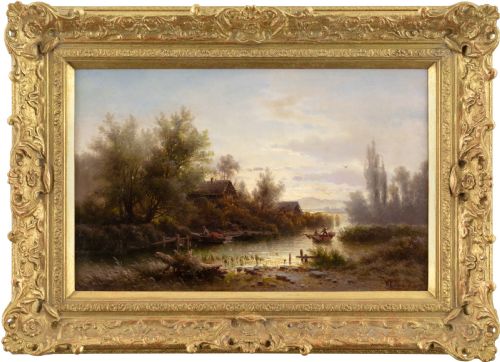
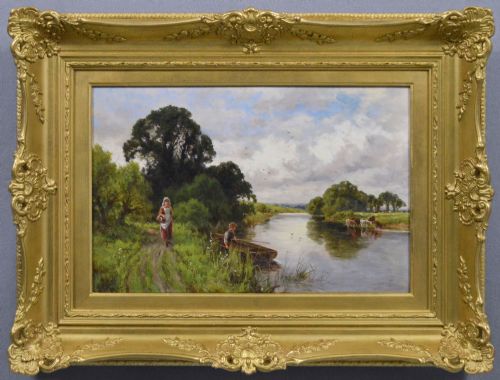
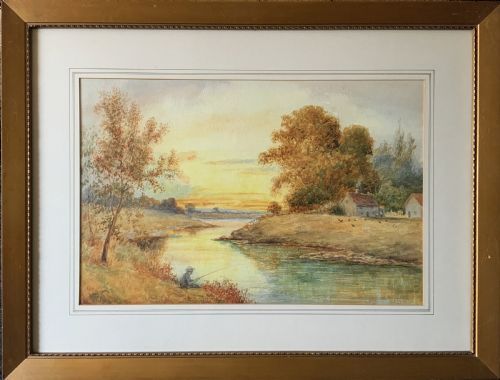
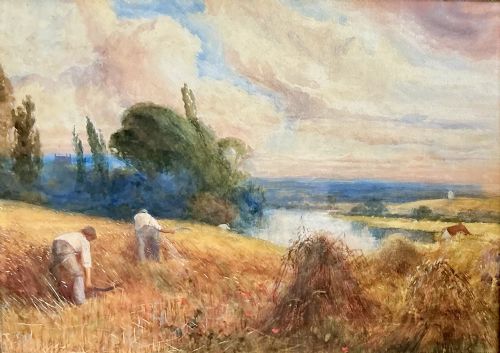


Victorian Pastoral River Painting
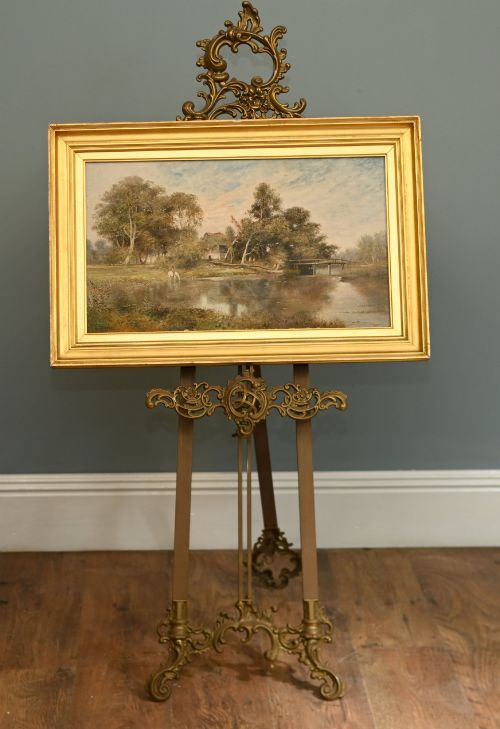
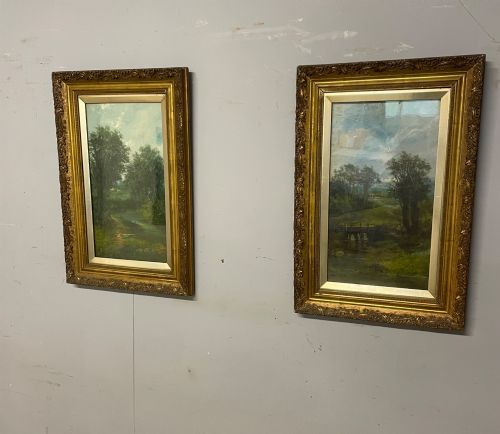
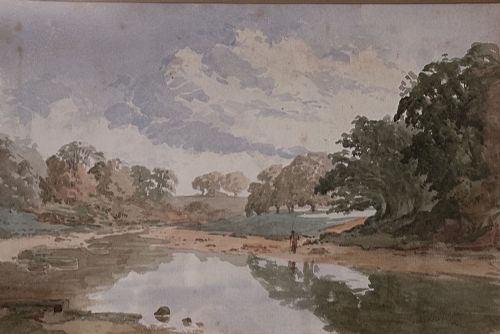
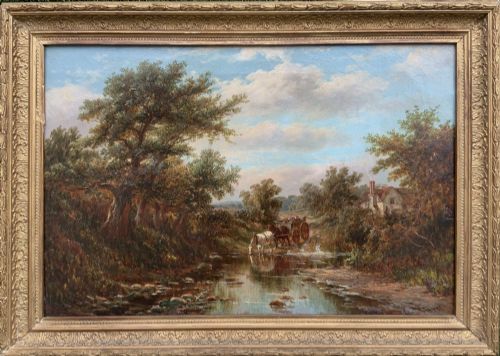
When you search for a victorian pastoral river painting, you find framed watercolours and oil canvases depicting rural waterways, cattle, and fishermen from the nineteenth century.
Victorian Pastoral River Painting
A victorian pastoral river painting captures the quiet rural life along British and Welsh waterways during the nineteenth century. These works frequently record figures fishing, herdsmen with cattle, or boats moored near familiar rivers such as the Thames, the Severn, and the Wye.
The compositions reflect dominant schools of British painting from the period, including Victorian Naturalism and the English School. Most examples present traditional countryside scenes executed either in oil on canvas or as detailed watercolours on paper.
Viewers encounter both intimate watercolours and large gallery oil paintings framed in original giltwood or gesso. These pieces represent a period when artists turned their attention away from grand historical subjects to celebrate the domestic landscape.
Materials and Techniques
Artists produced these works using oil paint on stretched canvas or fine watercolours on paper, mounted behind protective glass. Canvases received layers of pigment to build depth in water and foliage, while watercolours relied on translucent washes to capture daylight.
Frames played an integral role in presentation, utilising moulded gesso and carved gilt wood to complement the pictorial space. These surrounds frequently bear the original gilding applied by nineteenth-century framers.
Listings feature works from the nineteenth and early twentieth centuries, spanning oil on canvas, watercolours on paper, and carved giltwood frames.
Judging Quality and Execution
The distinction between standard works and master pieces lies in the handling of light, atmosphere, and natural movement. Superior examples render water reflections, changing weather, and animal anatomy with convincing precision rather than formulaic repetition.
The integration of figures and livestock into the broader landscape environment demonstrates the painter's skill. Stronger compositions balance the human or animal elements naturally within the riverbanks and valleys without crowding the view.
Albert Rieger·Henry H Parker·Frederick Hines·Cornelius Pearson·Thomas Baker of Leamington·Henry John Kinnaird·Alfred Augustus Glendening Jnr·William Sydney Cooper·Thomas Hunn·George Vicat Cole·Robert John Hammond·Sidney Richard Percy·Robert Thorne Waite·Walter J Watson·James Gunson Atkinson·Alfred Grey·Benjamin Williams Leader·Peter Deakin·Harold Lawes·Maud Raphael Jones·William Manners·Claude Cardon·Thomas Creswick·William Traies·Henry Sykes
The Victorian Pastoral River Painting Glossary
- Giltwood
- Wood carved and covered with a thin layer of gold leaf. This material frequently frames nineteenth-century paintings.
- Gesso
- A plaster mixture applied to wooden frames as a base for gilding. Victorian framers moulded this substance into elaborate decorative patterns.
- Watercolour
- A painting method where fine pigments are mixed with water-soluble binders and applied to paper. These works require glass protection.
- Oil on Canvas
- Pigments bound in drying oil applied to a woven fabric support. This technique allowed artists to build rich textures across the surface.
Victorian Pastoral River Painting: Frequently Asked Questions
What subjects appear in these paintings?
The compositions show British rivers, streams, and estuaries accompanied by domestic livestock and rural figures. Common activities include cattle watering, harvesting, and fishing from the banks.
Artists focused on familiar rural locations across England, Wales, and Scotland, capturing typical nineteenth-century country life.
How do I care for a Victorian oil painting?
Keep the canvas away from direct sunlight and steady temperature fluctuations to prevent cracking in the paint layers. Dust the surface gently with a soft, dry brush without applying pressure.
Ensure the work hangs in a stable environment away from excessive moisture.
Are watercolours different from oil paintings?
Watercolours use water-soluble pigments on paper and require glass framing to prevent moisture damage. Oil paintings use oil-bound pigments on canvas and remain unglazed.
Both mediums were widely practiced during the nineteenth century to record pastoral scenery.
How do I date a nineteenth-century landscape?
Examine the style of the brushwork, the stretcher construction, and any inscriptions written on the reverse of the canvas. Artist exhibition records and biographical dates also help narrow down the period.
Original gilt frames often provide helpful clues about the era of creation.