


Victorian Paste Drop Earrings
Victorian paste drop earrings catch the light with genuine period charm, offering the brilliant sparkle of high-craft glass without the cost of mined stones.
Victorian Paste Drop Earrings
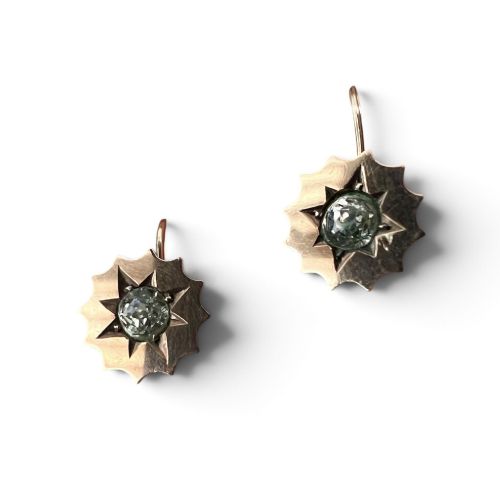
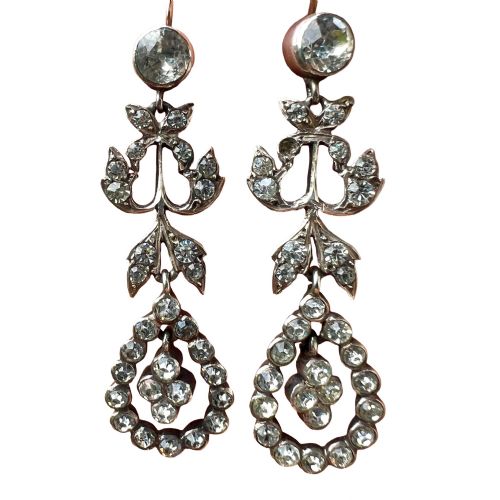
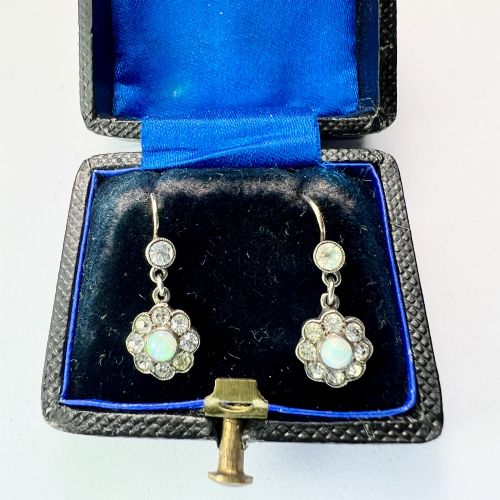
Victorian paste drop earrings encompass swinging designs made mostly during the 19th Century, alongside examples from the Edwardian period and the 1940s. These pieces take various forms including chandelier drops, tassels, and cushion-cut clusters, moving gracefully with every turn of the head.
The materials span silver, gold, 9ct gold, and 18ct gold cased settings, housing hand-faceted glass paste stones. Buyers encounter stones paired with opal, citrine, garnet, rock crystal, agate, and enamel across diverse styles like Victorian Etruscan Revival, Georgian, and Art Deco.
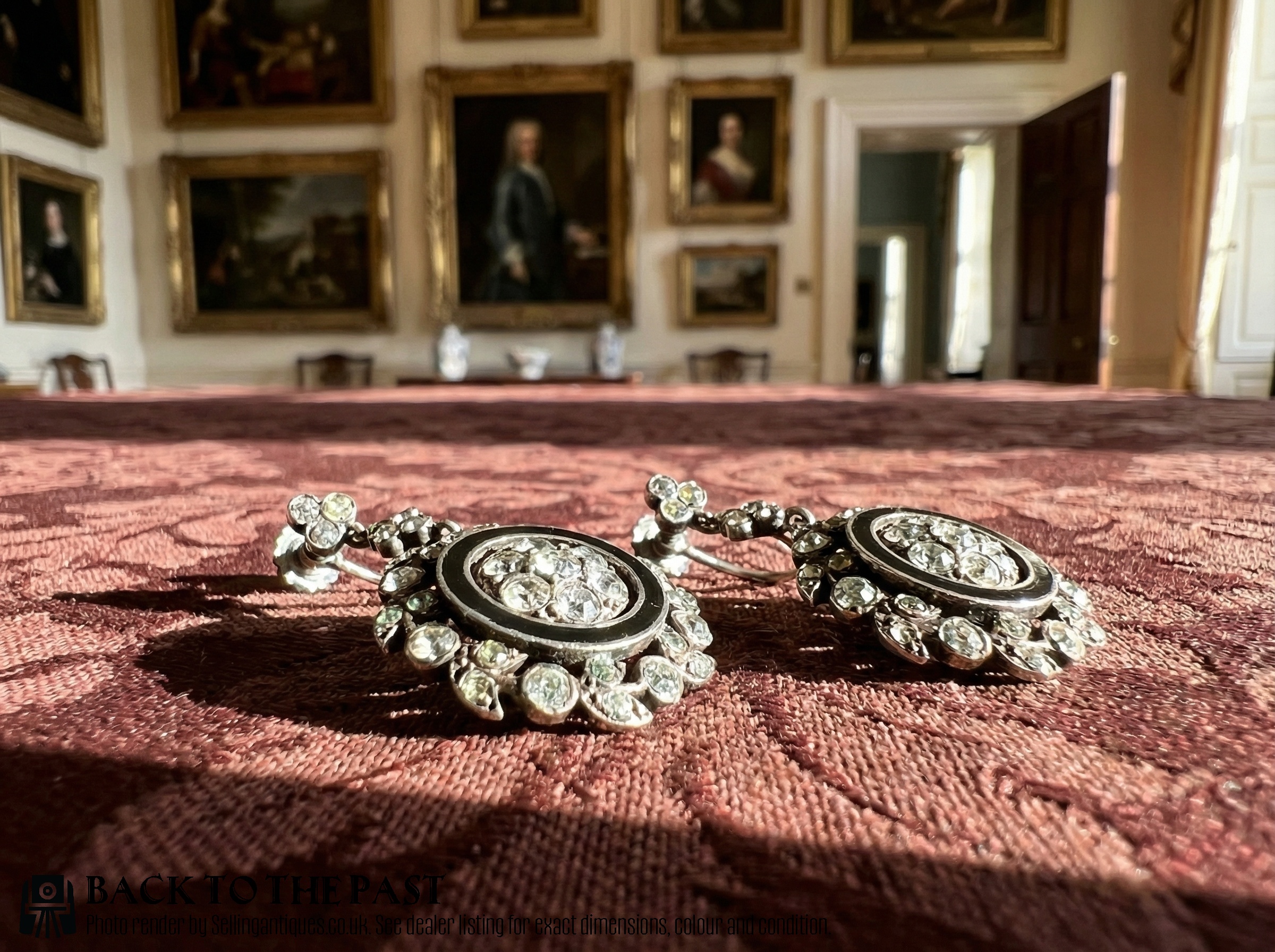
The selection ranges from screwback earrings to matching jewellery sets and demi parures featuring coordinated brooches and rings. Each piece reflects the decorative priorities of its specific manufacturing era while retaining the distinctive drop silhouette.
Materials and construction
Silversmiths and goldsmiths fashioned these drops using silver, gilt, and varying carats of gold, often combining metals to support complex designs. Stones were cut from glass paste and occasionally foiled at the back to intensify their reflection and colour.
Settings include intricate wirework, bezels, and cluster arrangements seen in Etruscan Revival and floral motifs. Screwback mechanisms and dangling articulated joints allowed the lower sections to sway independently.
Some paste stones sparkle so convincingly under candlelight that even experienced jewellers reach for a loupe.
Indicators of distinction
The precision of the stone-cutting and the clarity of the glass paste set finer examples apart from simpler production. Hand-faceted stones with crisp edges reflect light with greater brilliance than moulded glass alternatives.
The complexity of the metalwork, such as detailed granulation in Etruscan Revival pieces or substantial gold content, distinguishes standard work from exceptional output. Intact foiled backs and secure settings also elevate a piece's structural integrity.
Knoll and Pregizer
The Victorian Paste Drop Earrings Glossary
- Paste
- Hand-cut and polished lead glass used to imitate gemstones. It requires considerable skill to shape and facet.
- Foiled
- A thin sheet of metal placed beneath a paste stone to enhance its colour and reflectivity. This technique was standard in period jewellery.
- Demi parure
- A matched set of jewellery containing two or three pieces, commonly earrings paired with a brooch or ring. These sets share identical materials and design motifs.
- Screwback
- A fastening mechanism utilising a threaded screw to secure the earring without requiring pierced ears. This closure type became prominent in the 19th Century.
Victorian Paste Drop Earrings: Frequently Asked Questions
What is paste jewellery?
Paste is a heavy, high-refractive-index glass that craftsmen hand-cut and polish to replicate precious gemstones. It represents an art form in its own right rather than a mere simulation.
Victorian jewellers valued paste for its ability to hold vivid colours and sharp facets, creating brilliant decorative effects in earrings and brooches.
How do I care for antique earrings?
These pieces require gentle handling, avoiding harsh chemical dips or ultrasonic cleaners that can damage foiled backs or delicate metalwork. Clean them gently with a soft, dry cloth.
Store earrings individually in lined boxes to prevent the paste stones from scratching against other items in your collection.
Are screwback earrings original?
Screwbacks appear frequently on 19th-century and Edwardian earrings, offering a secure fit for non-pierced lobes before modern clips were common.
Their presence aligns with the periods recorded in the listings and matches the technological developments of the era.
How do I date these earrings?
Dating relies on examining the metal alloys, fastening types, and stylistic indicators such as Etruscan Revival motifs or Art Deco geometry. Silver and gold standards also shift across the Victorian and Edwardian periods.
Comparing the cut of the paste stones and the construction of the drop fittings helps place the piece within its historical decade.