



Victorian Paper Box
A victorian paper box gathers desktop items or letters with period craftsmanship, bringing practical organisation to a study.
Victorian Paper Box
A victorian paper box encompasses desk accessories, stationery boxes, letter racks, and decorative boxes originating largely from the nineteenth century. Buyers searching this phrase encounter desk tidies, jewellery boxes, tea caddies, and waste paper bins alongside traditional stationery caskets.
The majority of pieces on this page stem from the Victorian period, supplemented by Georgian, Edwardian, and nineteenth century French examples. Materials vary from papier-mâché and wood such as rosewood, oak, and mahogany to brass, metal, gold leaf, and fabric.
Forms serve specific desk and household functions, including wall pockets, newspaper stands, and stamp boxes. These functional containers reflect the domestic organisation habits of their respective eras.
Materials and Construction
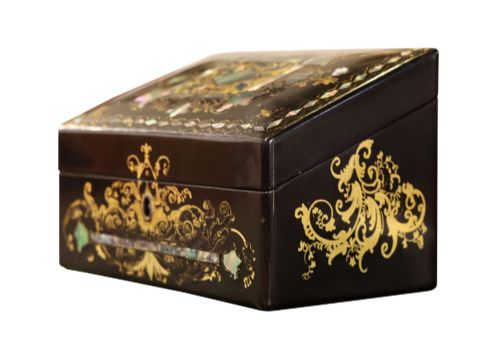
Construction relies heavily on timber and papier-mâché, with woods like mahogany, oak, coromandel, and rosewood forming structural boxes and desks tidies. Papier-mâché items utilise pressed paper pulp finished with lacquer and gold leaf decoration.
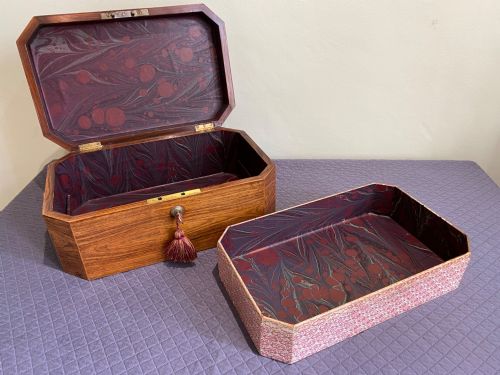
Metal components such as brass appear in mounts, hinges, stands, and hardware. Fabric and paper linings often interiorise jewellery boxes and stationery caskets, whilst painted surfaces finish waste paper bins and tea canisters.
Victorian Paper Box Retail Price Guide 2026
Typical asking prices for victorian paper box among the pieces listed under this phrase on Sellingantiques today, from the lower quarter to the upper quarter. They describe what is for sale here now, not the wider market.
Listings feature items spanning the Georgian, Victorian, and Edwardian periods, constructed from papier-mâché, brass, and woods such as rosewood and oak.
Assessing Quality and Execution
Quality separates through the precision of cabinetwork in wooden pieces like mahogany and oak desk boxes, particularly where secret drawers and fitted interiors operate smoothly. Papier-mâché items demonstrate quality via the durability of the lacquer and the crispness of gold leaf application.
The choice of materials dictates the tier of the piece, with exotic timbers like coromandel and rosewood sitting alongside finely painted papier-mâché letter wall pockets and tea caddies. Maker attribution, such as work by Jennens and Bettridge, distinguishes standard production from notable workshop output.
Jennens and Bettridge
The Victorian Paper Box Glossary
- Papier-mâché
- A composite material made from paper pulp or reinforced paper bound with glue, moulded and dried into rigid forms for boxes and wall pockets.
- Stationery Casket
- A specialised box designed to hold writing paper, envelopes, and related correspondence items on a desk.
- Desk Tidy
- A functional accessory intended to organise writing implements, letters, and small office items.
- Coromandel
- A dense, heavily figured timber imported from Asia, prized for its dark grain and used in high-end nineteenth-century caskets.
- Tea Caddy
- A container designed originally to store loose tea leaves, often constructed from papier-mâché or fine woods with fitted interiors.
Victorian Paper Box: Frequently Asked Questions
What is a stationery box used for?
A stationery box organises writing paper, envelopes, and small writing tools upon a desk or writing table. These containers keep correspondence materials tidy and accessible.
Interior compartments separate different paper sizes and envelopes, preventing creases and disorder in a study.
What woods were used for desk boxes?
Desk boxes and tidies utilise a range of timbers including mahogany, oak, rosewood, and coromandel. Each wood offers distinct grain patterns and colouration.
Hardwoods provided the structural durability required for daily desktop use and housing secret drawers.
Where were letter wall pockets placed?
Letter wall pockets hung on walls in studies, halls, or drawing rooms to hold incoming and outgoing post. Their vertical format saved valuable surface space on desks.
Pairs of pockets allowed households to sort correspondence systematically.