
Victorian Overmantel
A victorian overmantel brings scale and a brilliant sweep of gilded reflection directly to the hearth, anchoring a room with nineteenth-century presence.
Victorian Overmantel
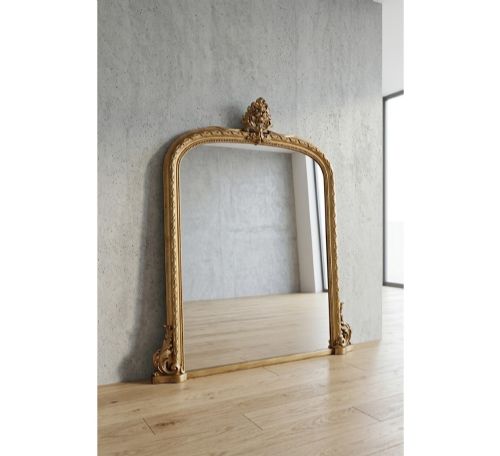
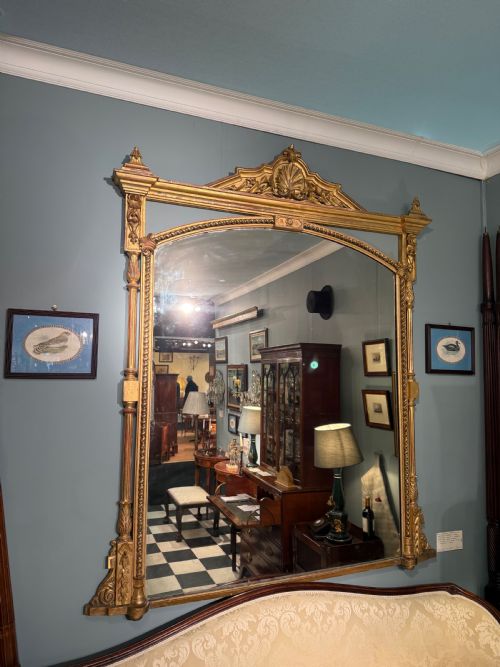
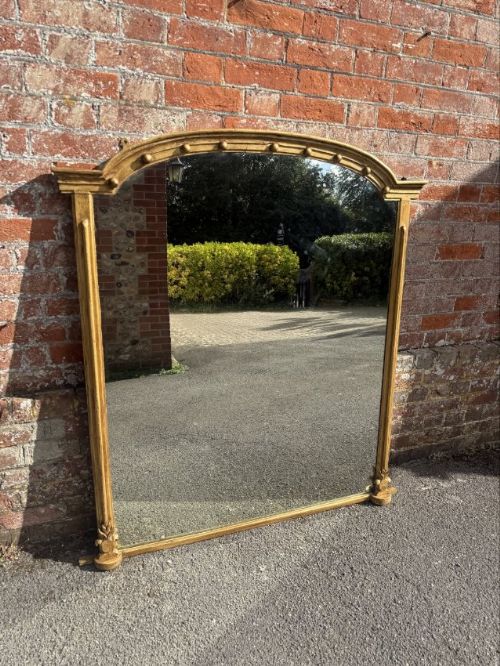
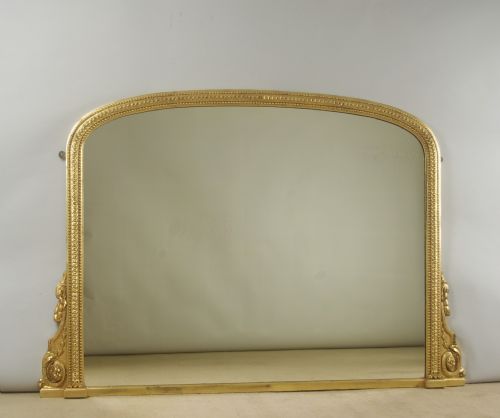
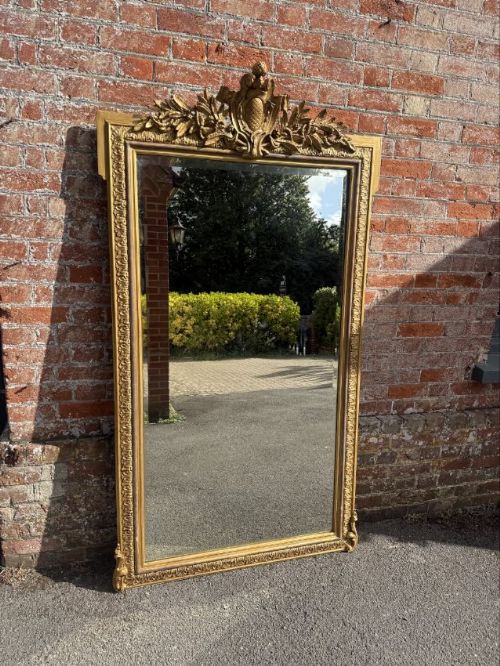
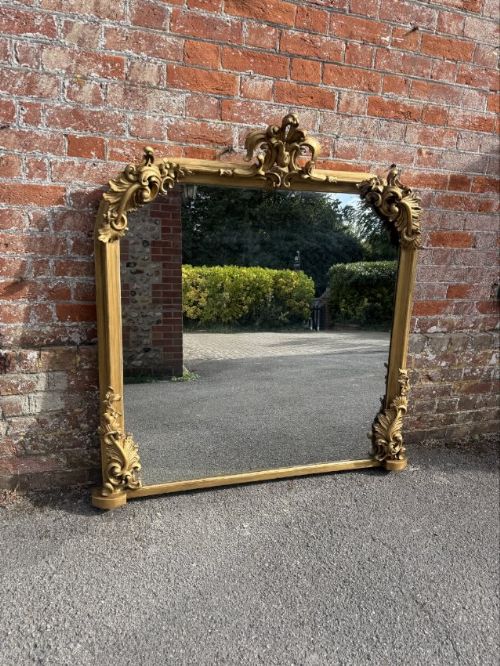
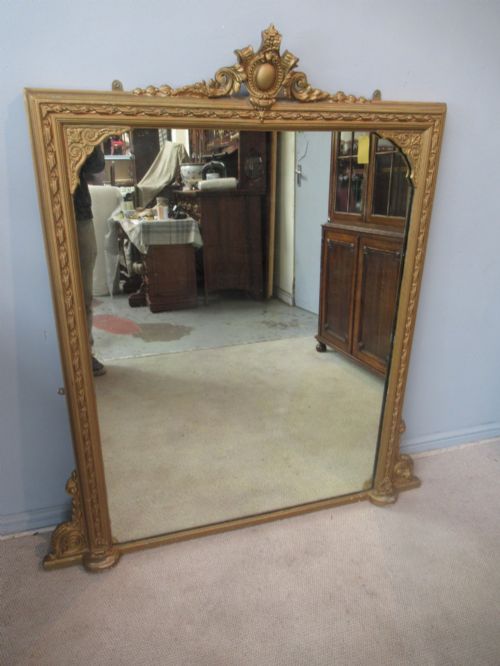
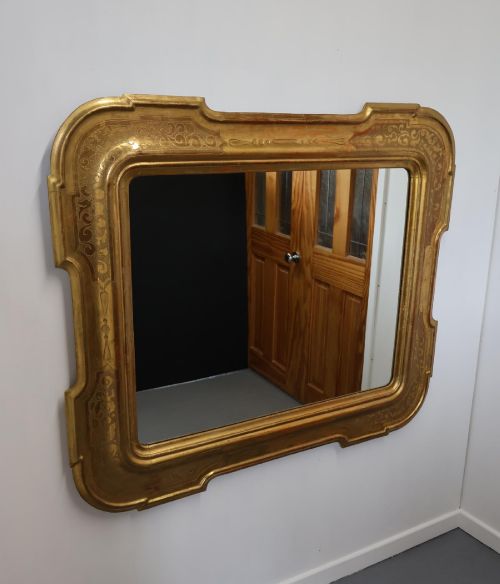
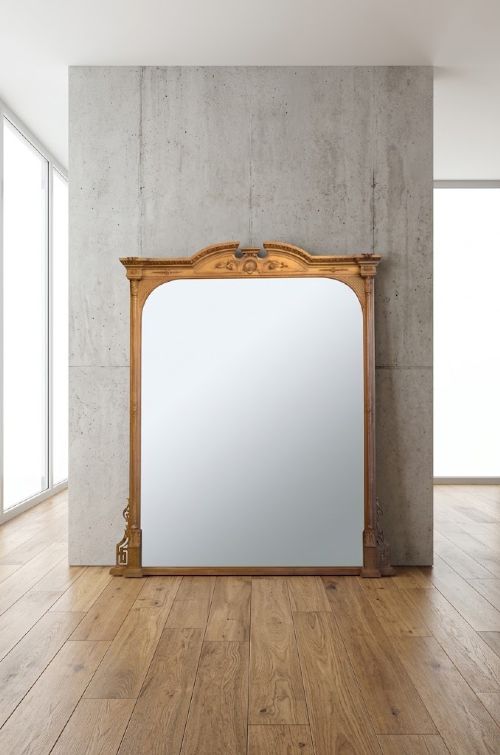
When you search for a victorian overmantel, you are looking at large, wide mirrors designed specifically to sit above a fireplace mantelpiece. The pieces on this page span the nineteenth century, including specific decades from the 1850s through to the 1890s, alongside earlier Regency influences.
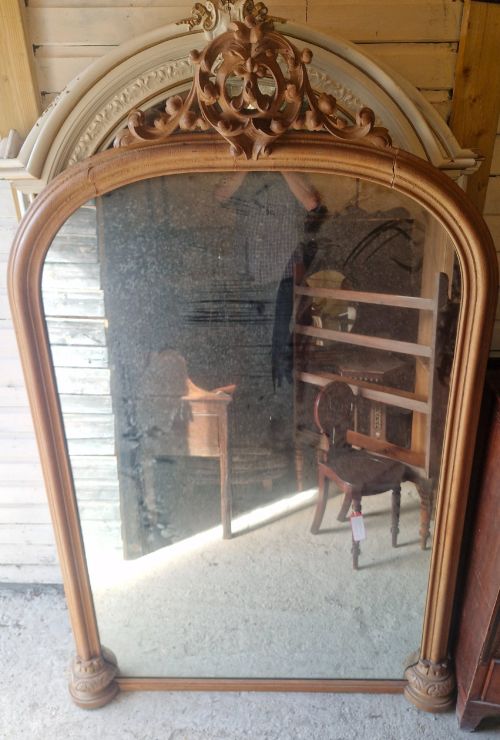
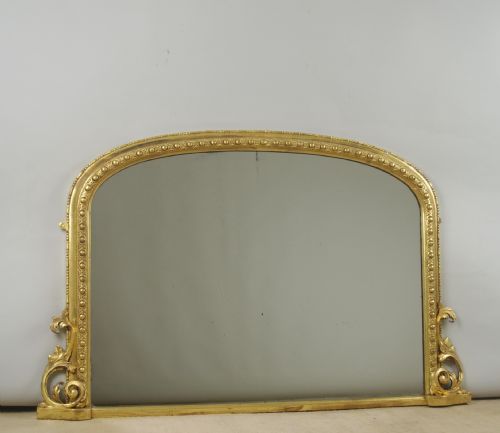
The most common version met here is a large arched top mirror framed in gilt wood, gesso, and composition, often featuring ornate carved details. These items functioned to bounce light around candle-lit and gas-lit parlours while visually expanding the proportions of the hearth.
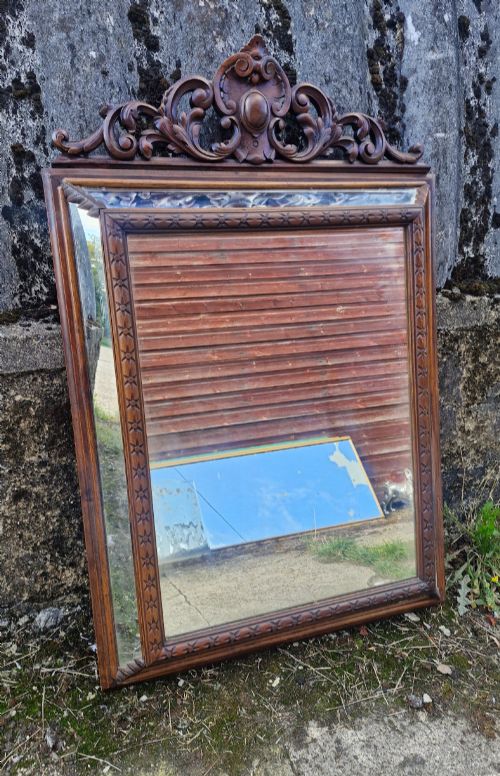
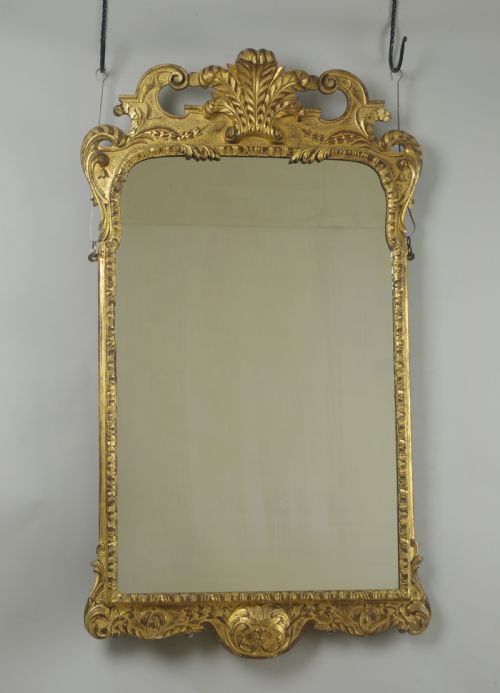
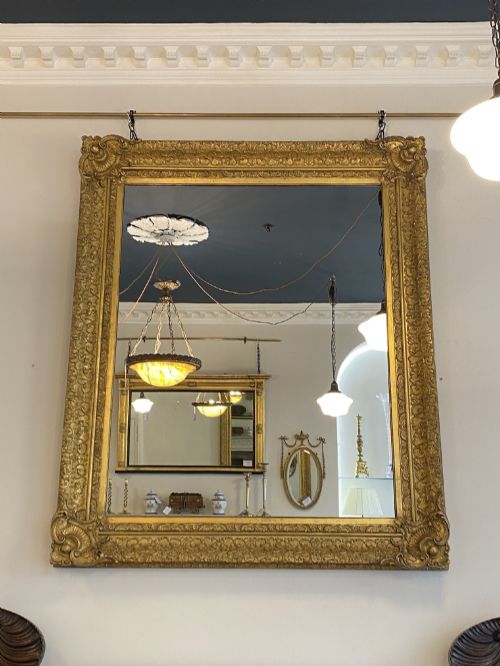
Originating predominantly from English and French workshops, these architectural mirrors draw on styles such as French Rococo Revival and French Second Empire. They vary from restrained wooden frames to monumental pieces mounted with porcelain or heavy carved crestings.
Materials and construction
Makers built these frames using a carcase of timber, such as oak or pine, which provided the structural rigidity required for such heavy wall pieces. Over this wooden foundation, artisans applied layers of gesso and gold leaf or composition mouldings to create crisp, decorative reliefs.
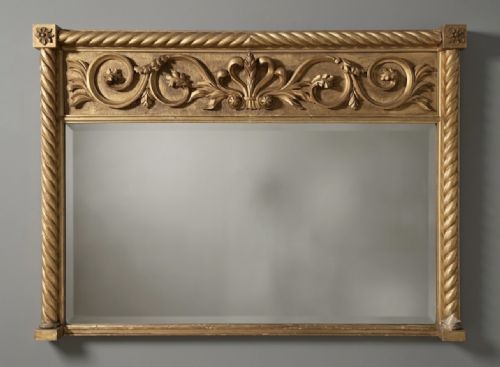
The decorative styles utilise carved wood and intricate plaster work, often incorporating rope twist borders or scrolling foliage characteristic of the period. Silver gilt and white painted finishes also appear, alongside alternative timbers like satin birch.
Mirror glass of the era was heavy and thick, fitted into the rebate of the frame and secured from behind. The silvering process often shows subtle age spotting, which confirms the historic nature of the glass plate.
Listings span the nineteenth century, with materials including giltwood, gesso, satin birch, and oak across various revival styles.
Distinctions in quality
The standard of a victorian overmantel depends heavily on the crispness of the gesso moulding and the depth of the carved wood beneath the gilding. High-tier examples retain deep, hand-carved relief work where lower-grade pieces rely entirely on mass-produced composition ornament pressed into place.
Proportion and scale dictate the visual success of the piece, with finer items maintaining harmonious balance across exceptionally wide or tall formats. The survival of the original gilding and the clarity of the heavy mirror plate also separate standard examples from exceptional statements of the craft.
The Victorian Overmantel Glossary
- Gesso
- A plaster mix applied to a wooden frame as a smooth base for gilding. It allows for intricate moulded details to be built up before gold leaf is laid.
- Giltwood
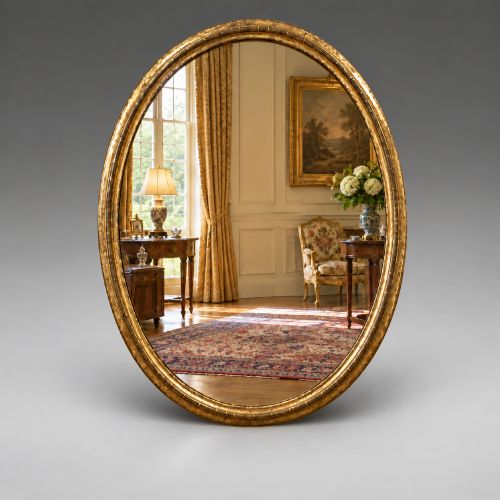
- Timber that has been coated with gold leaf. It gives a warm, reflective metallic sheen that catches fireplace illumination.
- Composition
- A mixture of whiting, resin, linseed oil and glue pressed into moulds. Makers used this material to produce rapid decorative ornaments for frames.
- Overmantel
- A mirror or painting specifically proportioned to hang on the wall directly above a mantelpiece. These forms dominate nineteenth-century domestic interior decoration.
Victorian Overmantel: Frequently Asked Questions
How do I hang a heavy overmantel?
These mirrors carry substantial weight due to their thick timber frames and heavy glass plates. They require secure fixing directly into masonry walls or substantial wall studs using rated brackets.
Professional installation is strongly recommended to ensure the piece is safely anchored above the fireplace hearth.
Were these mirrors made only for fireplaces?
While specifically proportioned to sit above mantelpieces, many examples also function as standard wall mirrors or pier glass. Their wide format makes them effective for placing between windows to reflect natural light.
Their primary historic role remained tied to the principal reception room fireplace.
How do I clean nineteenth-century gilt frames?
Historic gilt surfaces require gentle maintenance using a soft, dry brush to remove dust. Moisture and modern chemical cleaners will strip the delicate gold leaf and gesso layers.
Take care not to touch the exposed metallic leaf directly with bare hands, as natural oils can damage the finish over time.
Can I replace the original mirror glass?
Original mirror glass often displays foxing, dark spots, and wavy reflections that collectors value as proof of age. Replacing the glass removes the historic character integral to these antique pieces.
If the glass is dangerously cracked, consult a specialist restorer who understands period mirror plate installation.