

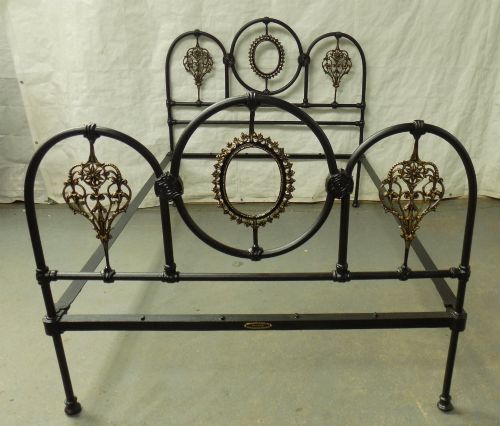
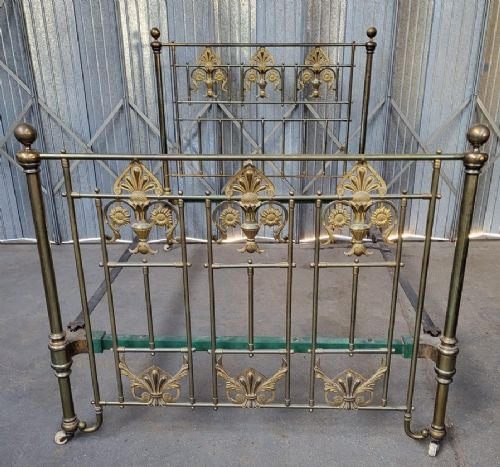


Victorian Ornate Brass Bed
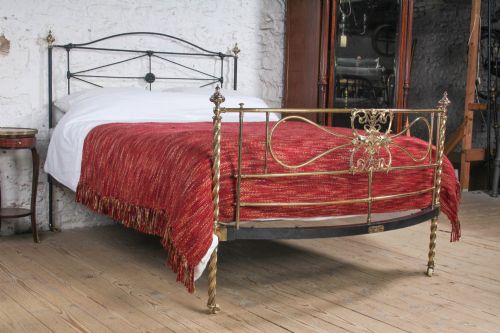
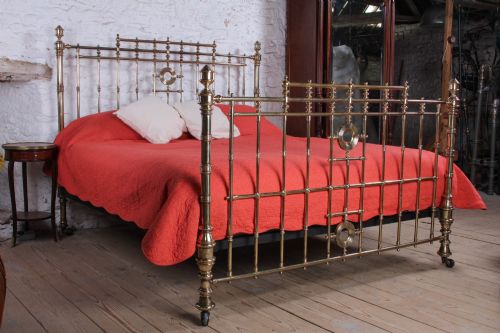
These robust victorian ornate brass bed frames combine substantial metalwork with elaborate castings, offering a commanding centrepiece for a period bedroom.
Victorian Ornate Brass Bed
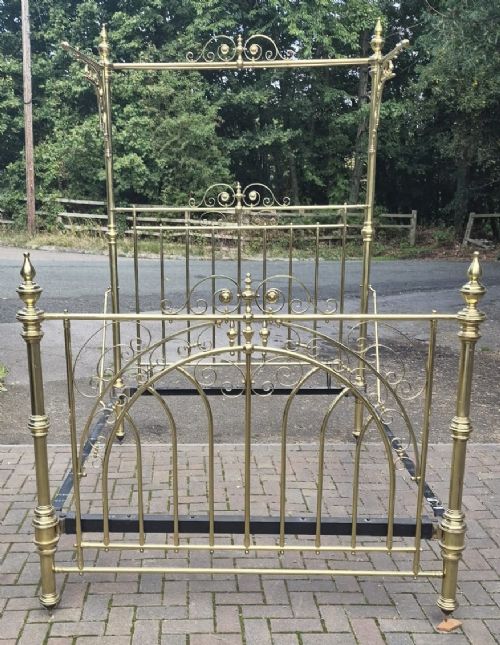
A victorian ornate brass bed brings together substantial metal framing and decorative cast embellishments, typically encountered in double, king, and super king sizes. The selection spans standard bedsteads alongside more architectural half tester and four poster configurations.
Makers and workshops of the nineteenth century produced these frames utilising durable brass tubing combined with iron components for structural stability. Styles range from straightforward Victorian patterns through to Aesthetic Movement designs and French Belle Epoque influences.
Buyers frequently select these substantial frames to anchor a traditional bedroom scheme, appreciating the mix of gleaming metalwork and robust construction. The period output encompasses simpler double frames as well as exhibition quality pieces featuring intricate detailing.
Construction methods and materials
Makers constructed these bedsteads using heavy brass tubing mounted onto strong iron or cast iron internal frames to ensure stability. Decorative elements such as collars, mounts, and finials were typically cast separately and applied to the main structure.
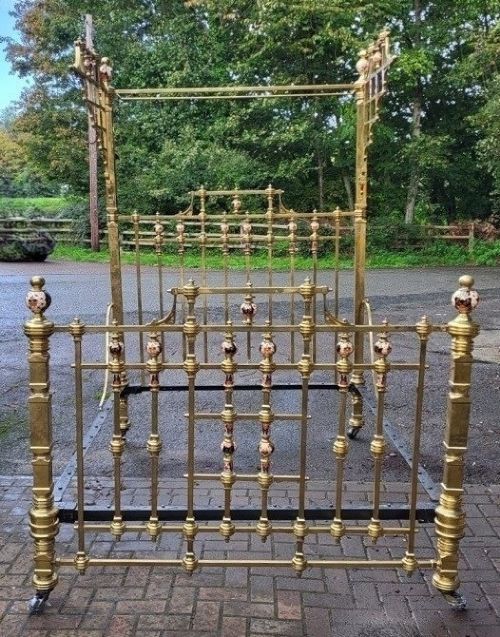
Finishes were achieved through polished or lacquered brass surfaces, often paired with contrasting iron side rails and structural supports. Selected pieces also incorporated complementary materials such as maple timber elements or ceramic components.
Listings feature periods from the seventeenth century through to the nineteenth century, with Victorian dates predominating.
Assessing quality and proportion
Quality in these beds rests on the weight of the metalwork, the crispness of the cast brass ornamentation, and the overall architectural proportion. Finer examples feature heavier gauges of brass tubing and intricate, deeply chased decorative castings rather than simple pressed sheet metal.
The presence of renowned makers or specialised forms like half testers and four posters elevates a piece above standard domestic bedsteads. Integrity of the original construction and the survival of all primary brass components distinguish superior examples.
Maple & Co·RW Winfield
The Victorian Ornate Brass Bed Glossary
- Bedstead
- A framework of a bed upon which the mattress and bedding are supported. This term specifically refers to the complete structural frame including headboard, footboard, and rails.
- Half Tester
- A canopy bed where the tester extends only partway over the head of the bed rather than covering its entire length. It typically suspends drapery above the pillow area.
- Cast Iron
- An iron-carbon alloy poured into a mould to create complex decorative shapes. It is frequently utilised in these frames alongside brass for added structural rigidity.
- Aesthetic Movement
- A nineteenth century design style emphasising art for art's sake and incorporating diverse decorative motifs. Pieces from this movement often display refined linear details and stylized ornamentation.
- Four Poster
- A bed featuring four vertical columns that support an upper tester or canopy frame. These grand structures provide a commanding vertical presence in large bedrooms.
Victorian Ornate Brass Bed: Frequently Asked Questions
How do I fit a modern mattress?
Most nineteenth century bedsteads accommodate standard modern mattress sizes with minor adjustments to the internal support rails. Custom slats or modern base units can be dropped securely within the existing iron frame.
It remains sensible to verify the exact internal length and width dimensions before sourcing a mattress. Professional consultation ensures the bedding platform sits at the correct height relative to the decorative footboard.
Are these beds easy to assemble?
These frames typically utilise standard side rail cotter pin or wedge joints that slot together without complex tools. Two people can easily dismantle or reassemble the headboard, footboard, and heavy side rails.
Care should be taken when handling large brass and iron components to protect finished surfaces. Regular checks of the joints keep the structure rigid and stable during daily use.
How should I clean the brass?
Maintenance generally requires only gentle dusting with a soft cloth to prevent the accumulation of airborne grime. Heavy abrasive cleaners should be avoided, particularly on lacquered or patinated historical surfaces.
If the metal lacks a protective coating, a specialised non-abrasive brass polish applied sparingly restores the original lustre. Preserving the natural ageing often enhances the character of nineteenth century metalwork.
Did iron and brass serve different structural roles?
Brass was selected primarily for its bright appearance and was applied to visible tubular posts and decorative castings. Iron provided the hidden internal strength required to support heavy bedding and occupants safely.
This combination allowed makers to achieve a luxurious visual presentation without compromising structural integrity. The contrasting dark iron and gleaming brass remained a hallmark of quality nineteenth century production.