


Victorian Opal Pin
A victorian opal pin brings together colourful fire and period gold work, offering a wearable piece of history.
Victorian Opal Pin
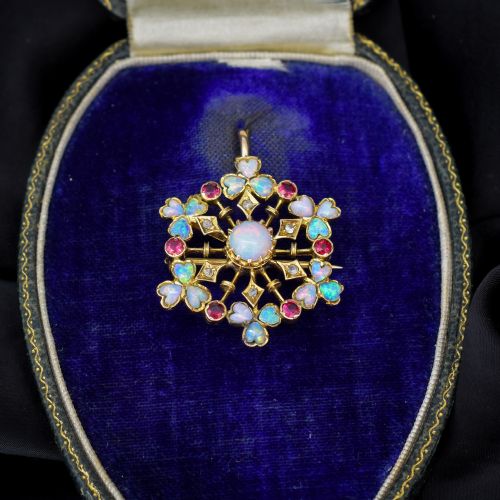
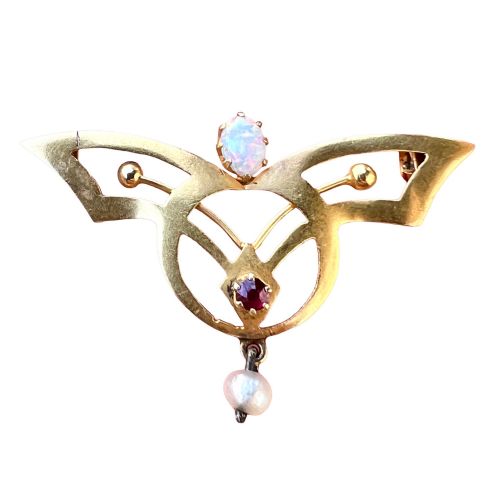
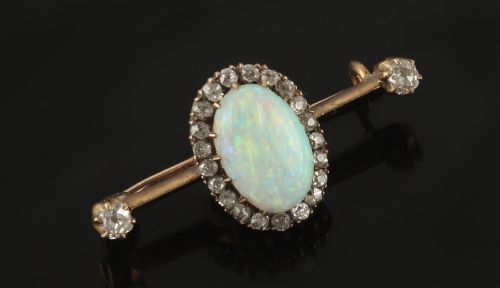
When you search for a victorian opal pin, you are looking at small jewels designed to fasten garments, ranging from simple bar brooches to elaborate pendant brooches. These pieces span the nineteenth century and into the early twentieth century, taking forms such as flowers, clovers, and hearts.
The versions you are most likely to meet on this page combine natural opals with yellow gold, rose gold, or higher carat gold settings. Many examples incorporate supporting stones like diamonds, rubies, or pearls to frame the central play of colour.
Makers of this era also produced dual-purpose items that function as both a brooch and a pendant, giving versatility to the design. The origins and periods reflect both strict Victorian work and slightly later Edwardian or Art Nouveau influences.
How they were made
The foundation of these jewels relies on worked gold, utilising 9ct gold, 9ct rose gold, 18ct gold, and 15ct yellow gold to shape bar mounts, settings, and pins. Goldsmiths shaped these metals by hand to house fragile gemstones securely.
Opals are set alongside diamonds, rubies, and pearls, often cut into cabochons to maximise the shifting spectral colours of the stone. Techniques include closed or open settings designed to catch and reflect light through the play of colour.
Assay marks occasionally stamp the metal, linking pieces to specific towns like Chester, while hinged pins and secure c-clasps complete the functional structure of each brooch.
Some Victorian butterflies managed to land firmly on lapels and stay there as permanent multi-gem companions.
What varies in quality
The quality of a victorian opal pin rests heavily on the optical liveliness of the opal itself, where vibrant flashes of green, red, and blue distinguish superior stones from muted examples. The depth of colour and the absence of dull dead spots dictate the visual impact.
Gold weight and purity also separate standard production from finer masterworks, with higher carat gold or detailed multi-gem clusters showing greater ambition in design. The integration of supporting diamonds and rubies adds to the refinement of the piece.
Original fitted boxes and intact convertible mechanisms, allowing a brooch to double as a pendant, elevate the desirability and historical completeness of the jewel.
The Victorian Opal Pin Glossary
- Bar brooch
- A slender horizontal metal rod that forms the primary structure of the pin. These often feature a central cluster or gemstone.
- Cabochon
- A gemstone with a smooth, rounded dome surface rather than faceted edges. This cut is standard for opals to display their internal colour play.
- Pendant brooch
- A convertible jewel equipped with both a pin fitting and a hidden loop. This allows the piece to be worn on clothing or suspended from a chain.
- Assay mark
- A stamp or series of marks indicating the purity of the precious metal. These hallmarks verify the gold content against official standards.
- Play of colour
- The optical phenomenon where spectral colours shift as the stone moves under light. This internal flashing is the primary aesthetic trait of quality opals.
Victorian Opal Pin: Frequently Asked Questions
Can I wear a victorian opal pin every day?
Opals possess a moderate hardness and require careful wear to avoid scratching or heavy impacts. Selecting a secure spot on thicker fabric helps protect the pin stem and setting.
Storing the piece in a dedicated box when not being worn prevents accidental damage from other jewellery items.
How do I clean a victorian opal pin?
Gentle maintenance involves wiping the metal and stone with a soft, dry microfibre cloth. Avoid harsh chemical dips, ultrasonic cleaners, or prolonged soaking in water.
Many antique opals are sensitive to sudden temperature changes or moisture, so keeping them dry preserves their structural integrity.
Are these pins made of solid opal?
The pieces listed here feature natural solid opals alongside occasional opaline glass or doublet variations seen in the wider archive. Examining the side profile helps reveal the natural composition of the stone.
Solid opals display a continuous material structure without man-made joining lines visible beneath magnification.
How can I tell the period of the pin?
Stylistic cues such as floral motifs, symmetrical bar layouts, and distinct gold colours point towards Victorian, Edwardian, or Art Nouveau eras. Hallmarks and assay marks provide official confirmation of the metal standard and working period.
Comparing the clasp type and pin mechanism alongside documented designs helps narrow down the decade of manufacture.