

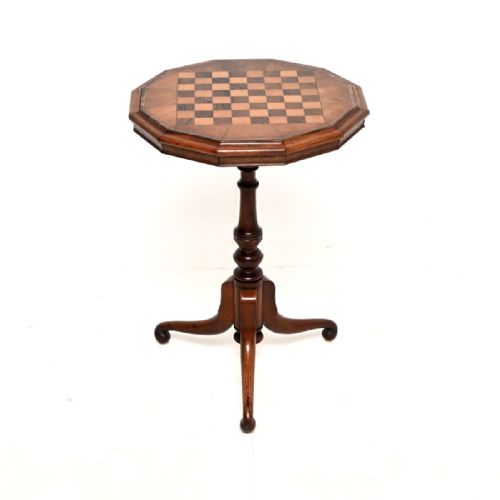


Victorian Octagonal Work Table
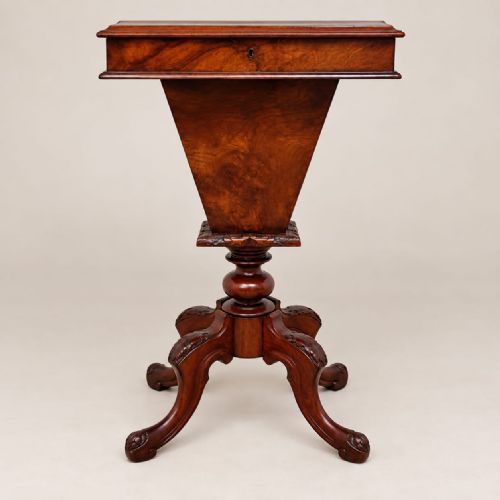
A victorian octagonal work table is a clever sewing piece combining a fitted top and a tapered compartment, built for domestic craft.
Victorian Octagonal Work Table
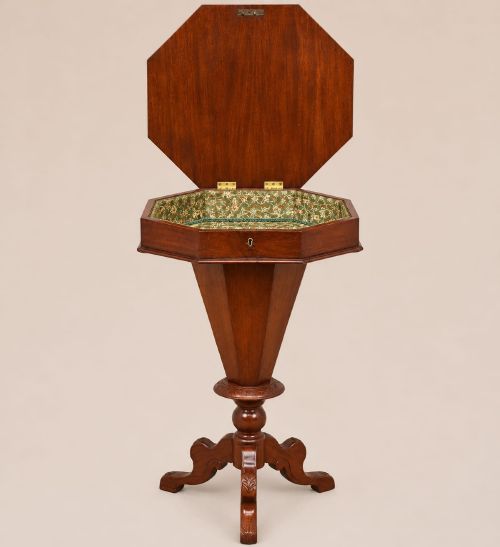
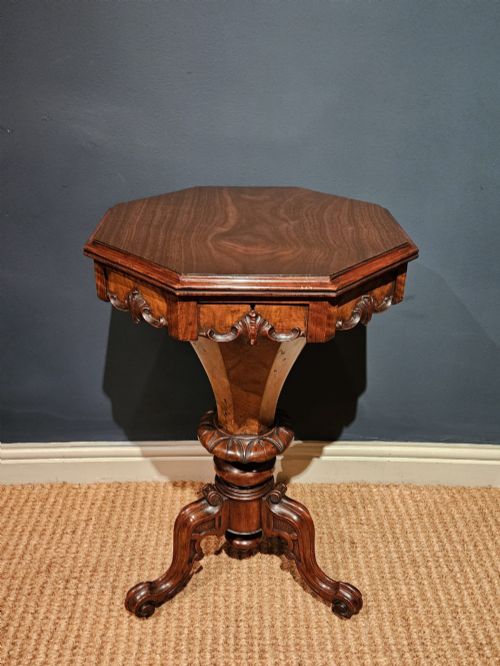
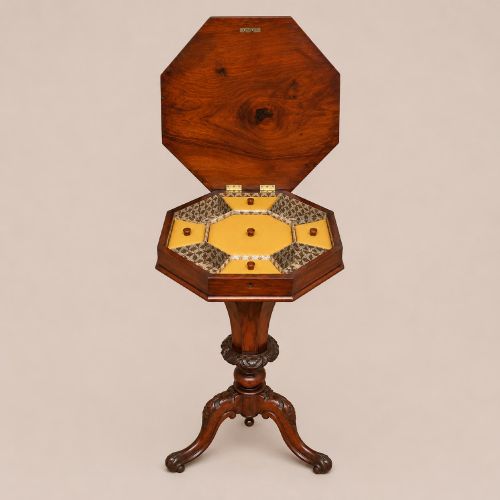
A victorian octagonal work table is a multi-functional piece designed for sewing, needlework, and games, appearing frequently in walnut, rosewood, and mahogany across this selection. These tables typically feature a hinged octagonal lid opening to reveal fitted compartments and a fabric storage bag beneath, supported by pillar and tripod bases.
The forms span from standard sewing tables to trumpet workboxes and occasional chess tables, largely originating in the Victorian period alongside occasional Regency and William IV examples. They served as refined parlour furniture where women could keep their needlework organised while entertaining.
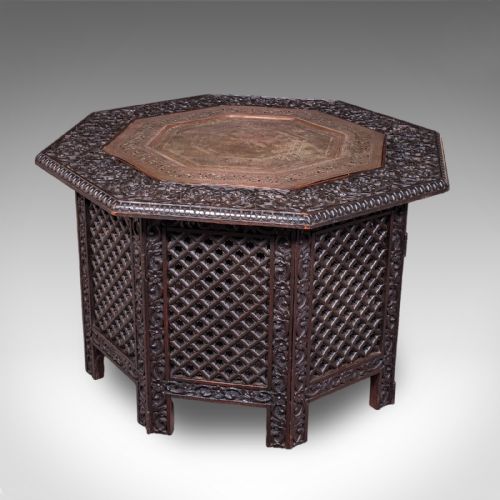
Buyers will encounter various regional expressions within these listings, including Irish Killarney Ware in arbutus wood and Anglo-Indian variants with copper insets. The core domestic form remains consistent, offering a practical surface and hidden storage within a compact geometric footprint.
How They Were Made
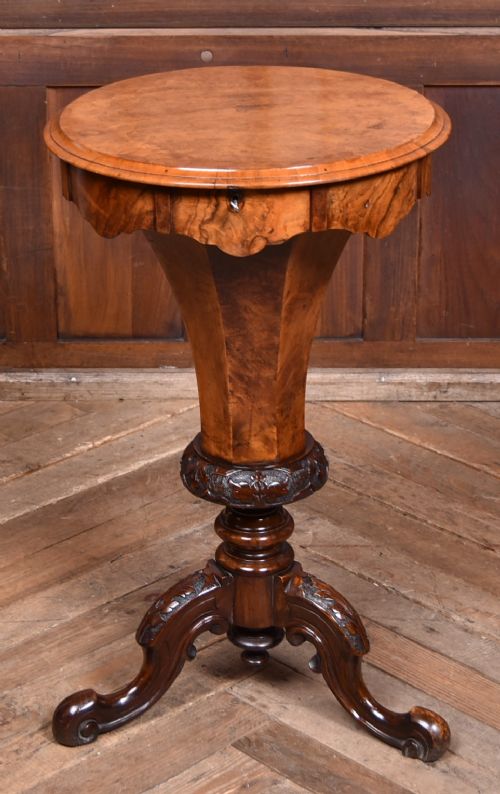
Cabinet makers utilised dense hardwoods such as walnut, rosewood, and mahogany, often selecting burr walnut veneers for rich surface figuring. Boxwood and satinwood stringing frequently outlined the geometric panels and lids.
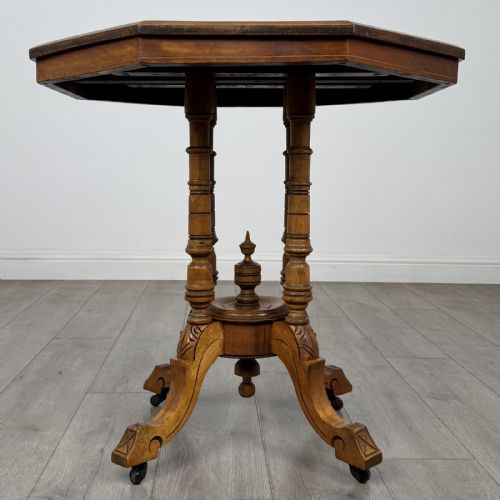
Construction involved stable tripod pillar supports and turned pedestals, carrying the weight of the octagonal boxes and internal fitted trays. Interior compartments required precise miniature joinery to organise thread, needles, and sewing tools.
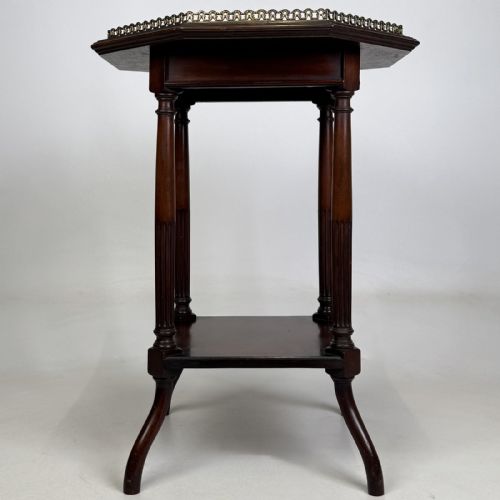
Surface decoration incorporated delicate wood inlay, marquetry, and occasional brass galleries, combining structural timber with ornamental detail suited to the nineteenth-century drawing room.
Victorian Octagonal Work Table Retail Price Guide 2026
Typical asking prices for victorian octagonal work table among the pieces listed under this phrase on Sellingantiques today, from the lower quarter to the upper quarter. They describe what is for sale here now, not the wider market.
Listings feature walnut, rosewood, mahogany, and arbutus wood across Victorian, Regency, and William IV periods.
What Varies in Quality
Quality depends upon the choice of timber and the precision of the marquetry or stringing inlay, with burr veneers and contrasting satinwood accents commanding greater visual depth. The crispness of the turned pillar and the stability of the tripod base dictate the structural integrity of the piece.
Internal arrangement determines the utilitarian value, with fully fitted compartments and intact original fabric sewing bags representing higher craftsmanship than stripped interiors. Regional variations, such as Irish Killarney Ware or specialised chess tops, introduce distinct decorative standards that elevate individual pieces.
The Victorian Octagonal Work Table Glossary
- Trumpet workbox
- A sewing table featuring a flared, trumpet-shaped body that widens from the stem toward the octagonal lid. This design provides a deep interior volume for wools and textiles.
- Marquetry
- The art of applying decorative pieces of veneer to a structure to form intricate patterns and pictures. It is commonly seen in floral or geometric motifs across Victorian tabletops.
- Killarney Ware
- A distinctive form of nineteenth-century Irish turned woodwork utilising local timbers like arbutus and yew. Pieces are frequently decorated with marquetry views or shamrock motifs.
- Stringing
- A narrow strip of contrasting wood inlay used to outline panels, borders, and edges on furniture. It highlights the geometric form of the octagonal top.
- Tripod base
- A three-legged support system connected to a central column, providing stable footing on uneven nineteenth-century floorboards.
Victorian Octagonal Work Table: Frequently Asked Questions
What is inside a work table?
Inside an octagonal work table you typically find a series of small wooden compartments, lidded boxes, and pin cushions designed to hold sewing implements. Below this shallow tray, a hanging fabric bag or structured box stores wools, fabrics, and ongoing needlework projects.
These internal fittings vary in complexity, with finer examples retaining original ivory or bone winders and partitioned trays for an organised workspace.
How were these tables used?
Victorian households utilised these tables primarily for sewing, embroidery, and mending during the afternoon and evening hours. The flat octagonal top also permitted them to function as occasional tea tables or side tables when closed.
Many incorporated chessboard tops on the reverse or interior of the lid, allowing them to double as games tables for chess and draughts in the parlour.
Where should I place it?
An octagonal work table suits a living room or study as an occasional side table beside a sofa or armchair. Its compact footprint makes it useful as a lamp table or lamp stand where surface space is needed.
Because the piece is finished on all sides for central room placement, it functions well away from walls where the geometric top can be appreciated from every angle.
How do I date a work table?
Dating relies on observing the timber choice, secondary woods, and stylistic markers such as turned pedestals and inlay patterns. Victorian examples from the mid to late nineteenth century often feature walnut or rosewood with delicate boxwood stringing.
Earlier William IV or Regency precursors display heavier mahogany construction and bolder pedestal forms, while specific regional styles like Killarney Ware point to distinct local workshops.