

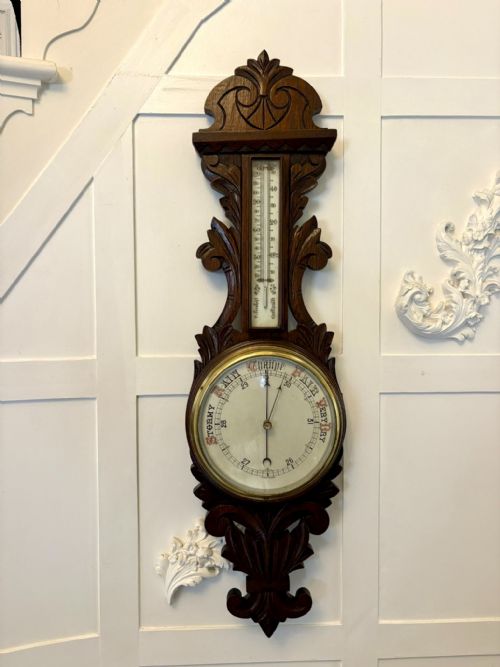


Victorian Oak Weather Instrument
A victorian oak weather instrument records atmospheric pressure and temperature with timber cases and legible paper or ceramic dials.
Victorian Oak Weather Instrument
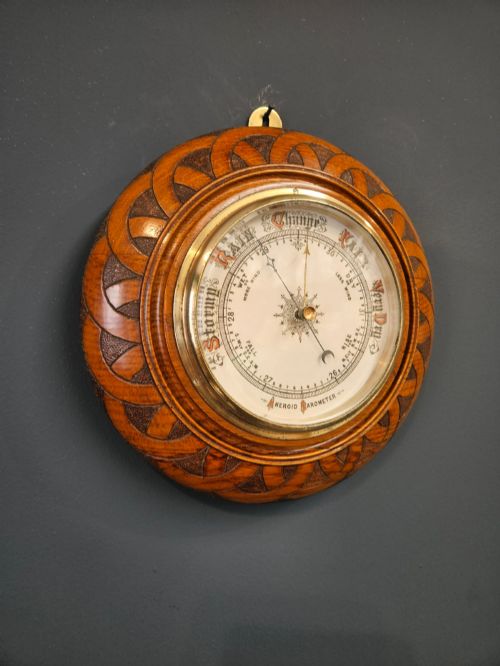
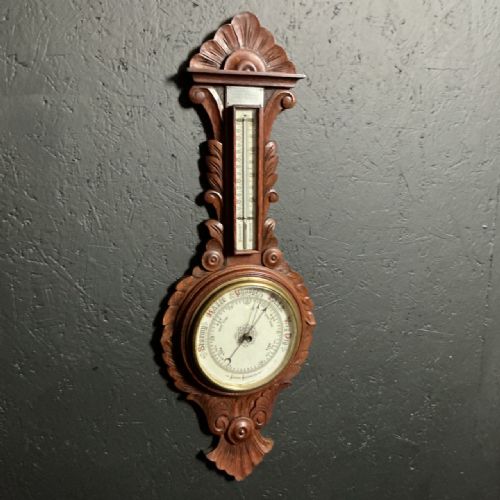
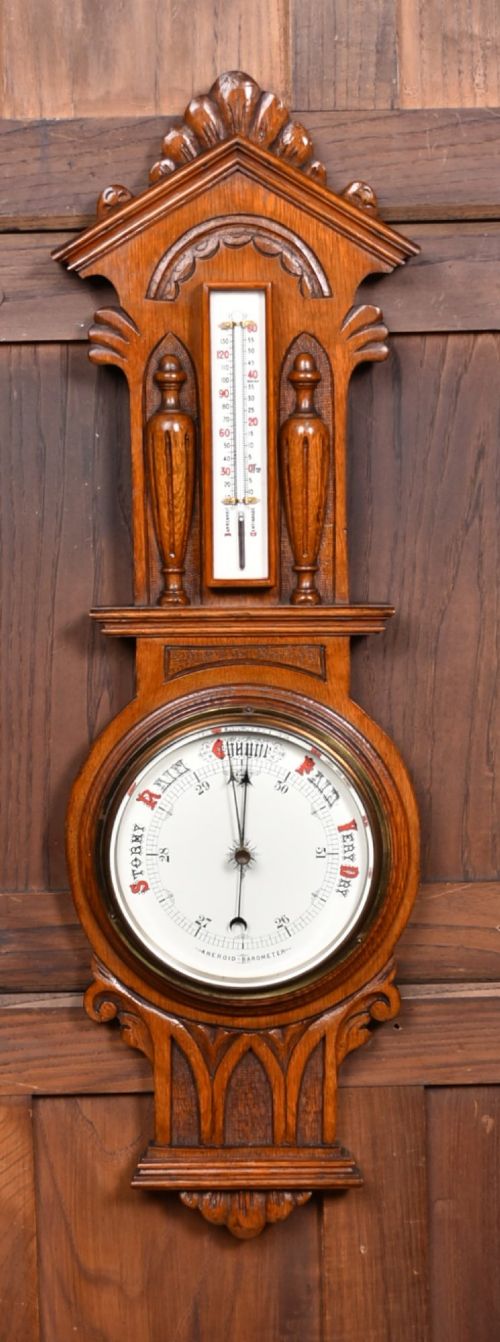
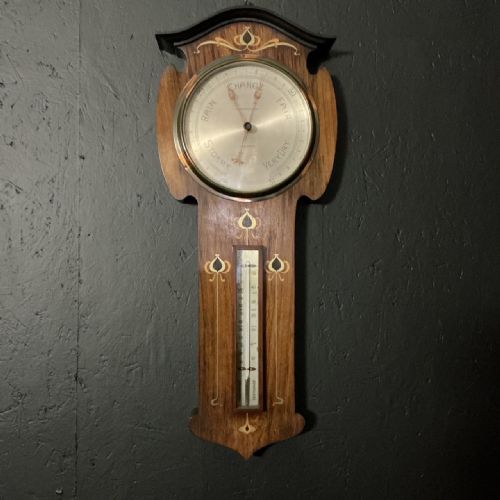
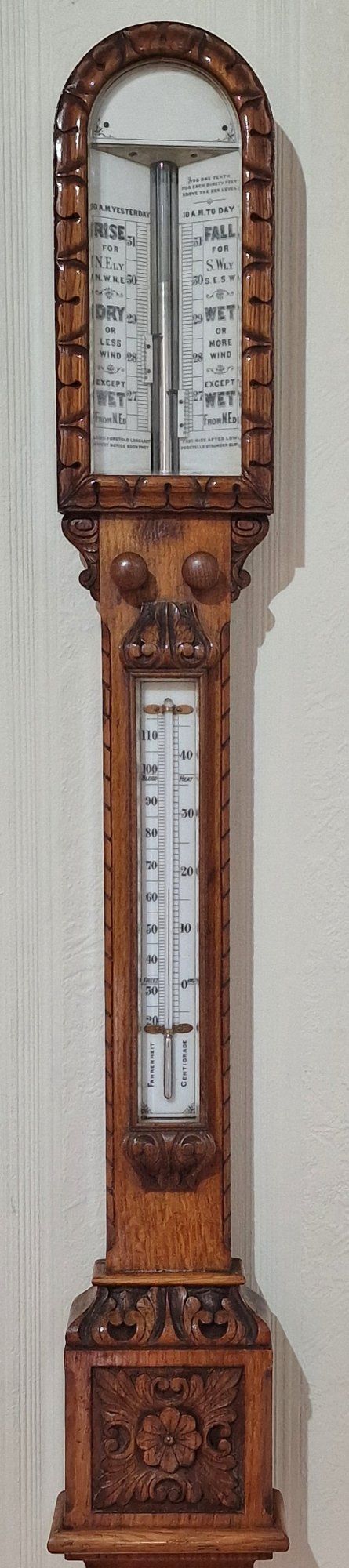
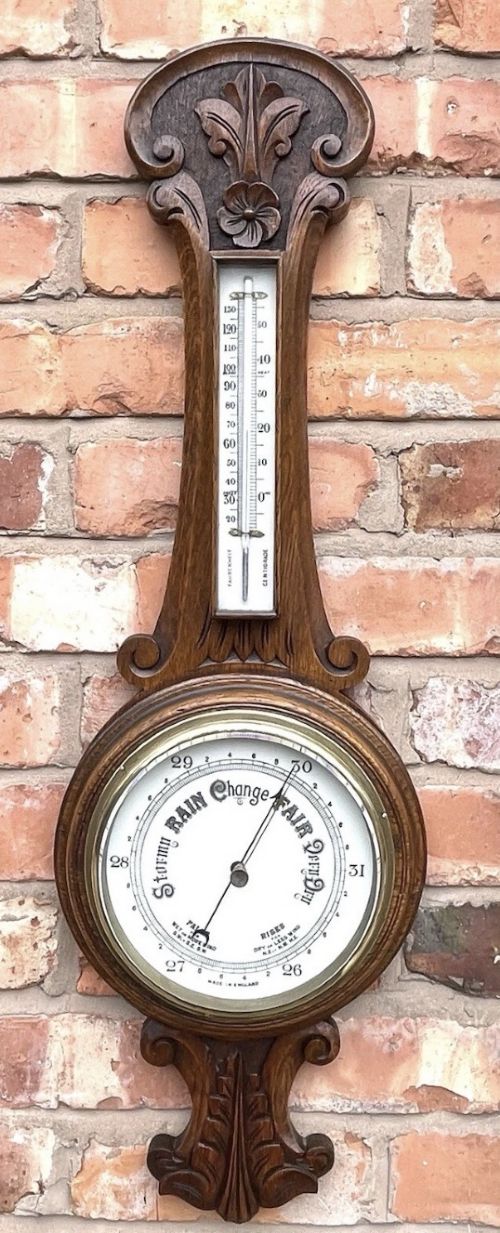
A victorian oak weather instrument encompasses barometers, barographs and complete weather stations built to monitor atmospheric shifts in domestic and public spaces. Buyers searching for a victorian oak weather instrument most frequently encounter banjo barometers, wall-hanging stick barometers and desk-standing barographs housed in solid or carved timber cases.
The objects span the Victorian, Edwardian and late nineteenth-century periods, capturing a time when domestic meteorology became both a scientific pursuit and a decorative art in British households. Makers utilised sturdy oak alongside brass fittings, bevelled glass and paper charts to construct functional instruments that doubled as architectural wall furniture.
Regional variations and specialised types appear across the selection, ranging from Admiral Fitzroy storm barometers designed for coastal communities to intricate Black Forest carvings featuring birds and foliage. Each piece reflects the specific domestic utility demanded by nineteenth-century homes, combining mercurial or aneroid movements with calibrated thermometers.
Assessing quality in weather instruments
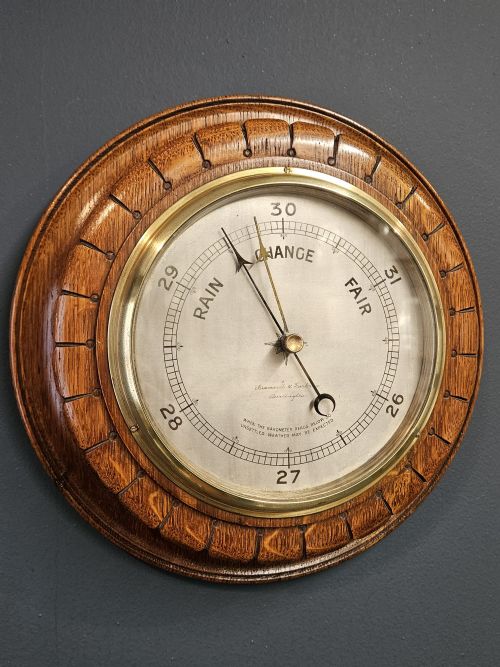
Quality rests upon the crispness of the oak carving and the structural integrity of the timber case, where deep relief work and well-joined mitres separate standard production from superior pieces. The legibility and execution of the dial matter significantly, particularly on silvered brass plates with finely engraved maker signatures or ceramic dials free from hairline cracks.
The precision and completeness of the mechanical movement dictate value, with intact mercury tubes, original brass cisterns and functioning thermometer scales holding greater scientific and historical integrity. Signed movements by notable makers elevate an instrument, as does the presence of original accessories such as chart drawers, spare recording paper and bevelled glass covers.
Object forms documented include wall-hanging banjo barometers, upright stick barometers, mechanical barographs and Admiral Fitzroy storm instruments.
Bramwell & Harbron of Darlington·Negretti & Zambra·Baines Harrograde·W Watson & Sons·J Hughes London·Maple & Co·J Hicks of London
The Victorian Oak Weather Instrument Glossary
- Aneroid barometer
- An instrument that measures air pressure using an expanding and contracting metal capsule rather than liquid mercury. It translates mechanical movement directly to a dial pointer.
- Stick barometer
- A tall, vertical instrument containing a mercurial glass tube mounted against a wooden backplate. It allows direct observation of the height of the mercury column.
- Barograph
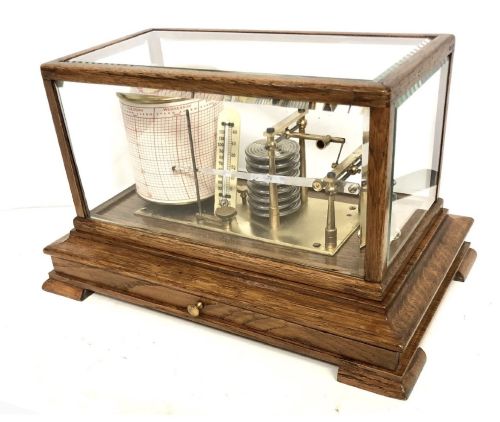
- A recording meteorological instrument that writes continuous barometric pressure readings onto a rotating paper chart using a clockwork drum. These often sit within glazed oak desk cases.
- Admiral Fitzroy barometer
- A specialised storm glass and barometer combination designed to interpret impending weather changes based on chemical reactions and barometric trends. They frequently feature detailed descriptive paper scales mounted behind glass.
- Silvered dial
- A brass dial plate treated with a silver compound to produce a matte white metallic finish with engraved or black-filled lettering. This treatment reduces glare and enhances legibility.
Victorian Oak Weather Instrument: Frequently Asked Questions
How do aneroid and stick barometers differ?
Aneroid barometers utilise a sealed metal vacuum capsule that expands and contracts with air pressure changes, moving a mechanical pointer across a circular dial face. Stick barometers use a vertical glass tube filled with liquid mercury that rises and falls within an open column against a calibrated scale.
Stick designs offer direct mercurial readings favored in traditional scientific contexts, while aneroid versions provide compact, wall-mounted circular formats that resist physical shocks and do not require vertical plumb hanging.
Where should a wall barometer be placed?
Wall barometers require stable interior locations protected from direct sunlight, central heating radiators and extreme draughts. Sudden thermal shifts alter internal metal components and fluid densities, causing inaccurate pressure readings.
Mounting them securely to solid masonry or internal wall studs ensures the casework remains plumb, which is particularly vital for the correct operation of mercurial stick barometers and swinging pendulums.
What is a barograph and how does it work?
A barograph is a mechanical weather recording device that plots barometric pressure onto a rotating paper chart over the course of a week. A clockwork drum inside the cylinder turns the paper while an inked pen arm linked to an aneroid stack traces the pressure line.
These instruments sit inside protective glazed oak cases, often equipped with a small drawer at the base to store spare weekly paper charts and spare ink bottles.
How can I identify an Admiral Fitzroy barometer?
Admiral Fitzroy barometers feature large, elongated wooden wall panels inscribed with extensive weather forecasting remarks alongside the traditional barometer and thermometer dials. They were developed in the nineteenth century to help fishermen and farmers anticipate storms by combining barometric observation with chemical storm glass tubes.
The descriptive paper scales mounted behind bevelled glass offer explicit guidance on wind directions and expected sea conditions based on the rising or falling of the mercury.