


Victorian Oak Tier Table
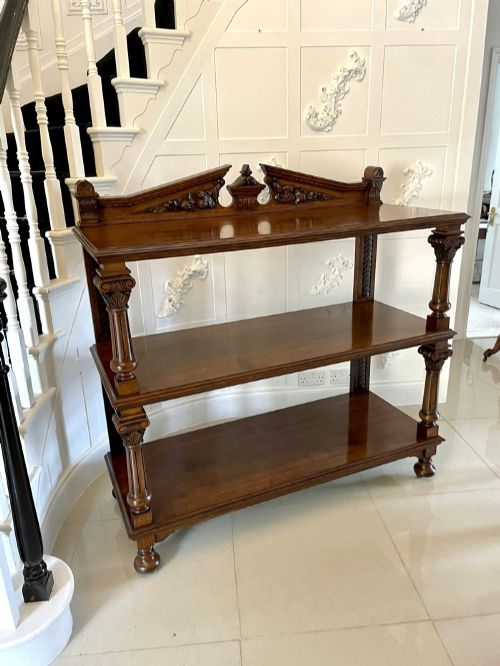
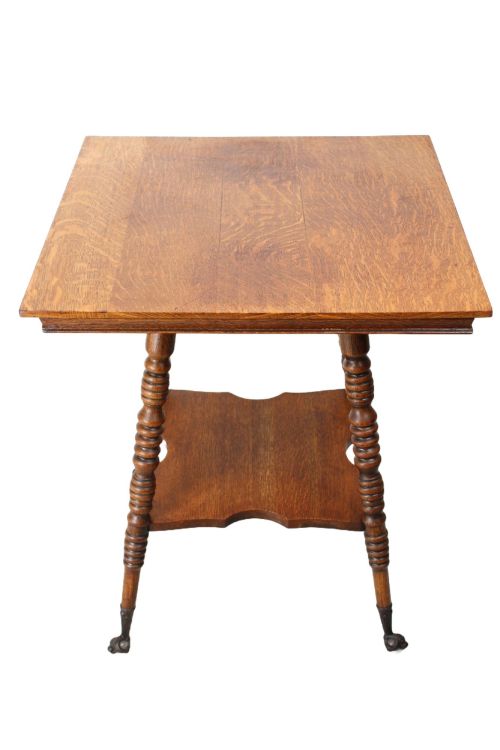
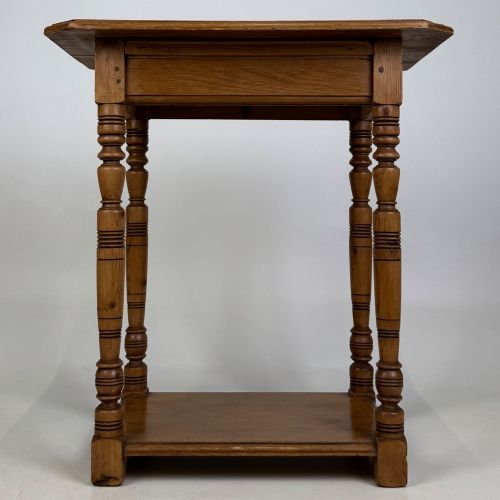
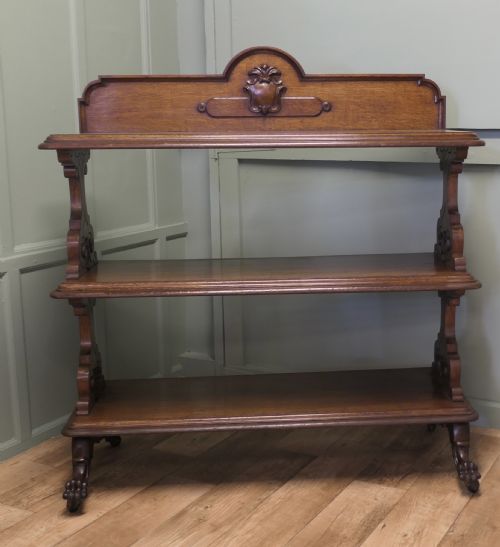
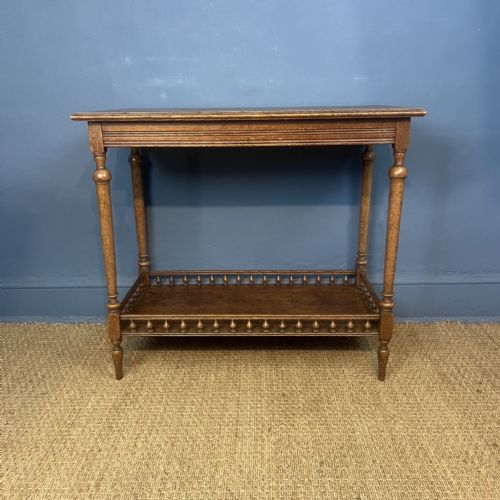
A victorian oak tier table brings solid nineteenth-century construction and tiered shelving into domestic spaces.
Victorian Oak Tier Table
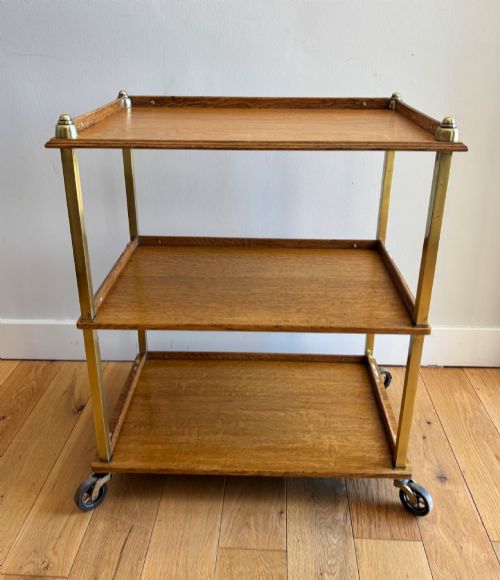
A victorian oak tier table encompasses multi-level occasional tables, dumbwaiters, and buffets originating from the nineteenth century and the early twentieth century. These pieces primarily function as practical display and serving surfaces across domestic interiors.
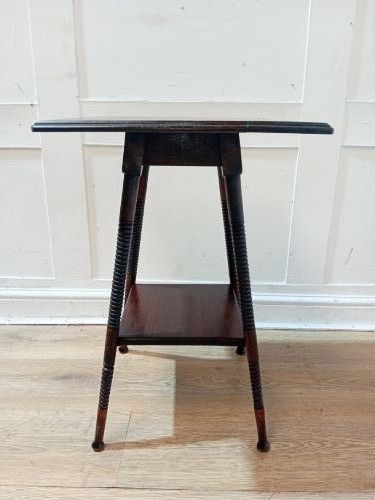
The selections on this page concentrate heavily on two-tier and three-tier formats executed in oak, frequently incorporating carved details like foliage and Green Man motifs. Alongside dedicated side tables, the inventory includes related serving furniture sharing tiered configurations.
Makers and designers from movements such as Arts and Crafts and the Aesthetic Movement left their mark on these multi-level pieces, producing rectangular, circular, and octagonal forms. The historical span covers standard Victorian production through to Edwardian interpretations.
Materials and Construction Methods
Oak serves as the primary timber, appearing in standard, dark, pollard, and bleached variations across the inventory. Cabinet makers occasionally supplemented these primary structures with brass, iron, walnut, and mahogany for hardware or secondary elements.
Construction relies heavily on traditional joinery paired with profuse hand-carving. Many examples demonstrate sculptural enrichment, including barley twist supports and detailed foliate carving upon the tiers.
Listings feature oak predominantly, alongside secondary use of brass, iron, walnut, and mahogany across nineteenth and early twentieth-century periods.
Distinctions in Quality
Quality separates through the depth and crispness of the hand-carving and the selection of the oak timber itself, such as highly figured pollard oak. Pieces featuring named workshops or specific artistic movements display superior design ambition.
Structural integrity across multiple tiers and the sophistication of turning on supports distinguish standard utility furniture from finer exhibition or parlor pieces.
William Birch·Leonard Wyburd·Liberty and Co
The Victorian Oak Tier Table Glossary
- Tier table
- A multi-level table featuring stacked surfaces supported by upright columns or legs. These surfaces provide additional display capacity within a compact footprint.
- Dumbwaiter
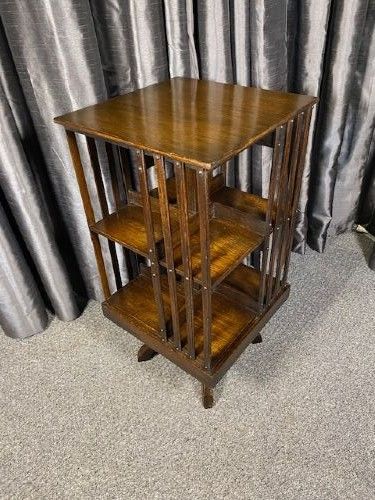
- A multi-tiered serving piece designed to hold dishes or books. Examples frequently incorporate revolving mechanisms or rise-and-fall functions.
- Pollard oak
- Timber taken from trees that have been pollarded, producing a highly decorative and dense grain pattern. Cabinet makers used this veneer or solid wood for high-status surfaces.
- Green Man
- A sculptural architectural ornament depicting a human face entwined with foliage. Victorian carvers frequently applied this motif to oak furniture.
- Aesthetic Movement
- A late nineteenth-century design current emphasising visual beauty over narrative subject matter. Furniture from this circle often utilises clean architectural lines.
Victorian Oak Tier Table: Frequently Asked Questions
How were tier tables used?
These multi-level surfaces served primarily for holding books, serving tea, or displaying decorative objects in Victorian reception rooms.
Their stacked design maximised floor space while providing distinct platforms for everyday domestic items.
How do I date a tier table?
Dating relies on examining construction methods, timber preparation, and stylistic markers such as Arts and Crafts influences or Gothic Revival carving.
Earlier nineteenth-century pieces often display heavier hand-carving, while later examples shift towards simpler rectilinear forms.
Where should I place one?
A multi-tier piece functions effectively beside seating as an occasional table or against a wall as a serving surface.
Circular and octagonal variants fit well in corners or open hallway spaces where access from multiple sides is useful.
What is pollard oak?
Pollard oak derives from trees pruned close to the trunk, creating a dense growth ring pattern with intense figuring.
Cabinet makers utilised this striking timber on prominent surfaces of buffets and tables to catch the light.