



Victorian Oak Thermometer Barometer
These Victorian oak thermometer barometer pieces combine practical weather recording with dense carved timber cases, bringing reliable mid-nineteenth to early twentieth-century domestic instrumentation into any hall or study.
Victorian Oak Thermometer Barometer
A victorian oak thermometer barometer is a domestic wall-hanging or table instrument designed to gauge atmospheric pressure and ambient temperature simultaneously. The pieces found here span from the mid-nineteenth century through the Edwardian period, capturing both standard domestic wall units and more elaborate architectural carvings.
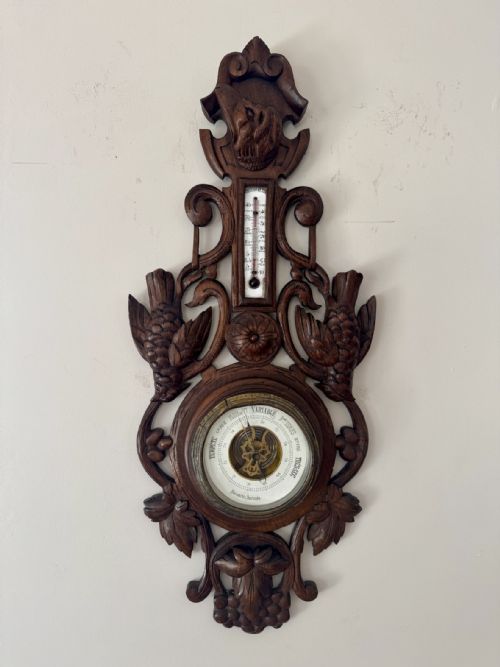
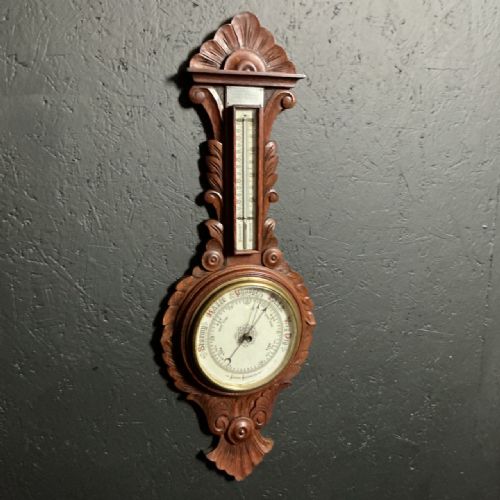
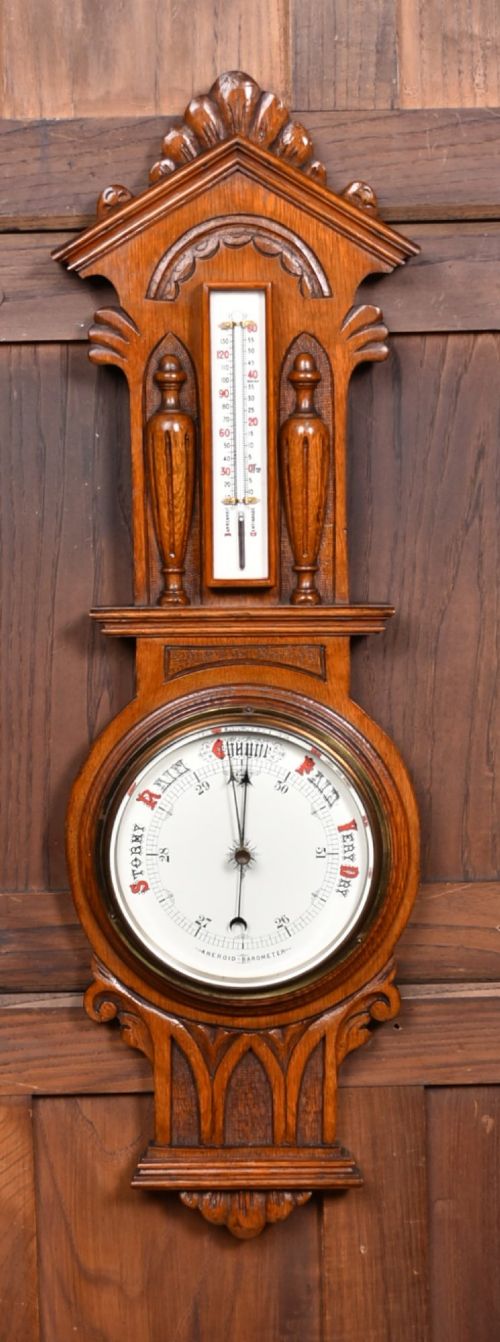
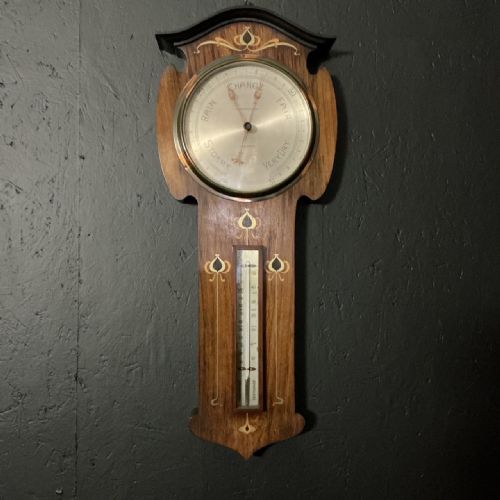
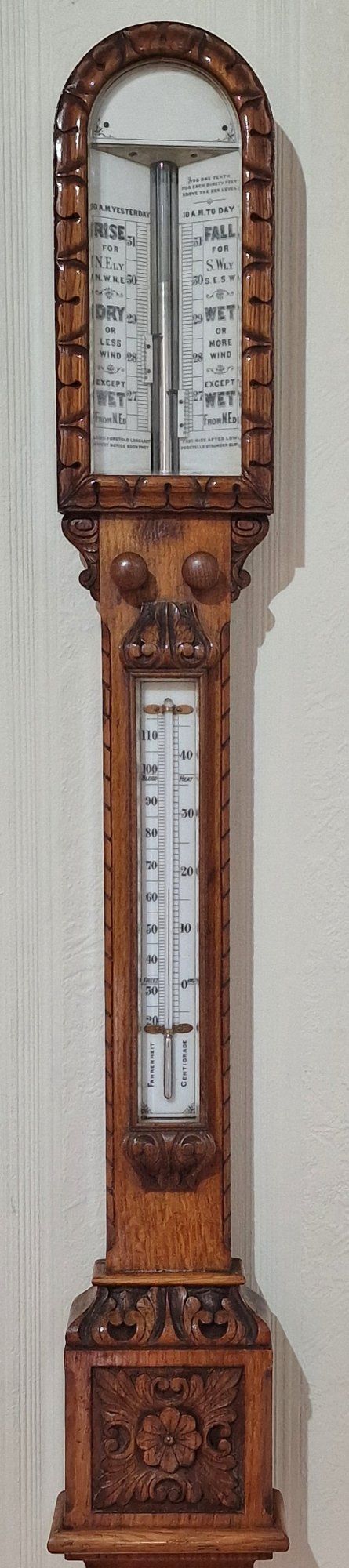
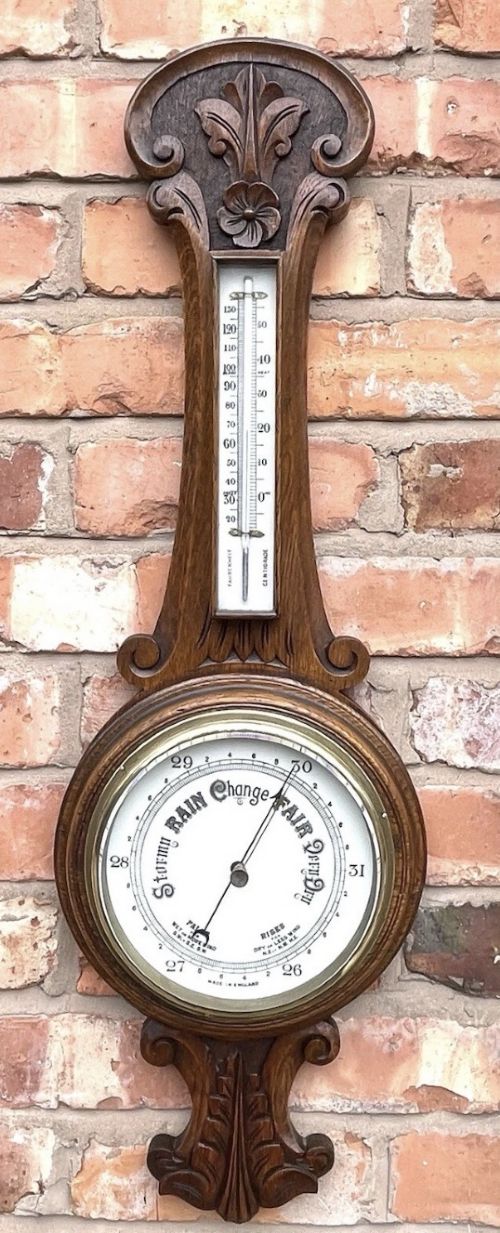
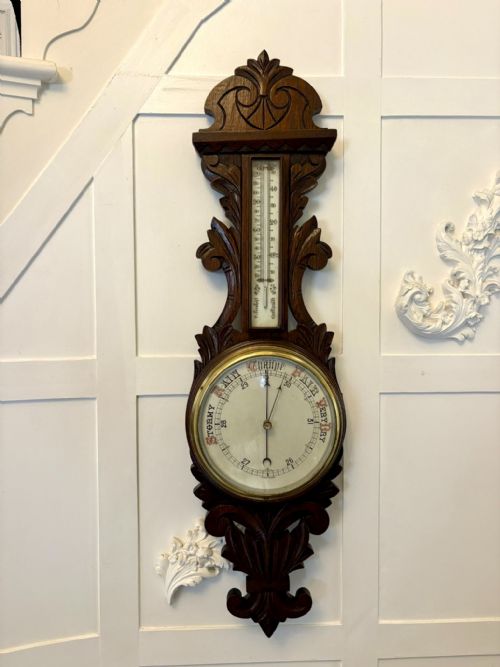
Most examples encountered on this page take the form of banjo barometers or wall-hanging aneroid instruments housed in solid timber cases. Carved oak is the defining material for this group, frequently decorated with foliage, birds or geometric motifs characteristic of the era.
Makers and retailers such as Negretti & Zambra and Maple & Co contributed to this selection, alongside unmarked workshop pieces from Black Forest and British makers. Buyers typically choose these instruments for their combination of functional clockwork or barometric dials and deeply figured timber surrounds.
How they were made
Cases were fashioned primarily from solid oak and carved wood, utilising the dense grain to support heavy bevelled glass plates and brass bezels. Many incorporate hand-carved decorative elements such as birds, scrolls and foliate borders directly into the timber chassis.
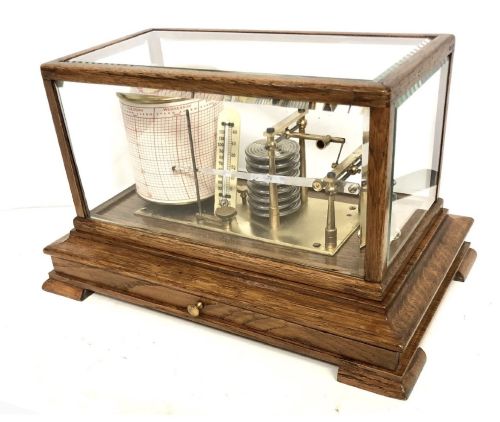
The interior mechanism typically relies on aneroid capsules or mercurial tubes to measure pressure, paired with Fahrenheit or centigrade thermometers mounted on ceramic, porcelain or metal scales. Paper charts are housed within specific barograph variants, whilst desk clocks and combination sets utilise brass clockwork movements alongside the weather dials.
A notable Victorian wheel barometer commemorated the life of the Duke of Wellington, ensuring the weather was tracked under the watchful gaze of the Iron Duke.
What varies in quality
Quality rests in the crispness of the timber carving and the architectural proportion of the oak case, where deeply undercut foliage and balanced symmetry distinguish workshop pieces from simpler production items. The presence of signed maker dials, high-grade brass bezels and intact bevelled glass further elevates an example above standard domestic grade.
The sophistication of the internal movement also dictates the standing of the piece, ranging from basic aneroid dials to mercurial stick barometers and complex barographs with chart drawers. The integration of auxiliary thermometers and specialised commemorative plaques demonstrates superior commissioning.
Negretti & Zambra·Maple & Co·W Watson & Sons·J Hughes London·J Hicks of London
The Victorian Oak Thermometer Barometer Glossary
- Aneroid barometer
- A barometer that measures atmospheric pressure by the expansion and contraction of a flexible metal box or capsule. This mechanical system removes the need for liquid mercury and allows the instrument to be mounted securely on walls.
- Banjo barometer
- A wall barometer housed in a case shaped somewhat like a banjo, featuring a circular dial at the base and a tall stem carrying the thermometer. This form dominated nineteenth-century British hallways.
- Stick barometer
- A tall, vertical barometer that uses a column of mercury in a glass tube to indicate atmospheric pressure variations. These pieces often feature exposed ivory or glass vernier scales.
- Barograph
- A mechanical barometer that records atmospheric pressure continuously onto a paper chart fitted to a rotating drum. These instruments frequently include an ink pen driven by multiple aneroid capsules.
- Bevelled glass
- Glass with an angled edge polished around the perimeter, fitted into the brass bezel to protect the barometer dial. This detail adds depth and catches light across the instrument face.
Victorian Oak Thermometer Barometer: Frequently Asked Questions
How do aneroid and mercurial barometers differ?
Aneroid barometers use sealed metal capsules that flex with air pressure changes, moving a needle across a dial without any liquid. Mercurial barometers rely on a column of liquid metal inside a glass tube to rise and fall directly with the atmosphere.
Mercurial models are generally the older and more traditional form, whilst aneroid versions became widespread for domestic wall hanging due to their resilience and lack of shifting fluid.
Where were these barometers originally placed?
Victorian households typically hung these instruments in hallways, entrance passages or libraries where family members and visitors could check the weather before stepping outside. Hallways offered stable ambient conditions away from direct hearth heat.
Tabletop and desk versions sat in studies or offices, serving both as functional weather glasses and decorative timepieces alongside matching clocks.
How do I identify a Black Forest oak barometer?
Black Forest pieces are distinguished by exceptionally deep, naturalistic wood carvings depicting forest foliage, game birds or rustic motifs. The oak or carved wood cases often feature three-dimensional birds and heavy relief work that set them apart from standard British geometric designs.
These continental imports arrived in Britain in large numbers during the nineteenth century, prized for their exuberant and dramatic sculptural quality.
Are these barometers still accurate today?
Most antique barometers can be calibrated to reflect current local atmospheric pressure by adjusting the internal linkage via a small screw on the back or face. However, they are primarily valued as historic domestic instruments and decorative antiques rather than precision meteorological tools.
Thermometers and clockwork components similarly require gentle handling and occasional professional servicing to function reliably.