
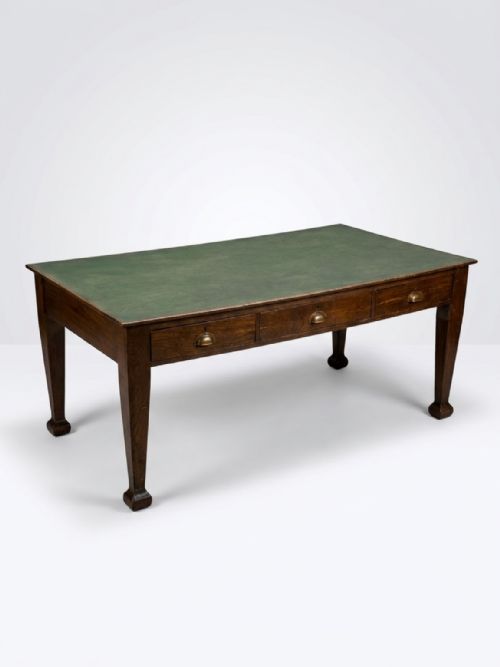
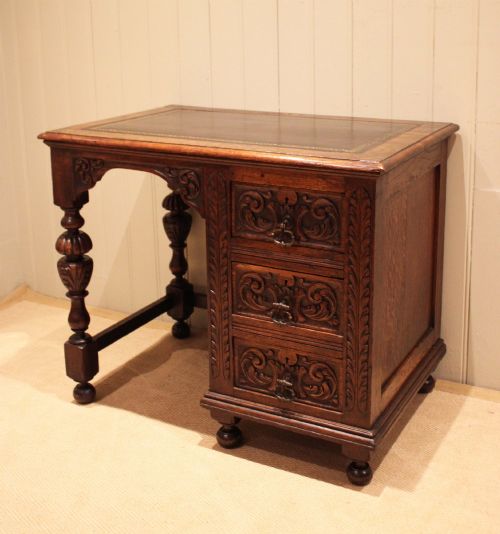
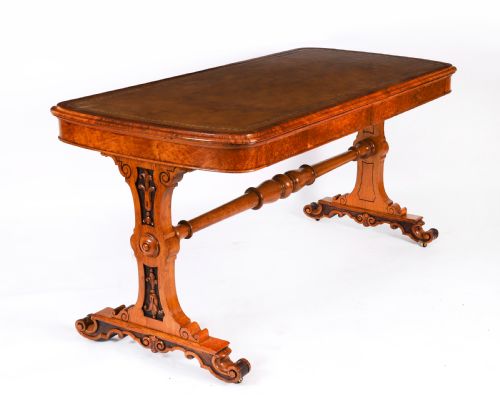
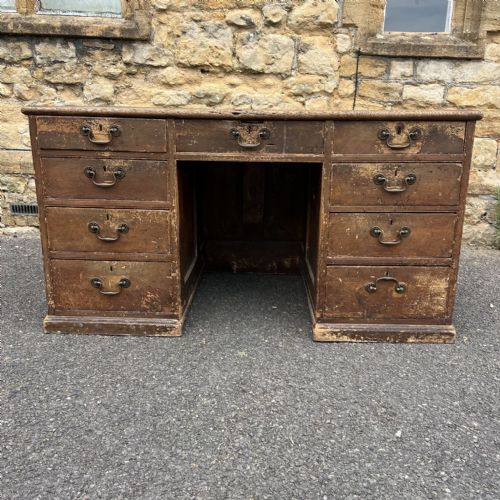
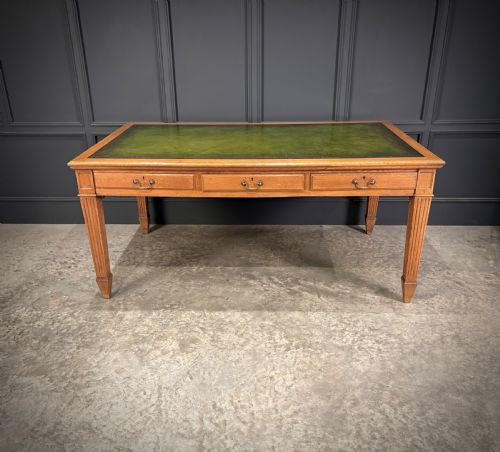


Victorian Oak Study Table
A victorian oak study table offers a robust work surface rooted in nineteenth-century craftsmanship, combining solid timber with practical drawer arrangements.
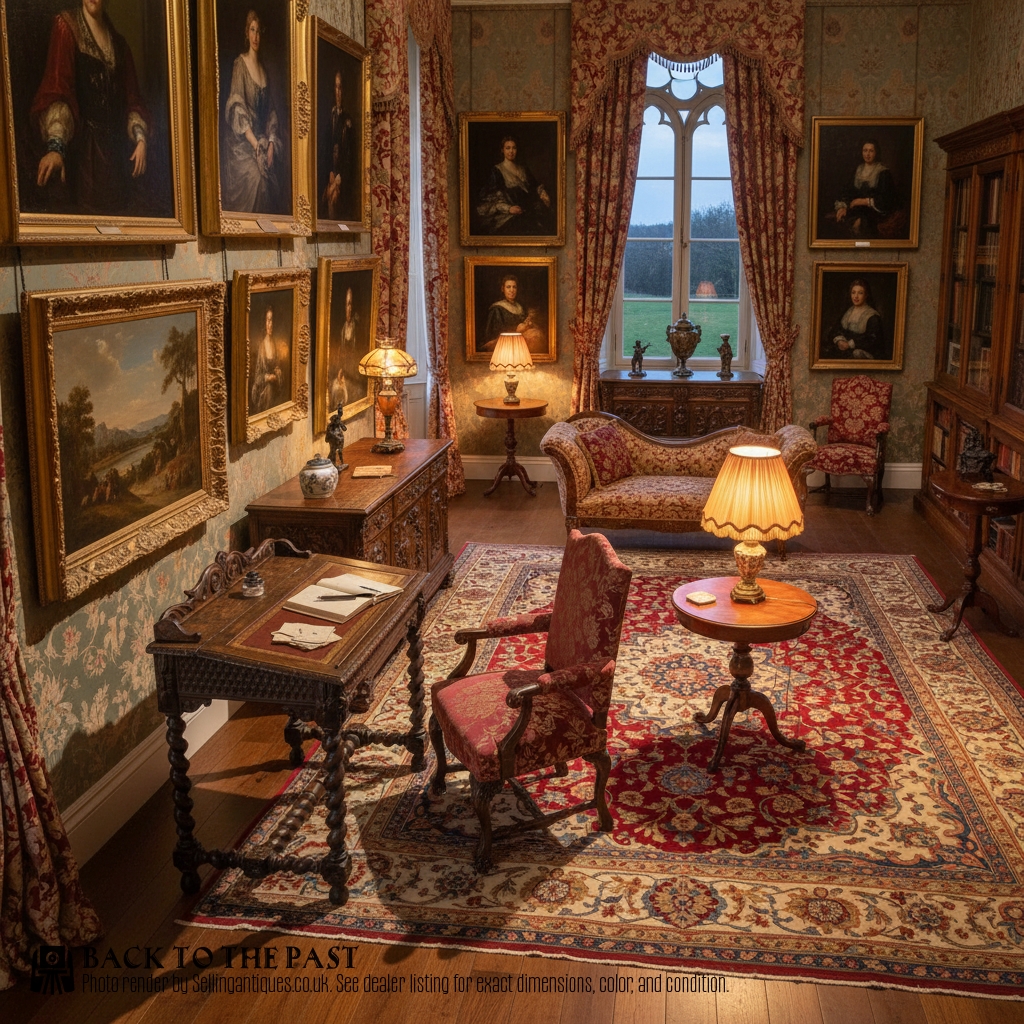
Victorian Oak Study Table
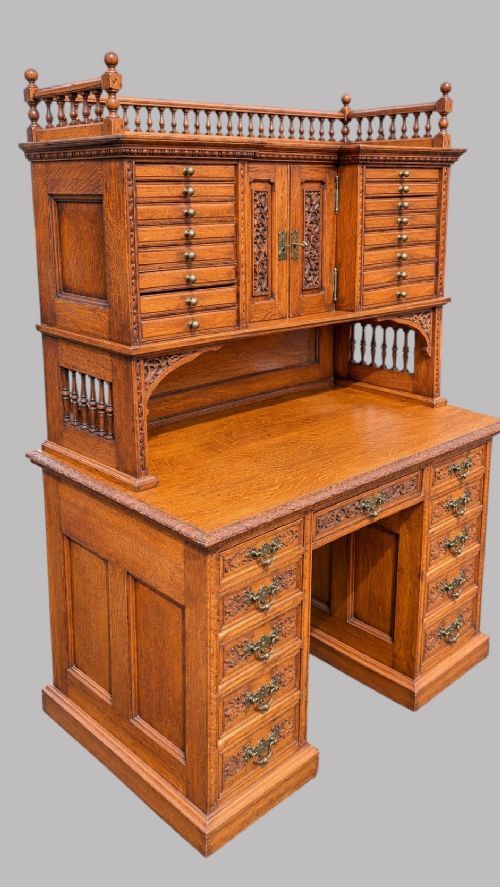
A victorian oak study table encompasses heavy pedestal desks, twin-drawer writing tables and library tables originating across the nineteenth century. These forms reflect the functional demands of domestic studies, estate offices and libraries.
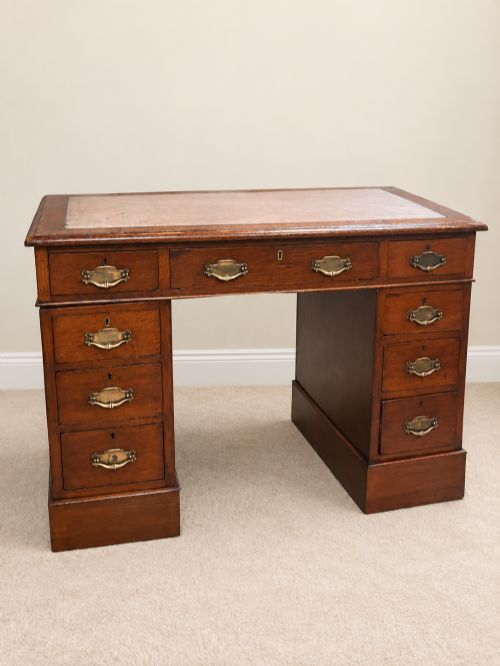
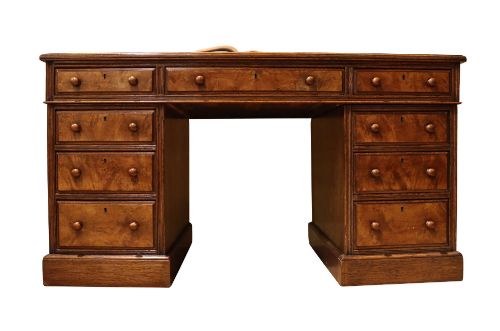
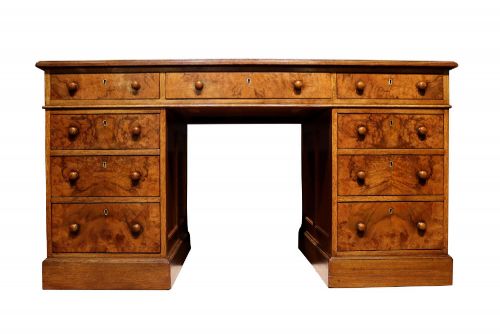
The version most commonly met on this page is the pedestal desk or writing table built from solid oak, frequently fitted with multiple drawers and a contrasting leather writing surface.
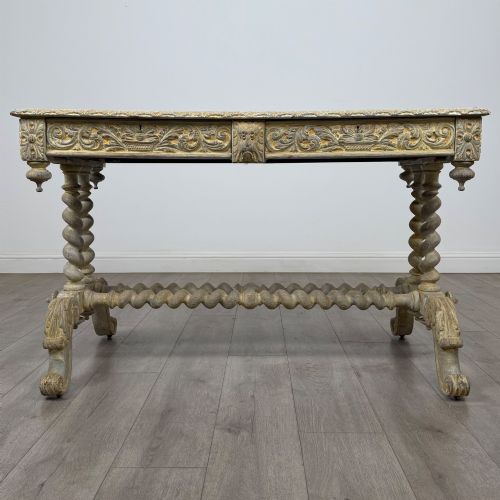
Makers and workshops of the period produced these tables in styles ranging from plain utilitarian designs to heavily carved Neo-Jacobean, Gothic and Arts and Crafts interpretations.
How They Were Made
Makers utilised solid oak alongside secondary timbers such as pine and ash for internal framing, combining structural durability with panelled construction methods. Selected pieces incorporate burr walnut or pollard oak veneers to create decorative contrast on drawer fronts and writing surfaces.
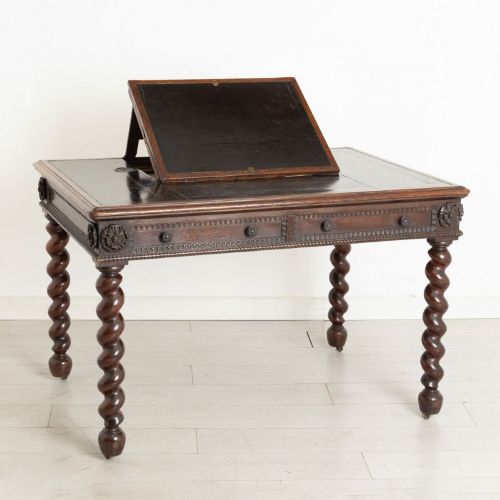
Writing surfaces were traditionally lined with tooled leather, secured with brass tacks and paired with cast brass handles, escutcheons and drawer pulls. Carved ornamentation, when present, was executed by hand directly into the solid timber framework.
The inventory records formats including kneehole desks, pedestal desks, library tables, wages desks, and Dickens desks dating from the mid to late nineteenth century.
What Varies in Quality
The tier of a victorian oak study table is defined by the selection of timber and the ambition of its construction. Heavy carcase work, secondary timber selection, and the presence of Burr walnut or pollard oak veneers separate standard utility pieces from exhibition-grade examples.
Detailing in the brass hardware, the crispness of hand-carved ornamentation, and the integration of secondary woods like ash or pine indicate the workshop standard behind the desk.
Gillows·James Shoolbred·Blyth and Son·Deighton and Dunthorne·Merryweather and Son
The Victorian Oak Study Table Glossary
- Pedestal Desk
- A form comprising two banks of drawers supporting a single desktop. These units often feature central kneehole spaces and standing configurations.
- Partners Desk
- A large double-sided writing table designed for two people to work opposite one another. Drawers typically span both long sides of the carcase.
- Kneehole Desk
- A compact form featuring a central recess for the user's legs, flanked by vertical stacks of small drawers.
- Library Table
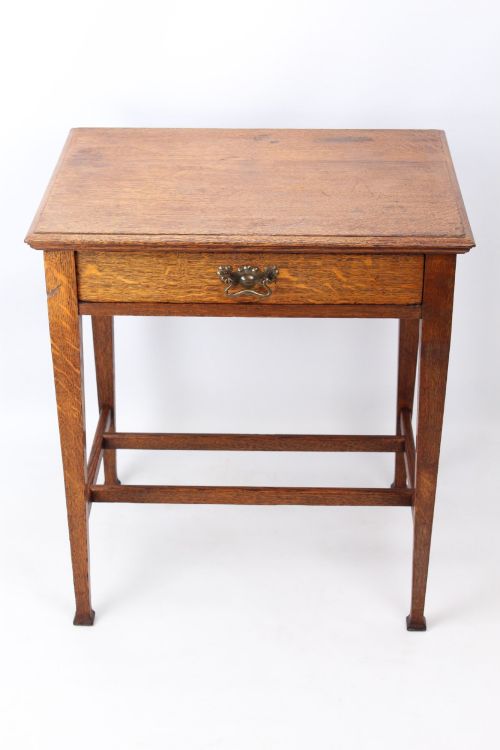
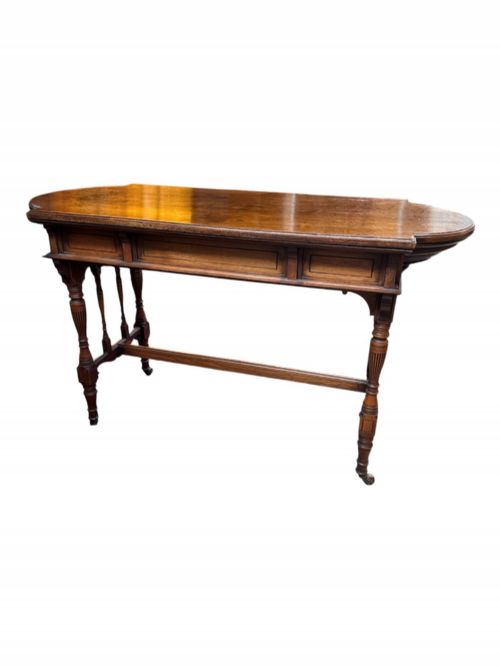
- A freestanding table designed for central room placement rather than wall placement. These pieces often lack pedestals and rely on four legs with perimeter stretchers.
- Escutcheon
- A decorative brass plate surrounding a keyhole. It protects the surrounding timber from wear caused by the key.
Victorian Oak Study Table: Frequently Asked Questions
How do I clean the leather top?
Wipe the leather gently using a slightly damp cloth without soaking the surface. Avoid harsh chemical cleaners that can strip the original polish and finish.
Nourish the leather periodically with a suitable conservation wax or balm to maintain flexibility. Test any product on a small, hidden corner first.
Were these desks used in offices?
Many examples served as estate desks, partners desks, or architectural workstations in professional environments. Their heavy construction suited daily administrative duties and archival tasks.
Domestic studies also housed smaller writing tables and library desks for personal correspondence and reading.
Can I dismantle a pedestal desk for transport?
Most pedestal desks separate into three main components consisting of the two drawer pedestals and the top slab. The top is typically held in place by interior screws or wooden buttons.
Carefully remove the internal drawers and unscrew the fixings beneath the desktop before attempting to move any section.