


Victorian Oak Nightstand
These Victorian oak nightstand pieces offer sturdy bedside storage, built from honest timber to anchor a period bedroom with practical charm.
Victorian Oak Nightstand
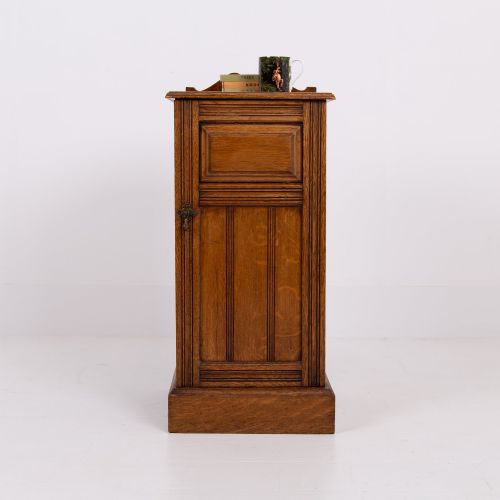
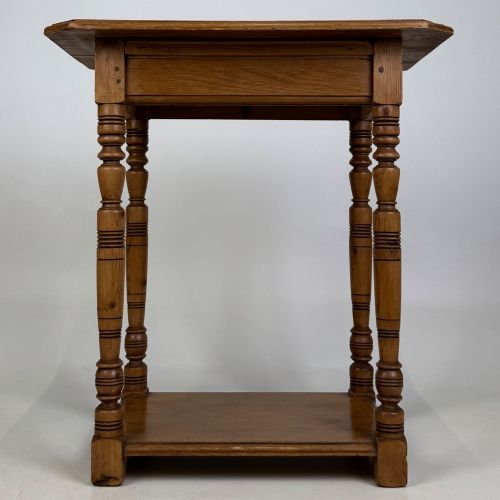
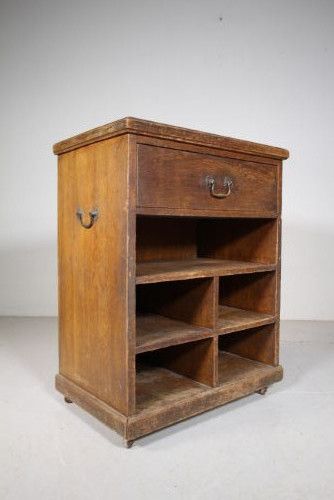
A victorian oak nightstand takes many forms on this page, appearing as bedside cabinets, side tables, side cupboards, and chests of drawers. These utilitarian items served bedrooms across the nineteenth century, providing enclosed or open storage beside the bed.
Most examples hail from the Victorian era, alongside pieces spanning the Regency period up to the early twentieth century. Makers worked within specific design vocabularies, producing items that range from simple country pieces to highly decorated Gothic Revival and Aesthetic Movement forms.
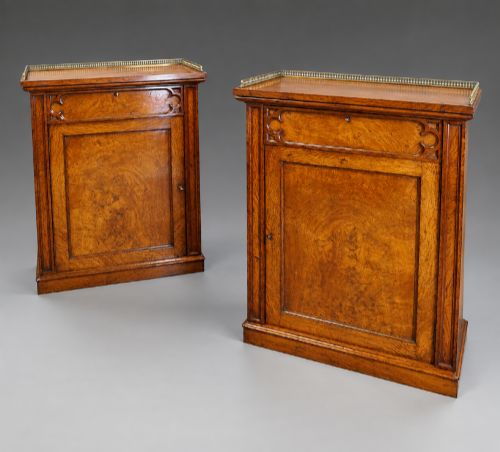
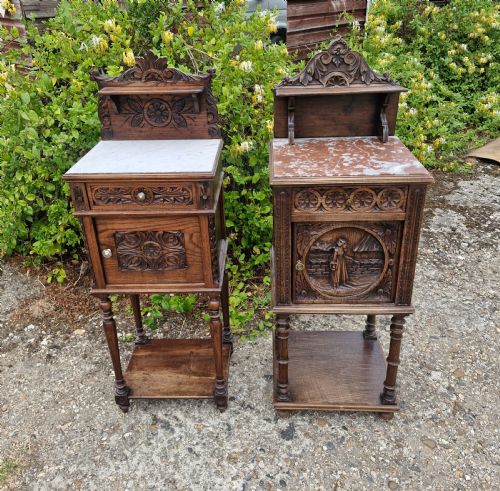
Buyers will encounter single cupboards and matched pairs alike, constructed primarily in solid timber with occasional painted finishes or marble tops. The forms respond directly to domestic needs of the period, keeping nighttime necessities close at hand.
How They Were Made
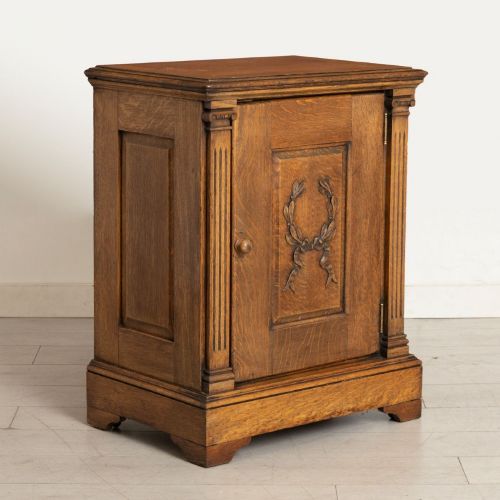
Cabinet makers relied predominantly on solid oak, frequently pairing it with pine for secondary woods and drawer linings. Workshops utilised brass for handles, hinges, and escutcheons, adding functional metalwork that complemented the heavy timber grain.
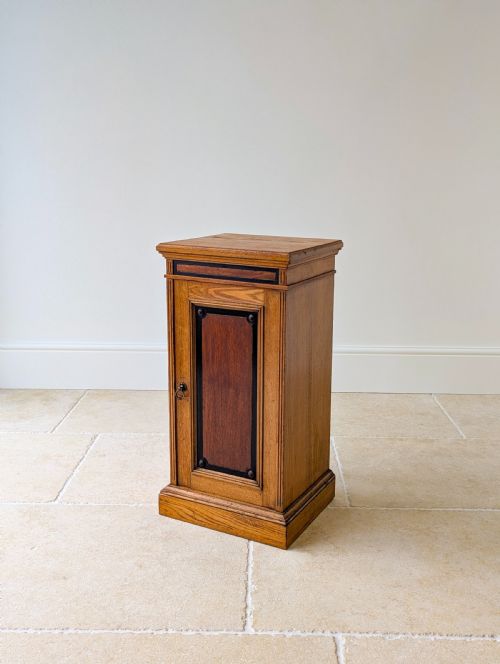
Surface treatments varied from plain polished oak to ebonised wood, carved panels, and simulated painted finishes. Certain pieces incorporate marble inserts or feature hand-carved ornamentation typical of Gothic Revival and Arts & Crafts workshops.
Listings feature oak alongside walnut, pine, ebonised wood, and marble across Victorian, Regency, and Arts & Crafts styles.
What Varies In Quality
Quality rests in the integrity of the timber selection and the precision of the joinery used in the carcass and drawers. Finer examples show thoughtful proportion and crisply executed carving, whereas simpler pieces rely on plain utility.
The sophistication of the stylistic movement influences the execution, moving from robust country carpentry to the deliberate aesthetic choices of Gothic Revival or Arts & Crafts design. Original hardware and sound structural timber elevate the standing of any piece.
The Victorian Oak Nightstand Glossary
- Victorian
- Belonging to the reign of Queen Victoria, spanning the nineteenth century. This period encompasses varied revival styles and industrial shifts in furniture production.
- Gothic Revival
- An architectural and decorative style drawing inspiration from medieval forms. Pieces often feature pointed arches, heavy carvings, and ecclesiastical motifs.
- Aesthetic Movement
- A late nineteenth-century design approach prioritising visual beauty over narrative meaning. Furniture from this circle often shows cleaner lines and stylised ornamentation.
- Arts & Crafts
- A design movement championing traditional craftsmanship and simple forms. It arose as a reaction against mass-produced machine ornamentation.
- Escutcheon
- A protective plate surrounding a keyhole. These brass fittings frequently secure the lock mechanism on cabinet doors and drawer fronts.
Victorian Oak Nightstand: Frequently Asked Questions
What is a nightstand called historically?
Period pieces answered to various names depending on their construction and purpose. Makers catalogued them as bedside cabinets, side cupboards, or occasional side tables.
Such terms reflect how furniture evolved from general storage into dedicated bedside placement through the nineteenth century.
Are pairs hard to find?
Matched pairs appear less frequently than single pieces because bedroom furniture was often purchased individually or split up over time. Finding two identical cabinets requires patience across available stock.
When pairs do surface, they usually share identical carved motifs, dimensions, and timber characteristics from the same workshop.
How do I identify a Gothic Revival piece?
Gothic Revival items display distinct architectural references inspired by medieval buildings. Look for pointed arch panels, heavy mouldings, and deep hand-carving.
These pieces embrace a serious, monumental presence that contrasts with lighter domestic styles.
Did they always use solid timber?
Makers constructed the primary surfaces from solid oak, walnut, or painted pine, yet secondary timbers frequently included softer woods. Drawer bases and internal framing often utilised pine or other accessible woods.
This mixed construction method balanced structural durability with practical material costs during manufacture.