

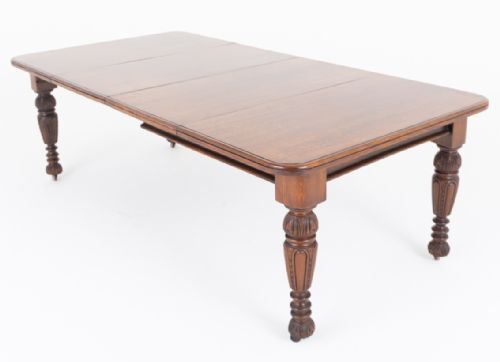
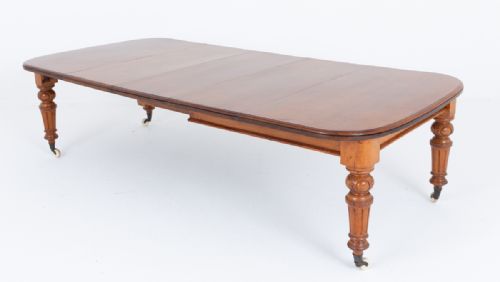


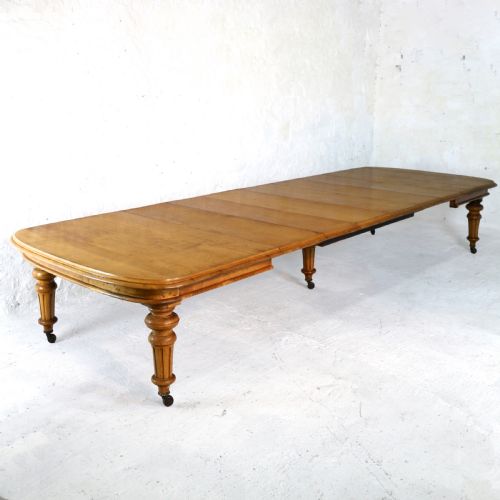
Victorian Oak Extending Dining Table
A Victorian oak extending dining table brings serious nineteenth-century craft and effortless hospitality to any room.
Victorian Oak Extending Dining Table
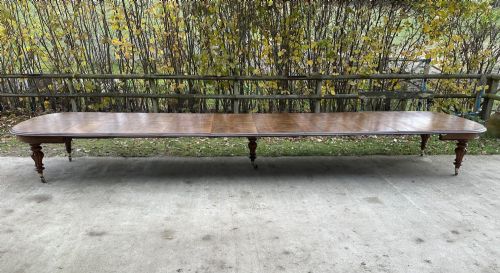
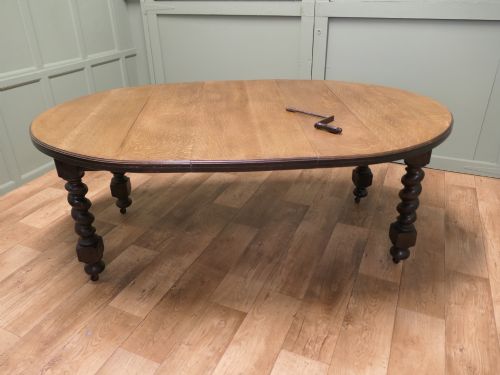
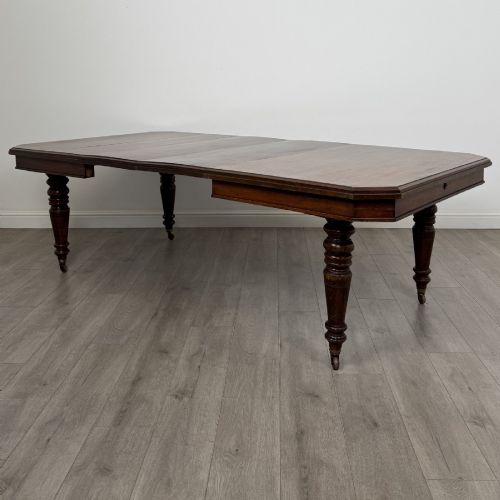
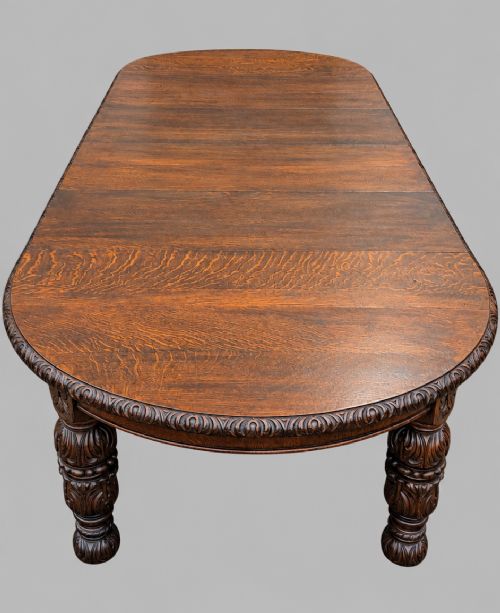
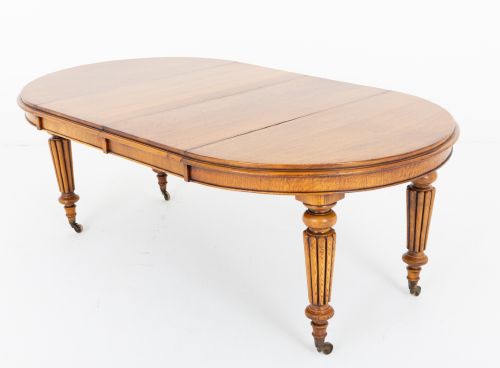
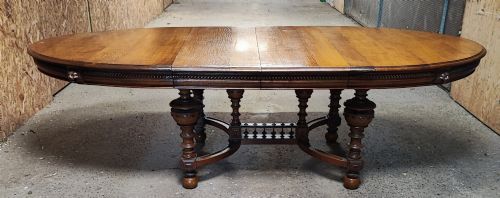
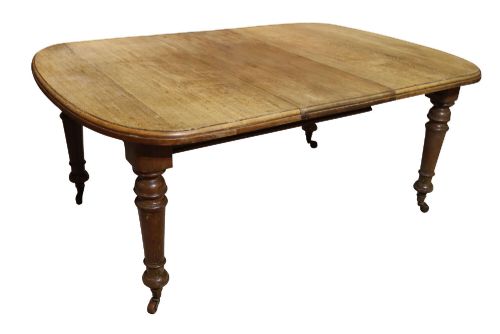
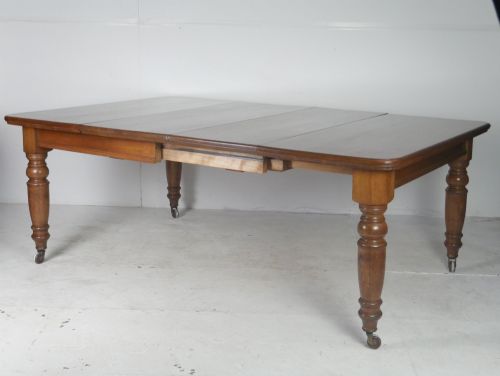
A victorian oak extending dining table is a heavy, practical piece designed for large gatherings, appearing here in formats ranging from modest circular models to massive tables stretching up to fifteen feet with multiple leaves. You will frequently encounter D-end shapes and formats with single or multiple leaves, often built to seat ten or more guests comfortably.
The aesthetic leans heavily into nineteenth-century vernaculars, spanning straightforward domestic kitchen furniture to elaborate Gothic Revival and Elizabethan Revival expressions. Pollard oak and blonde or light oak finishes frequently surface alongside traditional golden and dark tones, reflecting the diverse preferences of the period.
Materials and construction
Solid oak provides the primary structural foundation, complemented by specialised timbers like pollard oak for striking surface grain and visual depth. Cabinet makers utilised dense hardwoods to ensure the stability required for large extending frames.
Internal engineering relies on robust brass and iron components to support the winding mechanisms that allow smooth leaf insertion. Ceramic castors and metal hardware frequently facilitate movement across heavy floor surfaces without straining the timber frame.
Victorian Oak Extending Dining Table Retail Price Guide 2026
Typical asking prices for victorian oak extending dining table among the pieces listed under this phrase on Sellingantiques today, from the lower quarter to the upper quarter. They describe what is for sale here now, not the wider market.
Some tables stretch so far they require extra wooden legs that drop down like shy guests just to keep the middle from sagging.
What varies in quality
The distinction between standard domestic items and superior examples lies in the ambition of the carving and the selection of timber figures, such as pollard oak or carefully matched blonde boards. Elaborate Gothic Revival detailing and exceptionally wide proportions elevate certain tables far above basic kitchen formats.
Engineering integrity in the extending mechanism and the seamless integration of extra leaves dictate daily usability and long-term value. Tables retaining original winding hardware and matching supplementary leaves demonstrate superior workshop execution.
The Victorian Oak Extending Dining Table Glossary
- D-end
- A table end shaped in the semi-circular form of the letter D, often used in pairs to flank extending dining table leaves. This configuration was immensely popular throughout the nineteenth century for formal dining spaces.
- Extension leaf
- A removable board inserted into the centre of a table to increase its overall length. These were stored separately when not in use to keep the room manageable.
- Winding mechanism
- The internal screw or rack-and-pinion gear operated by a crank handle to open and close the table frame. It allows heavy timber sections to part evenly.
- Pollard oak
- Timber taken from trees that were pollunted or pruned close to the trunk, producing a dense, highly decorative grain pattern. Cabinet makers utilised it on top surfaces for dramatic visual effect.
Victorian Oak Extending Dining Table: Frequently Asked Questions
How do I operate the winding mechanism?
Insert the crank handle into the designated socket underneath the rim and turn it steadily to drive the wooden runners apart. This reveals the central gap where additional leaves drop securely into place.
Ensure the table is unloaded before winding to reduce friction on the brass and iron internal components. Gentle turning prevents any binding along the central tracks.
Will a Gothic Revival table suit a modern interior?
The architectural lines and rich grain of nineteenth-century oak pair surprisingly well with contemporary minimalist spaces. The warm tones of blonde and golden oak soften stark architectural backgrounds.
Contrast the heavy timber with simpler modern seating to let the period craftsmanship stand out. The physical presence of the wood anchors an open-plan room effectively.
How do I identify a Victorian oak table?
Look for dense, heavy oak construction combined with mechanical innovations like patent winding systems and heavy castors. Stylistic markers such as Elizabethan strapwork or Gothic pointed arches often point directly to the nineteenth century.
Examine the underside for tool marks and traditional joinery methods that distinguish nineteenth-century workshop production from later reproductions. The patina built up over generations offers a reliable visual guide.