



Victorian Oak Conference Table
A victorian oak conference table brings undeniable scale and gravitas to large rooms, offering robust timbers and stately architectural presence.
Victorian Oak Conference Table
When you search for a victorian oak conference table, you are looking at substantial nineteenth-century seating and workspace hubs designed for heavy daily use. The examples gathered here span large dining tables, library tables, and extending formats intended for major halls.
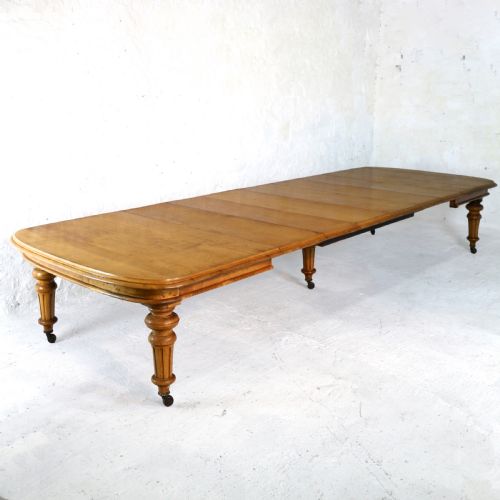
You are most likely to meet pieces originating from the nineteenth century, including specific dates such as eighteen-fifty and eighteen-seventy, alongside broad Victorian eras. These items frequently manifest in grand lengths stretching up to eighteen feet.
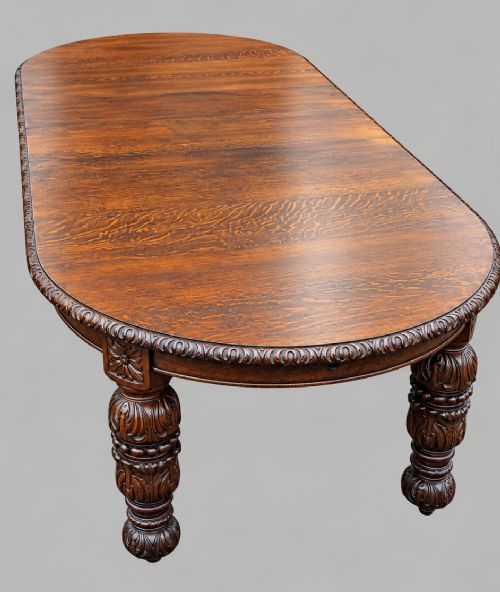
The forms encompass circular oak dining tables on cruciform bases as well as long extending refectory styles equipped with multiple leaves. Many of these surfaces arrive accompanied by matching chairs reflecting the same architectural period.
How they were made
Construction relies heavily on solid oak and pollard oak timber, providing the dense foundation required for tables of extraordinary length. Cabinet makers integrated brass mechanisms to facilitate the smooth operation of extending leaf systems.
Surface treatments incorporate inset materials such as leather and fabric to top the extensive working areas. Workshops applied elaborate carving techniques to realise Gothic Revival, Elizabethan Revival, and Reformed Gothic stylistic details.
Victorian Oak Conference Table Retail Price Guide 2026
Typical asking prices for victorian oak conference table among the pieces listed under this phrase on Sellingantiques today, from the lower quarter to the upper quarter. They describe what is for sale here now, not the wider market.
One eighteen-foot table insists on being the undisputed ruler of any room it enters.
What varies in quality
Distinction across these large tables rests in the complexity of the architectural styling and the selection of figured timbers like pollard oak. Pieces featuring cohesive Gothic Revival ornamentation or extensive matched seating display higher artisanal ambition than plain formats.
The sophistication of the extending mechanism and the preservation of original leaves dictate the functional calibre of the piece. Tables retaining their full structural integrity across spans exceeding twelve feet demonstrate superior original joinery.
The Victorian Oak Conference Table Glossary
- Pollard oak
- Timber taken from trees that have been pollarded, producing richly figured and mottled grain patterns. This decorative wood was frequently selected for high-status nineteenth-century dining and library tables.
- Extending dining table
- A table designed with a central track system and removable leaves to alter its overall length. This mechanism allows a surface to accommodate large gatherings safely.
- Gothic Revival
- An architectural and decorative style drawing inspiration from medieval forms, featuring pointed arches and heavy carved detail. It is a defining aesthetic across nineteenth-century oak furniture.
- Cruciform base
- A support structure arranged in the shape of a cross, typically centring beneath large circular table tops. This configuration ensures stability across heavy spans.
- Reformed Gothic
- A nineteenth-century design movement that simplified medieval motifs into more rectilinear and structural furniture forms. It emphasised honesty of construction and materials.
Victorian Oak Conference Table: Frequently Asked Questions
How many people do these tables seat?
These nineteenth-century pieces vary significantly in length, with several formats scaling from twelve to eighteen feet. Extended versions comfortably seat ten to eighteen diners depending on the specific leaf configuration.
Buyers should examine the dimensions and leaf counts carefully to ensure the surface matches their spatial requirements. The inclusion of matching chairs in certain listings provides a complete seating arrangement from the outset.
What styles are common in this period?
The aesthetic vocabulary of these pieces is dominated by Gothic Revival, Elizabethan Revival, and Reformed Gothic movements. These styles bring architectural motifs, pointed arches, and robust structural carving to the oak timbers.
Such decorative choices reflect a nineteenth-century fascination with medieval and Tudor design traditions. This gives the tables a distinct presence that contrasts sharply with later minimalist furniture.
How do extending mechanisms function here?
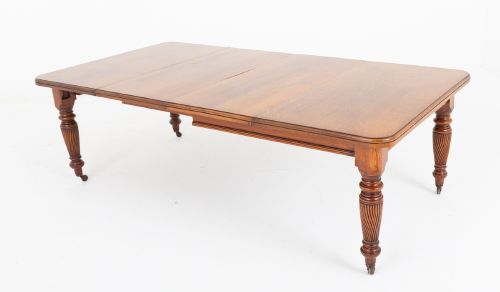
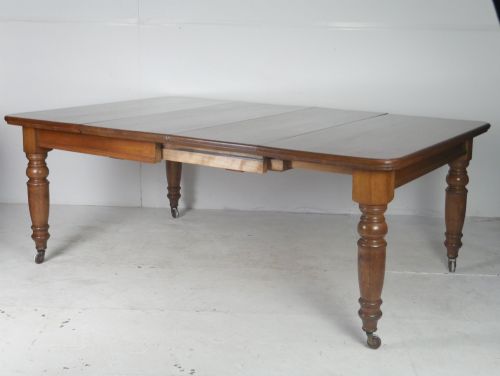
Nineteenth-century extending tables utilise internal wooden tracks and brass hardware to pull apart evenly. Additional leaves drop into the resulting centre gap to increase the usable surface area.
This engineering allows exceptionally long tables to contract for daily use and expand for major gatherings. The presence of multiple original leaves preserves the historical integrity of the piece.
Where were these tables used originally?
Large oak tables of this scale served primarily in country houses, institutional libraries, and substantial dining rooms. They functioned as heavy-duty workspace hubs or communal dining centres for large households.
Today, buyers repurpose these grand surfaces as boardroom desks, conference tables, or statement dining focal points. Their robust construction ensures they adapt readily to contemporary large-scale interiors.