

Antique Oak Long Table
An antique oak long table grounds a room with generations of utility, bringing deep grain and sturdy architecture to daily gatherings.
Antique Oak Long Table
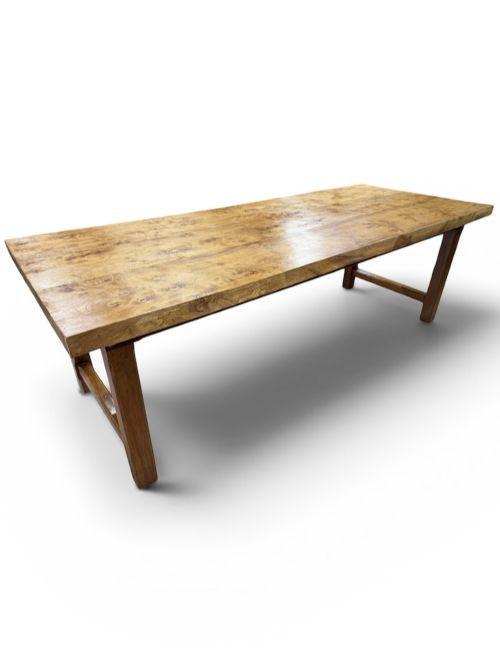
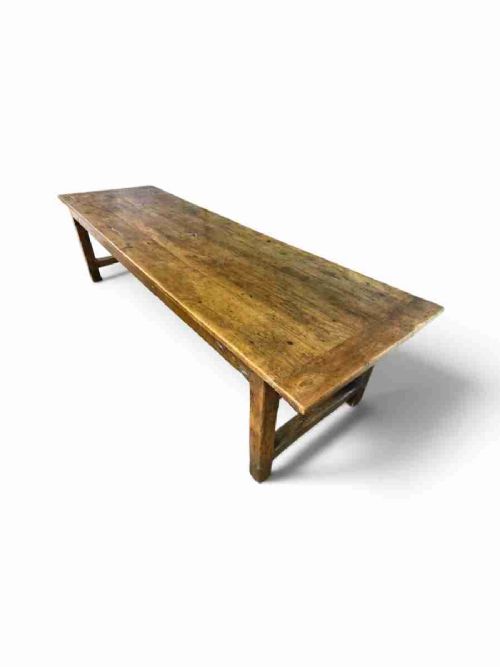
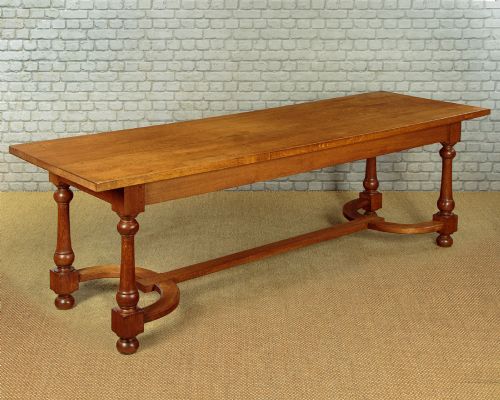
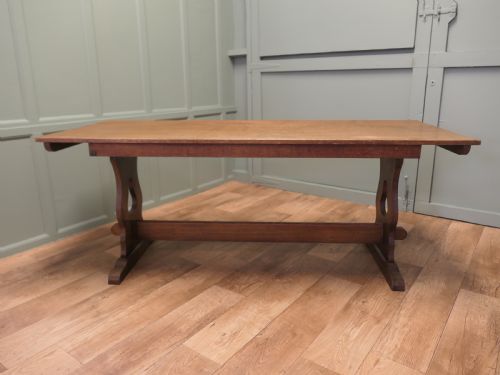
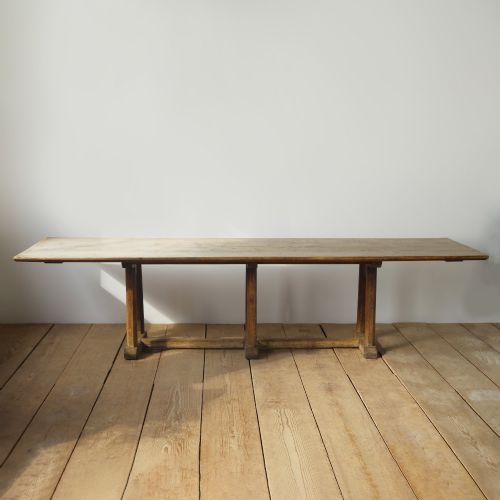
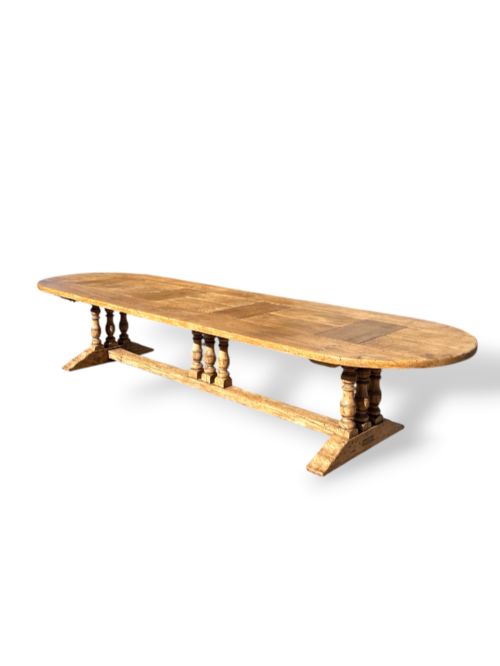
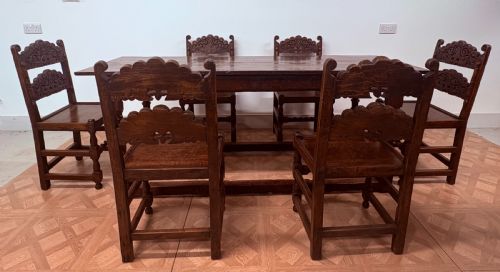
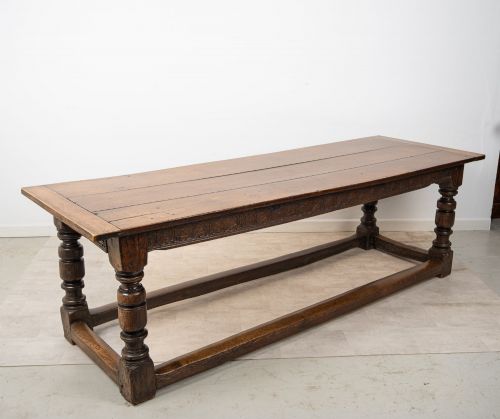
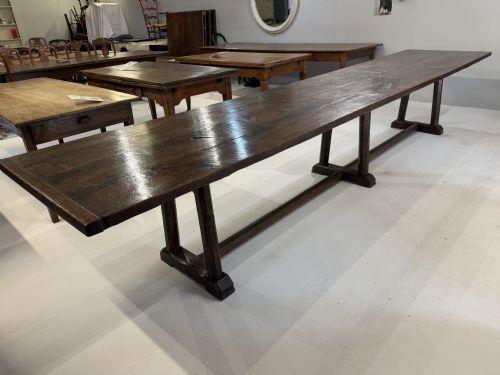
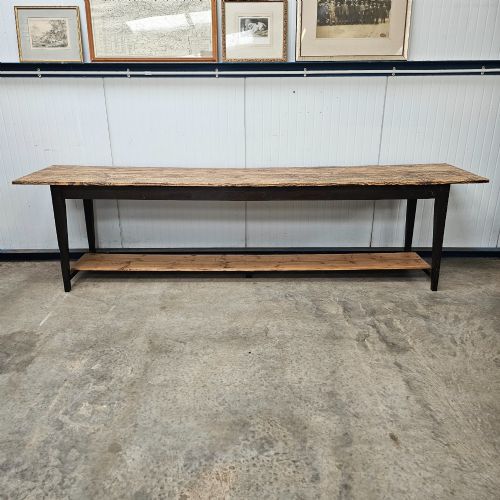
An antique oak long table encompasses substantial dining surfaces, refectory forms, and expansive kitchen boards designed to seat many people. These pieces derive from periods spanning the seventeenth century through to the early twentieth century, encompassing English, French, and continental workshops.
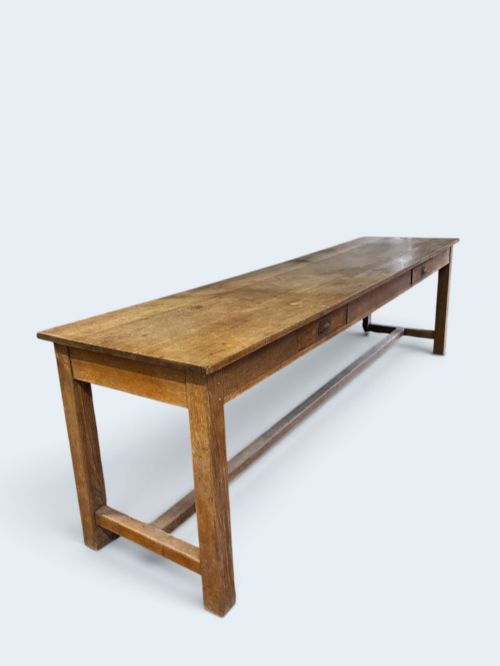
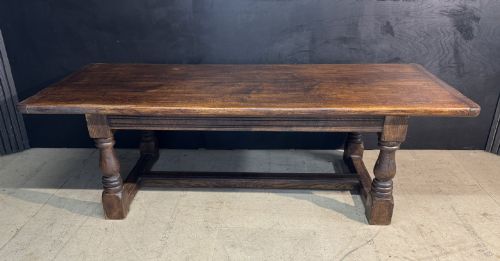
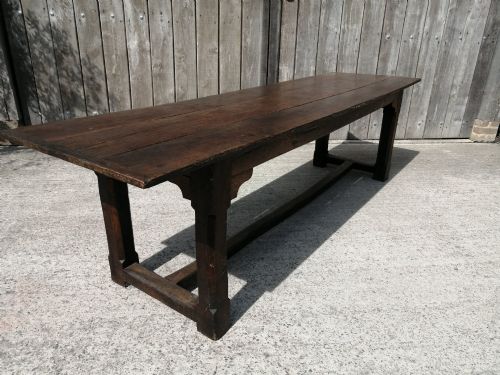
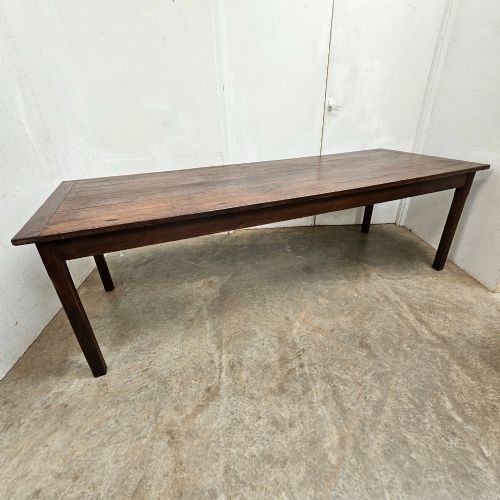
The version most commonly encountered on this page is the nineteenth-century farmhouse or refectory board, often measuring eight feet or longer. Such tables frequently feature heavy plank tops supported by trestles or robust turned legs, reflecting domestic and institutional uses.
How they were made
Makers utilised solid timber boards, primarily oak supplemented by elm, beech, and pine for secondary framing, joined with traditional pegged mortise and tenon construction. Surfaces often show heavy planking secured by wooden pins, bearing the tool marks of hand-planing and sawing.
Structural reinforcement frequently involved iron, brass, or cast elements in industrial, ships, or later refectory designs, while French and English country pieces relied purely on dense wood joints and pegged stretchers.
Several centuries of spilled ale, carved initials, and hurried bread-kneading live quietly beneath the polish of these boards.
What varies in quality
The caliber of an antique oak long table depends heavily on the integrity of its timber top, where single or double-plank construction outweighs patched or overly repaired surfaces. Thicker boards with rich, unbleached grain patterns and minimal structural alteration command greater respect among collectors.
Proportion and underframe preservation dictate distinction, as tables retaining their original stretchers, undisturbed block feet, and honest patination without excessive modern sanding exhibit superior craftsmanship.
The Antique Oak Long Table Glossary
- Refectory table
- A long, narrow dining table traditionally used in monasteries and large halls. These pieces typically feature elongated plank tops supported by strong side stretchers.
- Plank top
- A surface constructed from wide boards joined side by side. Early examples display substantial thickness and distinct growth rings.
- Stretcher
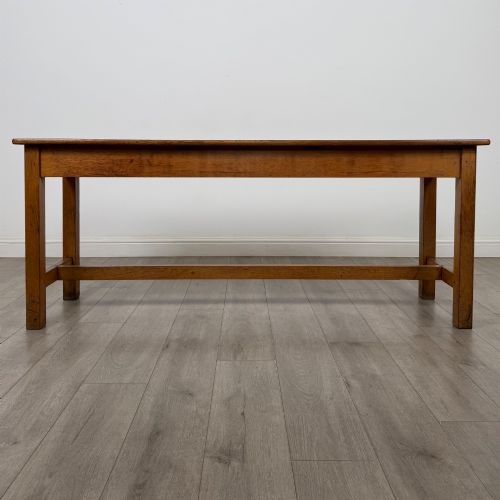
- A horizontal wooden brace connecting the legs of a table for stability. They often show foot wear from generations of sitters.
- Pegged joint
- A method of securing timber framing using wooden dowels rather than metal screws. This technique allows wood to move naturally with humidity changes.
Antique Oak Long Table: Frequently Asked Questions
How do I clean an antique oak table?
Wipe surfaces gently using a soft, damp cloth followed by dry buffing. Avoid harsh chemical sprays that strip historic wax.
Feed the dry timber periodically with traditional beeswax to maintain a deep, protective sheen over the grain.
Will an eight-foot table fit my dining room?
Measure your dining space carefully, allowing at least one metre of clear floor area around all sides for chairs and movement.
Consider the placement of doorways and stairwells if the table must travel to upper floors or tight corners.
What is the difference between a refectory and a farmhouse table?
Refectory tables typically feature recessed legs connected by a low continuous stretcher, originating from monastic dining halls.
Farmhouse tables often showcase more straightforward corner legs and occasionally include utilitarian drawers for cutlery storage.
How can I tell an eighteenth-century table from a later copy?
Examine the underside and joints for hand-cut tool marks, uneven shrinkage, and period-appropriate pegging methods.
Genuine age shows in the softening of edges, natural timber oxidation, and cumulative wear around the foot stretchers.