



Victorian Oak Barware
Victorian oak barware combines robust timber framing with bright metal mounts to serve spirits and wine with deliberate formality.
Victorian Oak Barware
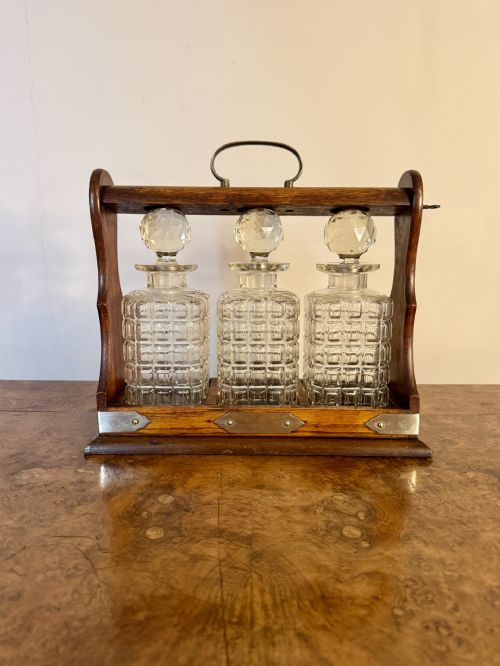
Victorian oak barware encompasses heavy-duty entertaining pieces designed to house and chill drinks in nineteenth-century drawing rooms and dining spaces. Buyers exploring Victorian oak barware encounter functional drinking equipment built to display bottles securely while keeping ice and wine at hand.
The selections on this page centre heavily on secure locking tantalus sets alongside insulated ice pails and wooden spirit barrels. These forms reflect the era's taste for structured hospitality where expensive spirits remained locked away until the host poured them.
Originating largely from the late nineteenth century and stretching into the Edwardian period, these items range from simple tabletop spirit casks to elaborate marquetry-strung bottle holders. Oak forms the structural core across almost every example, often paired with silver-plated mounts or brass bands.
How they were made
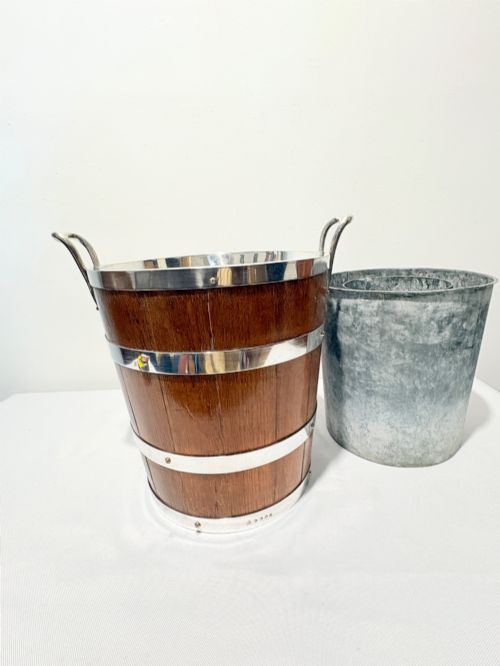
Makers constructed these pieces using solid oak, frequently enhancing the timber with intricate marquetry stringing or leaving the natural grain exposed beneath brass banding and silver-plated mounts. Cooperage techniques shaped wooden barrels and staves, while metalworkers cast and applied handles, hinges, and locking mechanisms.
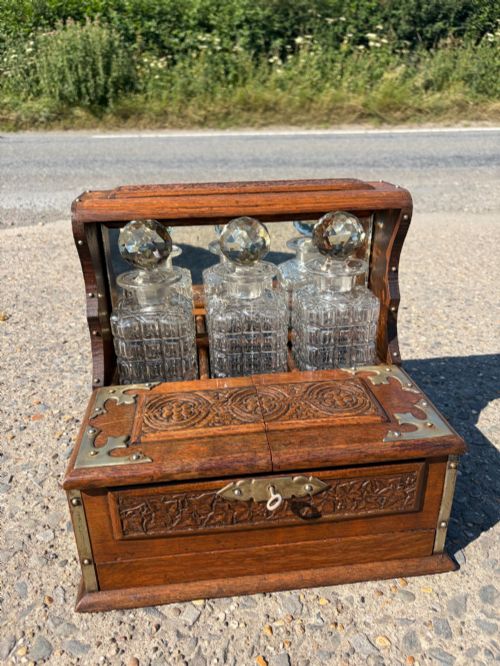
Interiors often relied on cut glass, cut crystal, or ceramic creamware liners to hold liquids safely within the wooden framework. Mirror glass occasionally lined the back of specialised stands, creating a reflective display behind the decanters and glassware.
Victorian Oak Barware Retail Price Guide 2026
Typical asking prices for victorian oak barware among the pieces listed under this phrase on Sellingantiques today, from the lower quarter to the upper quarter. They describe what is for sale here now, not the wider market.
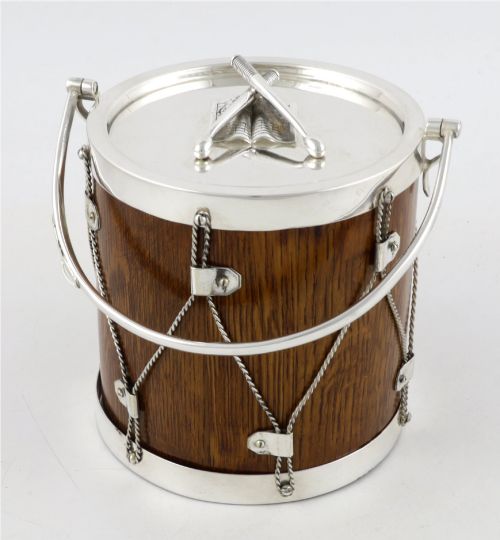
One exceptional piece takes the form of a military drum, turning an ordinary ice pail into a miniature percussion instrument.
What varies in quality
Quality rests in the precision of the joinery and the weight of the metal hardware applied to the timber frame. Superior pieces demonstrate crisp marquetry stringing, substantial silver plating over the mounts, and complex locking mechanisms that operate smoothly.
The integration of unusual forms, such as military drum shapes or carved Black Forest stands, elevates certain items above standard production models. The clarity and depth of cut glass decanters and liners further distinguish finer examples from simpler utilitarian vessels.
The Victorian Oak Barware Glossary
- Tantalus
- A locking drink cabinet that holds decanters securely within a wooden frame to prevent unauthorized access while displaying the contents. The locking bar traps the decanter stoppers until the key is turned.
- Marquetry
- The art of applying decorative veneer pieces to a structure to form intricate patterns or designs. On these items, thin contrasting wood strips create geometric stringing along the oak surfaces.
- Creamware
- A fine-grained, light-coloured earthenware developed in the eighteenth century and glazed to produce a smooth, durable finish. Liners made from this material frequently sit inside wooden ice buckets.
- Silver Plate
- A thin layer of silver bonded to a base metal foundation to give the appearance and lustre of solid silver. Mounts and handles finished this way resist tarnishing while providing structural strength.
Victorian Oak Barware: Frequently Asked Questions
What is a tantalus used for?
A tantalus holds decanters of spirits securely behind a locking metal bar. This design allowed Victorian hosts to display expensive whiskey and brandy while preventing servants or guests from helping themselves.
Today, they serve as striking tabletop display pieces that retain their original mechanical function. Collectors use them to house antique cut glass decanters in studies and dining rooms.
How do I date these items?
Dating relies on examining the construction methods, lock types, and stylistic indicators present in the piece. Pieces marked from the Victorian era often feature heavier brass mounts and traditional dovetail joinery.
Later Edwardian versions can display lighter proportions or incorporate marquetry detailing influenced by earlier design revivals. Maker marks on silver-plated mounts or locks also help narrow down the period of manufacture.
Are the locks still functional?
Many surviving pieces retain working locks, though original keys are sometimes missing or replaced over the decades. The locking mechanism typically involves a hinged metal bar that slips over the decanter stoppers.
When a key is turned in the lock, the bar releases to allow the bottles to be lifted clear. Buyers should check individual listings to confirm whether a working key is included.
How should I care for oak barware?
Maintenance involves keeping the timber clean and conditioned with appropriate wood wax to prevent the oak from drying out. Metal mounts require gentle polishing with non-abrasive cloths to preserve the silver plate or brass.
Avoid placing these items in direct sunlight or near heat sources that could warp the wood or crack internal liners. Glass and ceramic components can be washed separately with mild soapy water.