

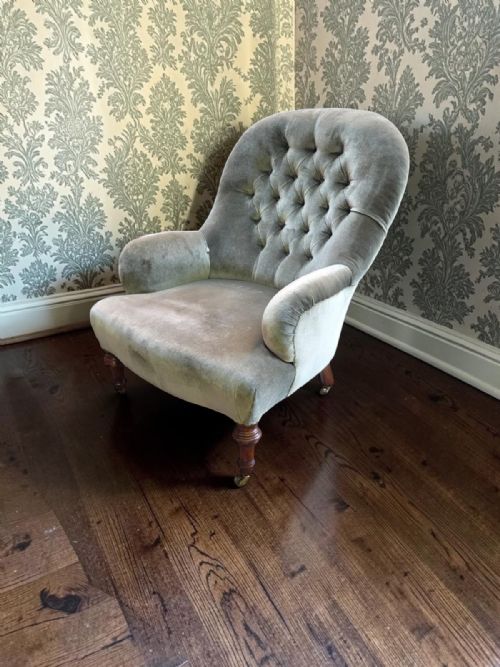
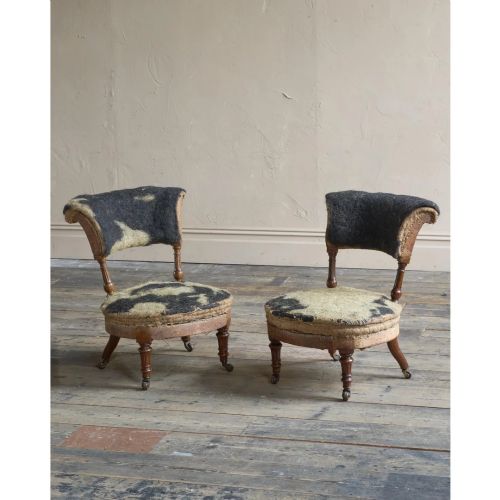
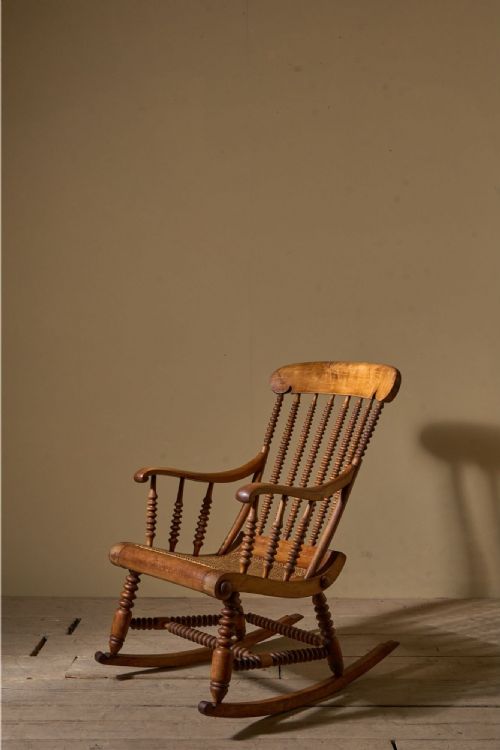
Victorian Nursing Seat
A victorian nursing seat is a low-slung, deeply upholstered chair designed for comfort, and you will find these compact nineteenth-century pieces surfaced in walnut, mahogany, and rosewood.
Victorian Nursing Seat
A victorian nursing seat is a low-slung chair built with a generous, padded seat and a supporting back, designed originally to allow a person to sit comfortably while holding an infant or tending to a child. These pieces emerge predominantly from the nineteenth century, spanning periods from early Victorian work through to Edwardian interpretations, alongside related forms such as slipper chairs, low salon chairs, and occasional chairs.
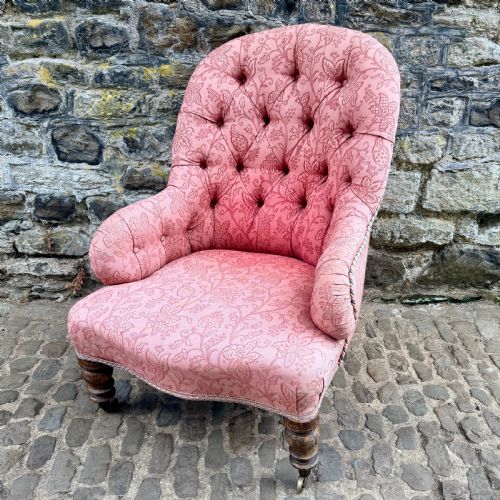
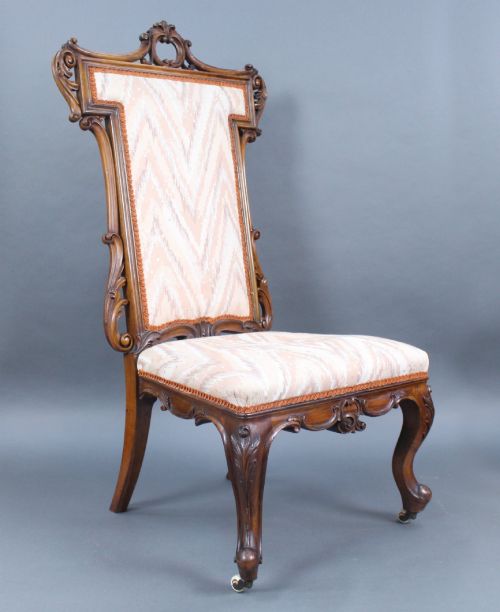
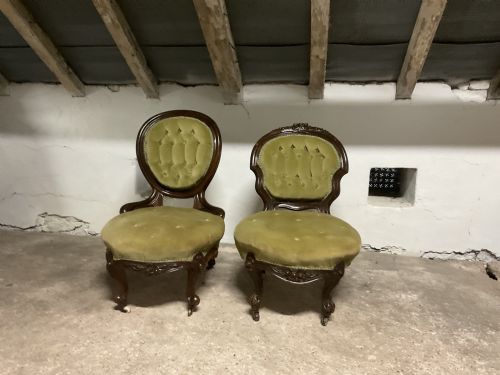
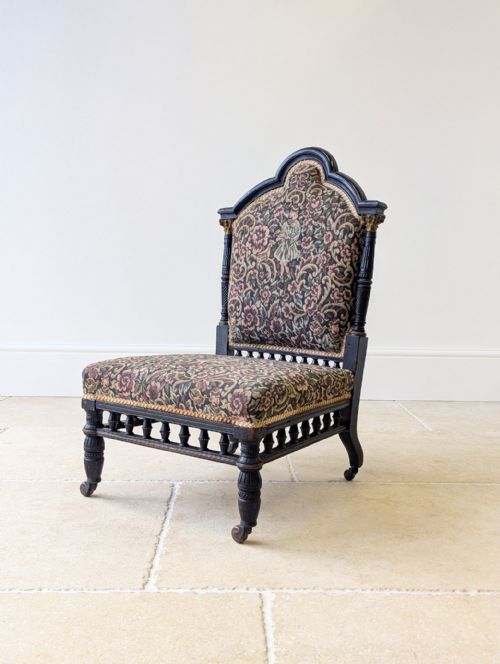
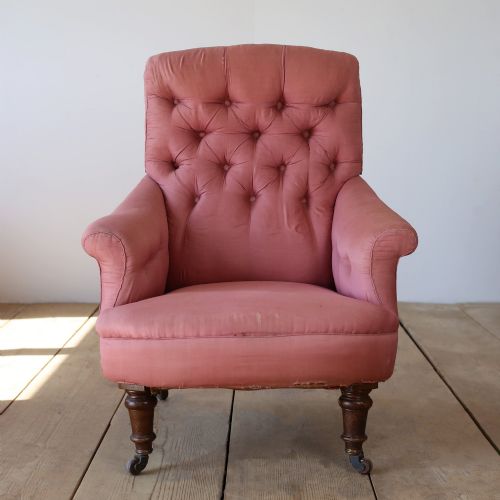
The profile of a victorian nursing seat is distinctive for its shortened legs and low height from the floor, which set it apart from standard parlour armchairs of the same decades. The evidence shows these low seats appearing in styles ranging from plain Victorian country models and Aesthetic Movement ebonised frames to elaborate Victorian Rococo Revival carved walnut and Louis XVI revival designs.
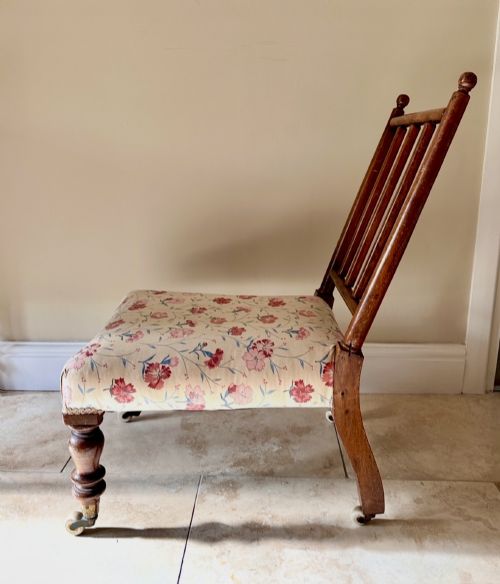
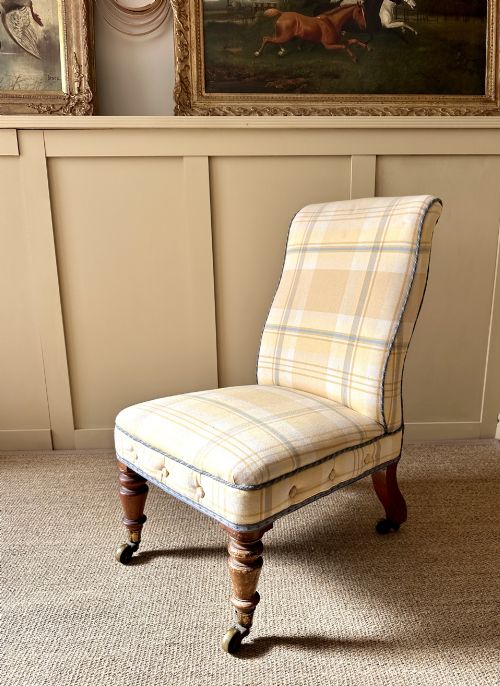
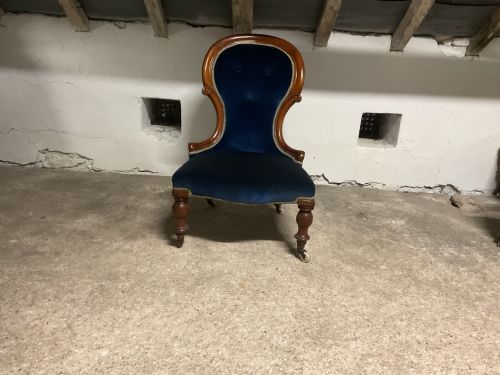
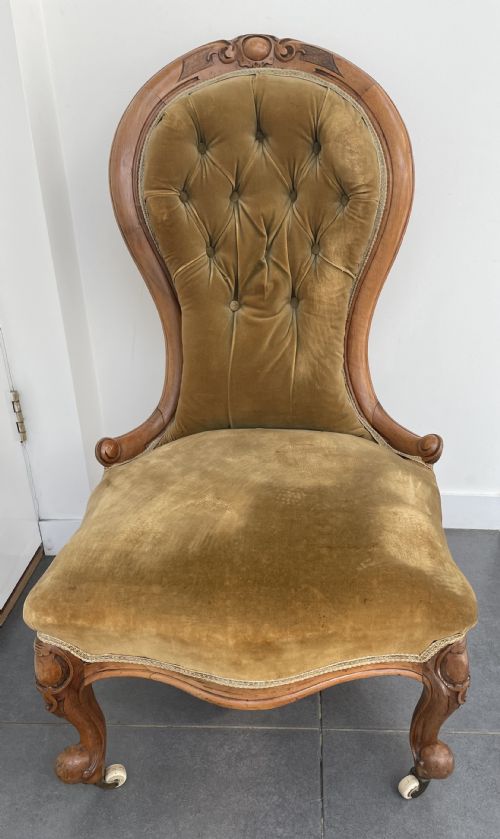
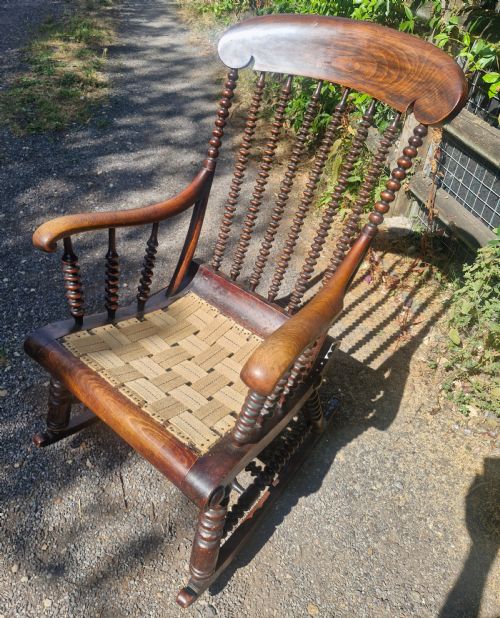
Buyers seeking a victorian nursing seat will encounter variations including button-backed upholstery, round seats, bobbin-turned frames, and low bedroom chairs intended for dressing rooms and private chambers. The listings include pairs, children's chairs, and rocking variants, constructed from native and imported timbers including mahogany, walnut, and rosewood.
How they were made
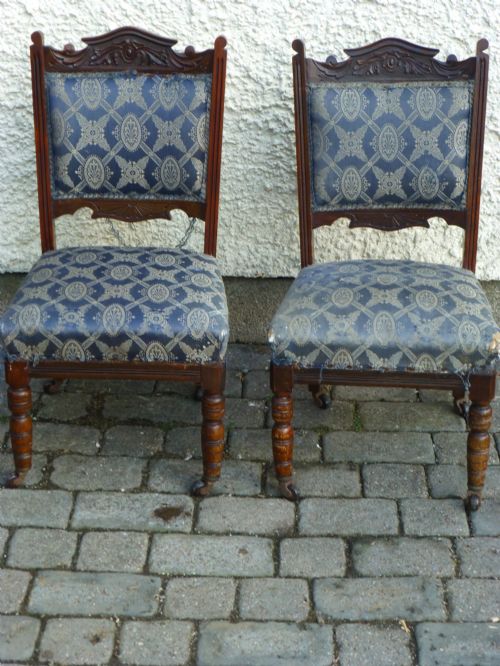
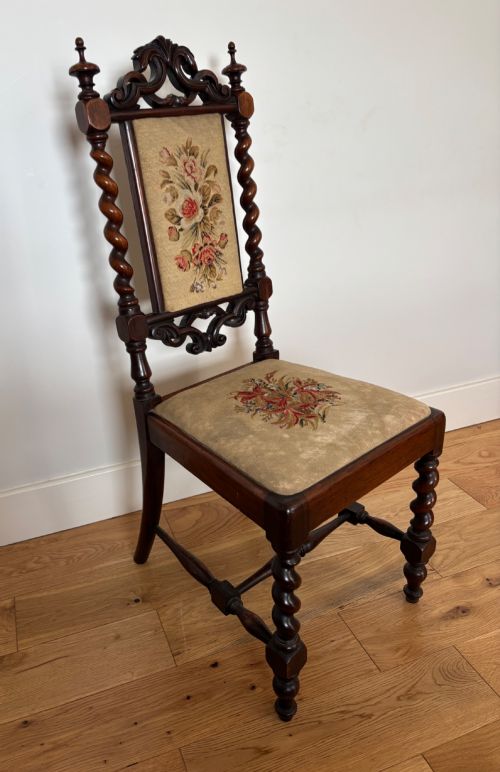
Makers constructed the timber frames of a victorian nursing seat from hardwoods such as walnut, mahogany, ebonised wood, and rosewood, often turning the components on a lathe to create barley twist or bobbin-framed supports. Joinery relied on traditional mortise and tenon methods to bear the weight of the deep upholstery while maintaining slim, elegant proportions.
Upholstery formed the primary substance of a victorian nursing seat, utilising internal stuffing secured over webbing and springs, then finished with fabrics such as velvet, silk, leather, or needlepoint. Button backing and applied fringe details required precise hand-tack work to secure the fabric tightly against the curved wooden contours of the low frame.
Listings for a victorian nursing seat feature walnut, mahogany, and rosewood frames alongside brass details and ceramic castors.
What varies in quality
The quality of a victorian nursing seat rests primarily in the crispness of the timber carving, the integrity of the frame construction, and the balance of its proportions. Pieces bearing maker stamps or originating from known workshops display superior joinery and more refined turning in woods like walnut and rosewood compared to standard commercial output.
The execution of the upholstery work also distinguishes better examples, where deep buttoning and hand-finished springing maintain a taut, enduring shape. Elaborate treatments, such as ebonising with gilt highlights or intricate carved foliate details on the walnut frame, separate ordinary bedroom chairs from exhibition-grade seating.
Howard And Sons·Gillows
The Victorian Nursing Seat Glossary
- Button back
- A method of upholstery where deep tufting is secured with fabric-covered buttons arranged in a geometric diamond pattern. This technique creates cushioned indentations that hold the padding firmly in place.
- Slipper chair
- A low-seated upholstered chair without arms, traditionally used in bedrooms for putting on shoes. It shares the low posture characteristic of a victorian nursing seat.
- Bobbin framing
- A style of furniture turning where the wooden legs or spindles are shaped to resemble a string of rounded bobbins or spools. This decorative joinery appears frequently on nineteenth-century vernacular seating.
- Aesthetic Movement
- A late nineteenth-century design style emphasising simplicity, ebonised surfaces, and artistic refinement over heavy Victorian ornamentation. Pieces from this movement often feature slender, clean lines.
- Bergere
- An enclosed upholstered armchair with a wooden frame and woven cane panels forming the back and sides. It offers a lighter visual weight than fully padded parlour chairs.
Victorian Nursing Seat: Frequently Asked Questions
What is a victorian nursing seat used for?
A victorian nursing seat was originally designed for the nursery or bedroom, offering a low sitting position that made it easier to nurse an infant or tend to clothing. The low height also suited dressing rooms and private sitting spaces.
Today, these chairs function well as accent seating in living rooms, bedrooms, or reading corners where a compact footprint is required. Their low profile gives them an understated presence that complements modern interiors.
How do I date a victorian nursing seat?
Dating a victorian nursing seat involves examining the primary timber, the style of the turned legs, and the upholstery method. Early nineteenth-century pieces often feature rosewood and simpler classical lines, while mid-Victorian examples frequently display carved walnut and button backs.
Later nineteenth-century pieces lean towards ebonised finishes and Aesthetic Movement designs, whereas Edwardian variants show lighter frames and simplified turned supports. Maker stamps, where present, provide a precise attribution to workshops of the period.
Are these chairs comfortable to sit in?
A victorian nursing seat provides a surprisingly supportive sit due to its deep sprung upholstery and padded backrest. The low seat height encourages a relaxed posture rather than an upright dining position.
Many surviving pieces retain their original internal springing or have been re-upholstered with modern supportive fillings. Their compact dimensions make them particularly comfortable for smaller statures.
How do I fit a victorian nursing seat into a modern room?
A victorian nursing seat works effectively as an occasional chair in a bedroom, dressing room, or corner of a larger sitting room. Its low height means it does not block sightlines or overwhelm surrounding furniture.
Pairing a walnut or mahogany frame with contemporary fabric choices can bridge historical design and modern interiors. They serve as distinct focal points without dominating the floor space.