



Victorian Nursing Chair Rocker
These victorian nursing chair rocker examples offer low seating and gentle movement, built for comfort beside the hearth.
Victorian Nursing Chair Rocker
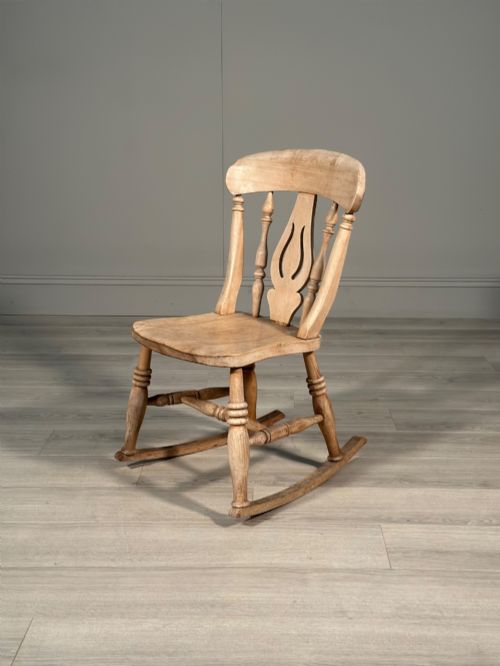
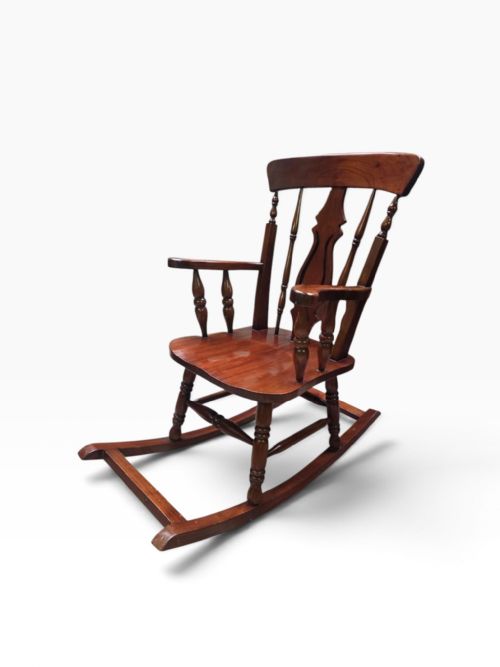
A victorian nursing chair rocker combines low-slung seating with a rocking base, designed for fireside use during the nineteenth century. These items appear in formats ranging from simple Windsor frames to padded low-backed models.
Most entries belong to the Victorian and Edwardian eras, spanning timber frames from mahogany and oak to walnut and stained hardwood. Collectors encounter regional styles like Caistor Windsor designs alongside turned bobbin framing and ladder-back structures.
Seating varies from woven cane and leather to upholstered button-back cushions supported by webbing. The primary focus remains on low proportions intended for domestic comfort.
Materials and construction
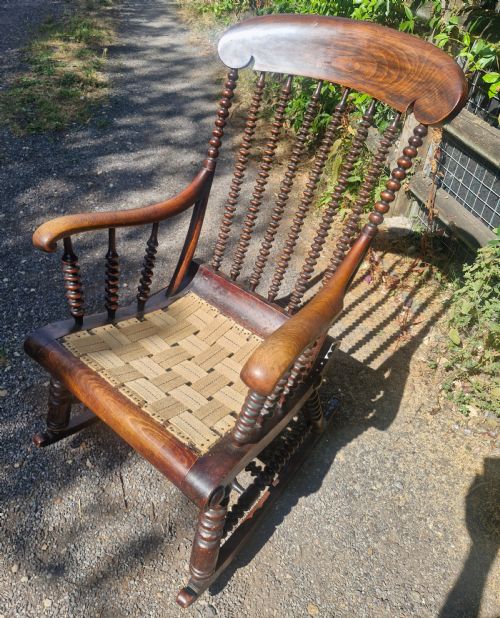
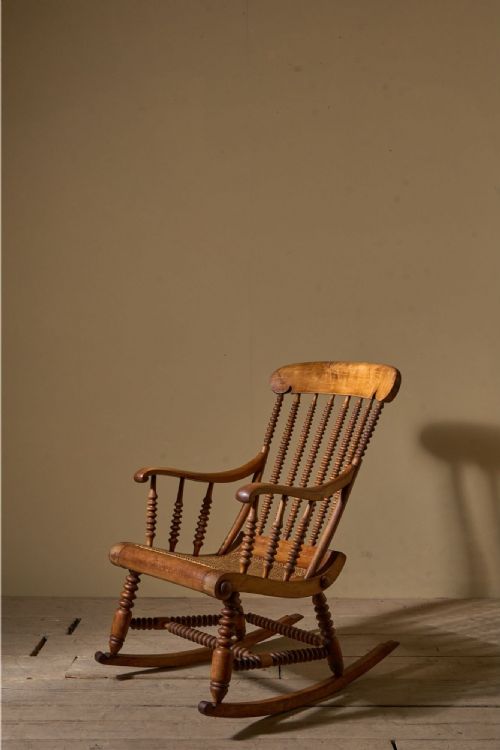
Frames rely on hardwoods including mahogany, walnut, and oak, shaped through traditional turning and joinery techniques. Bobbin-turned spindles and ladder backs demonstrate common nineteenth-century carpentry methods.
Upholstered variants incorporate leather, woven webbing, and button-backed padding fixed securely to low frames. Cane seating options utilise natural woven materials fitted directly into wooden seat rails.
Victorian Nursing Chair Rocker Retail Price Guide 2026
Typical asking prices for victorian nursing chair rocker among the pieces listed under this phrase on Sellingantiques today, from the lower quarter to the upper quarter. They describe what is for sale here now, not the wider market.
Bobbin-turned spindles on these nineteenth-century frames resemble strings of wooden thread spools.
Assessing the standards
Quality rests upon the integrity of the timber frame and the skill evident in turned components like bobbin spindles. Heavier woods such as mahogany and walnut generally indicate higher grade production than generic stained hardwoods.
The sophistication of the seating material, whether supple leather, tight cane work, or button-backed upholstery, distinguishes standard workshop pieces from finer regional variants.
The Victorian Nursing Chair Rocker Glossary
- Bobbin-turned
- A method of lathe-working timber to create a series of rounded, spool-like shapes along a spindle or leg. This decorative turning style appears frequently on nineteenth-century chair frames.
- Windsor
- A traditional wooden chair construction where legs and back spindles fit directly into a solid sculpted seat. Regional variations include specific brace and comb configurations.
- Ladder back
- A chair back featuring horizontal wooden slats set between two vertical rear posts. This sturdy construction dates back centuries and remains common in country furniture.
- Button back
- An upholstery technique where buttons are pulled deep into the padding to create a quilted, geometric pattern. This finish provides both structural tension and visual depth.
Victorian Nursing Chair Rocker: Frequently Asked Questions
What is a victorian nursing chair rocker?
These pieces are low-seated rocking chairs produced during the nineteenth and early twentieth centuries. They were designed to provide comfortable seating close to the hearth.
Today, they function as decorative and practical seating in living spaces or bedrooms. Their compact scale suits smaller rooms.
How do I date a rocking chair?
Dating relies on observing timber choices, framing styles, and upholstery methods across different eras. Mahogany and walnut often point to mid-Victorian periods, while Edwardian examples show lighter woods.
Construction details like bobbin turning or ladder backs also help align a piece with nineteenth-century production norms. Comparing overall proportions aids in confirming the era.
Were these chairs used only for nursing?
While traditionally associated with nursing infants due to their low seat height, they served general domestic purposes by the fireside. Their gentle motion suited relaxed sitting in Victorian parlours.
Many examples were simply low fireside chairs fitted with rockers for added comfort. Their versatility kept them popular across multiple rooms.
What materials are typical for these chairs?
Frames are constructed from solid hardwoods including mahogany, oak, walnut, and general stained wood. These timbers provide the necessary strength for rocking mechanisms.
Seats feature materials such as woven cane, leather, and upholstered webbing. These surface choices vary depending on the specific regional style and period.