

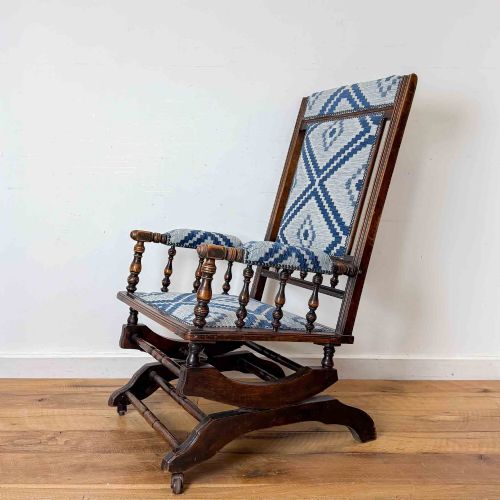


Vintage Upholstered Rocker Chair
These vintage upholstered rocker chair examples combine traditional framing with gentle movement, offering comfort and period character for any interior.
Vintage Upholstered Rocker Chair
A vintage upholstered rocker chair sits among nineteenth-century and early twentieth-century seating forms designed for motion. These pieces span Victorian, Edwardian, and traditional American styles, alongside specific variants like nursing chairs and children's versions.
Most examples originate from the Victorian and Edwardian eras, or date around nineteen-twenty, reflecting domestic comfort over a span of several decades.
How they were made
Carpenters shaped hardwoods such as mahogany, walnut, and oak into structural frames, sometimes employing bentwood techniques or incorporating steel elements. Inlaid decoration and ebonised finishes appear across the period examples.
Seating areas received supportive upholstery using durable fabric, velvet, or leather, frequently finished with button-back detailing suited to domestic parlours and nurseries.
Vintage Upholstered Rocker Chair Retail Price Guide 2026
Typical asking prices for vintage upholstered rocker chair among the pieces listed under this phrase on Sellingantiques today, from the lower quarter to the upper quarter. They describe what is for sale here now, not the wider market.
Listings feature periods from the nineteenth century up to nineteen-twenty, including Victorian and Edwardian examples.
What varies in quality
The sophistication of the timber framing and the choice of primary wood distinguish standard production from finer cabinetmaking. Mahogany and walnut frameworks generally indicate higher material ambition than simpler utilitarian beech.
Upholstery execution and the retention of original textiles or leather elements alter the character of each piece. Refinement shows in the harmony between the wooden rockers, the turned or inlaid supports, and the padded seat.
The Vintage Upholstered Rocker Chair Glossary
- Bentwood
- Wood softened by steam and bent into curved structural forms. This technique created lightweight and resilient frames for nineteenth-century seating.
- Button-back
- An upholstery style where buttons are pulled deep into the padding to secure the fabric in a patterned, tufted grid. It provides both structural tension and a decorative surface.
- Ebonised
- Timber finished with a dark stain or lacquer to imitate ebony. This treatment was popular in Victorian furniture to achieve a formal, high-contrast appearance.
- Nursing chair
- A low-seated chair designed for comfort, traditionally used for feeding infants. These examples often feature upholstered backs and low profiles to aid relaxation.
Vintage Upholstered Rocker Chair: Frequently Asked Questions
What periods do these rockers span?
The pieces on this page primarily date from the nineteenth century through to the nineteen-twenties. This includes specific Victorian and Edwardian examples alongside traditional American designs.
Craftsmanship and materials shift across these decades, moving from heavy dark hardwoods to varied fruitwoods and bentwood construction.
How do I identify a nursing chair?
Nursing chairs typically feature a noticeably lower seat height compared to standard armchairs. This low profile allowed individuals to sit comfortably while tending to young children.
Many examples also include upholstered button-backs and compact proportions suited to smaller domestic spaces.
What woods were commonly used?
Maker workshops utilised a range of domestic and imported timbers depending on the style and period. Mahogany, walnut, and oak appear frequently in more substantial frames.
Other examples employ beechwood, fruitwood, or ebonised finishes, occasionally paired with steel components in later or specific American variants.
Are child-sized rockers common?
Smaller rocking chairs appear across the nineteenth and early twentieth centuries. These diminutive pieces mirror the proportions and upholstery styles of full-sized adult seating.
They served as functional nursery furniture or decorative items within period domestic interiors.