



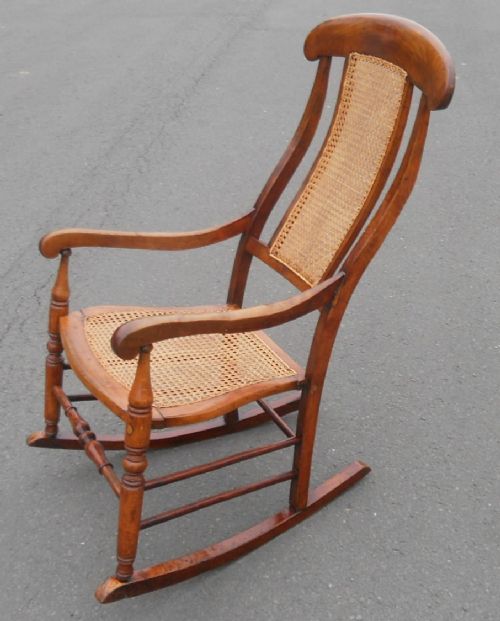

Carved Wooden Rocking Armchair
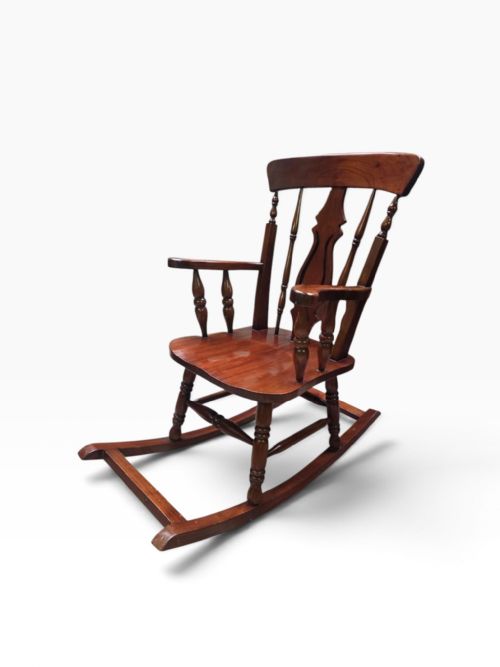
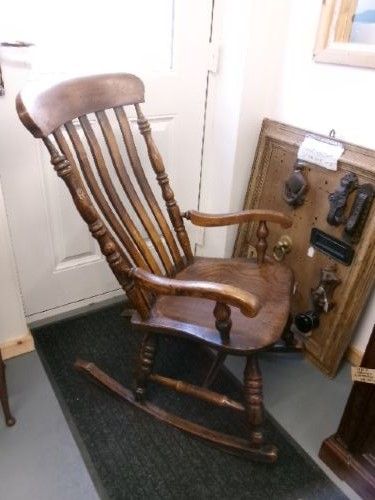
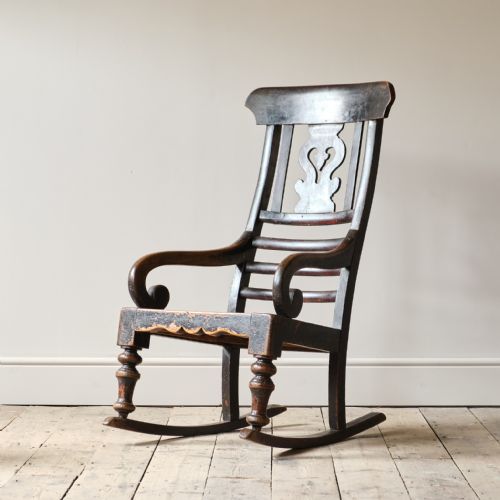
A carved wooden rocking armchair brings steady motion and sturdy seating into a room, combining traditional craft with deep comfort.
Carved Wooden Rocking Armchair
A carved wooden rocking armchair is a sturdy seat built upon curved rockers, designed for rhythmic motion and everyday comfort. The selections gathered here span the Victorian, Edwardian, and Regency periods, alongside rustic country and Arts & Crafts interpretations.
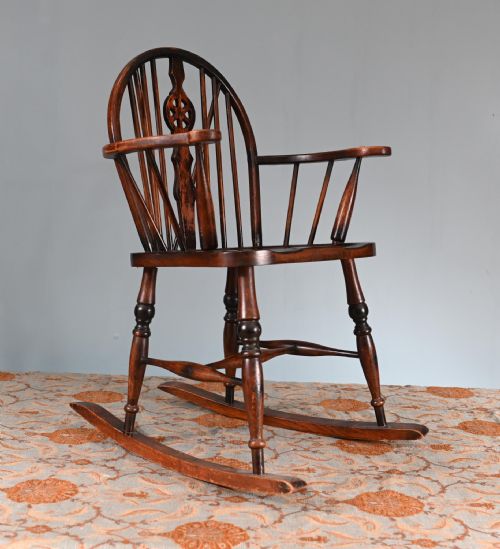
Most examples you encounter follow traditional Windsor or farmhouse forms, constructed in regional British timbers. You will find child's chairs, wheelback designs, and inlaid occasional pieces alongside simple spindle backs.
Makers shaped these chairs for domestic parlours, nurseries, and farmhouse kitchens alike. The overarching style reflects the period of its origin, from ornate late nineteenth-century carving to clean early nineteenth-century lines.
How they were made
Carpenters and turners relied upon domestic timbers such as elm, mahogany, beech, oak, ash, birch, and occasional fruitwoods. Turned spindles, steam-bent bows, and sturdy jointing methods gave the frames their structural integrity under constant movement.
Decoration often involved hand carving, decorative wood inlay, and pierced splats such as the traditional wheelback motif. Surfaces were frequently polished, waxed, or left with a natural timber grain that shows the honest marks of regional tools.
Carved Wooden Rocking Armchair Retail Price Guide 2026
Typical asking prices for carved wooden rocking armchair among the pieces listed under this phrase on Sellingantiques today, from the lower quarter to the upper quarter. They describe what is for sale here now, not the wider market.
Some nineteenth-century makers secretly signed their work underneath the solid wooden seat, leaving a hidden signature for future generations to discover.
What varies in quality
Quality rests upon the crispness of the timber carving, the balance of the rocking arc, and the selection of solid hardwoods. A superior chair retains its original turned components and tight joinery without excessive replacement parts.
Finer examples display careful attention to grain matching and subtle decorative touches like fine inlay work or well-proportioned arm supports. Simpler vernacular pieces prioritise robust utility over decorative flourishes, yet remain charming through honest country craftsmanship.
The Carved Wooden Rocking Armchair Glossary
- Windsor
- A traditional chair construction featuring a solid wooden seat into which the legs, back spindles, and arms are wedged directly. This technique ensures a sturdy frame built to withstand decades of daily motion.
- Wheelback
- A Windsor chair variation featuring a carved splat shaped like a spoked carriage wheel. It became a popular decorative motif during the nineteenth century.
- Spindle back
- A chair back composed of multiple slender turned vertical wooden rods. These rods provide comfortable back support while keeping the frame relatively lightweight.
- Inlay
- A decorative technique where contrasting pieces of wood or other materials are inserted into recesses within the primary timber surface. This creates flat geometric or floral patterns.
- Bobbin and bar
- A type of turned furniture decoration featuring a succession of rounded wooden beads resembling bobbins alternating with straight bars. It is particularly characteristic of Arts & Crafts design.
Carved Wooden Rocking Armchair: Frequently Asked Questions
How do I date a wooden rocking chair?
Dating relies on observing stylistic markers, construction methods, and timber choices across different periods. Victorian pieces often display heavier proportions or applied carving.
Earlier examples from the Regency period or around eighteen hundred tend to show simpler vernacular turning and lighter frames built by regional hands.
Are these rocking chairs comfortable?
Most wooden rocking chairs were designed with contoured solid seats and raked backs to support the body during long periods of sitting. Some Edwardian and Victorian versions also incorporate upholstered pads.
Adding a loose cushion can further increase comfort while preserving the historic timber frame beneath.
What woods were used for these chairs?
Cabinet makers and country joiners utilised whatever strong domestic timbers were readily available locally. Elm, mahogany, beech, oak, ash, and birch appear frequently.
Different woods were often combined within a single chair, such as an elm seat paired with ash or beech spindles.