
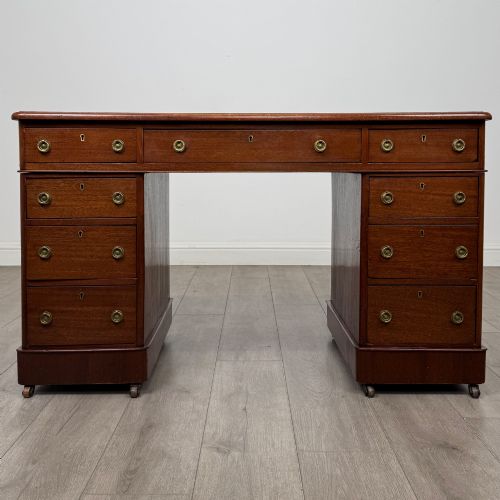
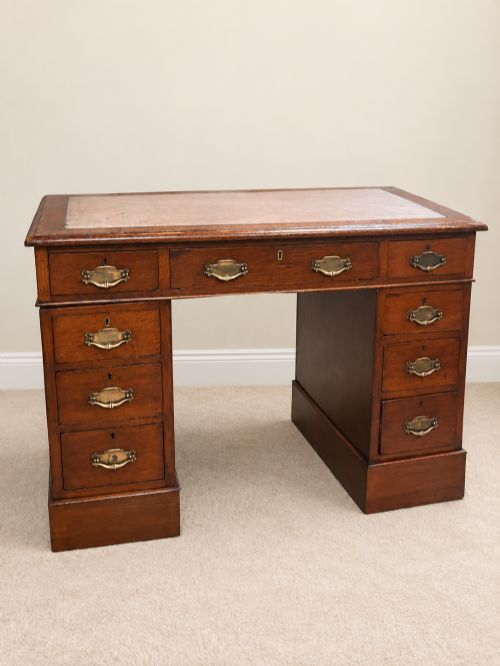
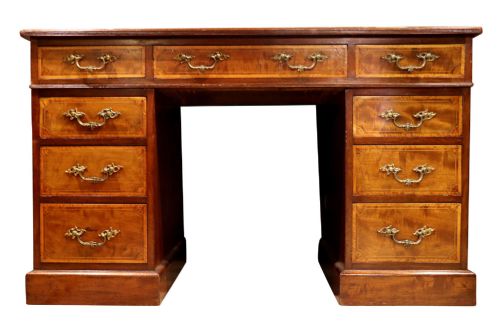
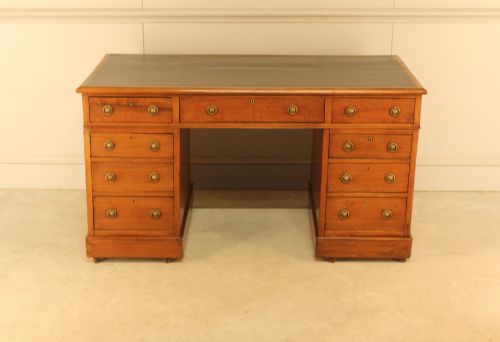

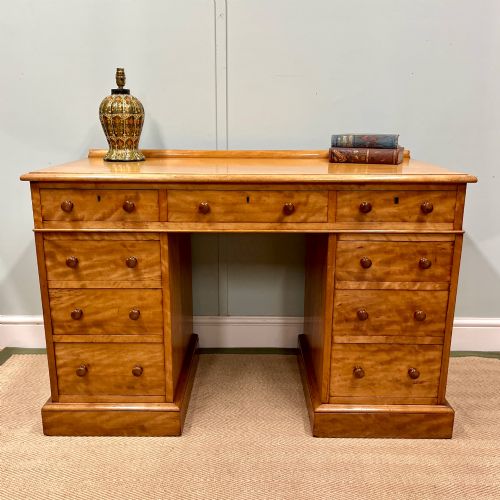


Victorian Nine Drawer Desk
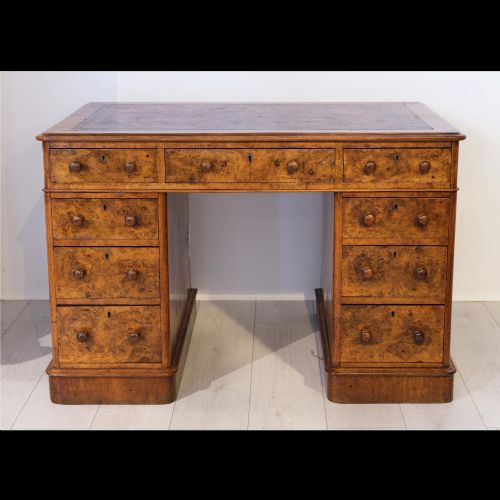
A victorian nine drawer desk provides a sturdy, compartmentalised workspace built to last.
Victorian Nine Drawer Desk
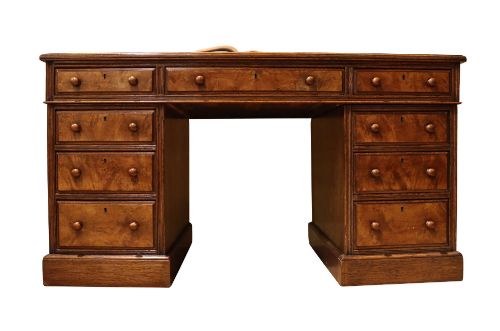
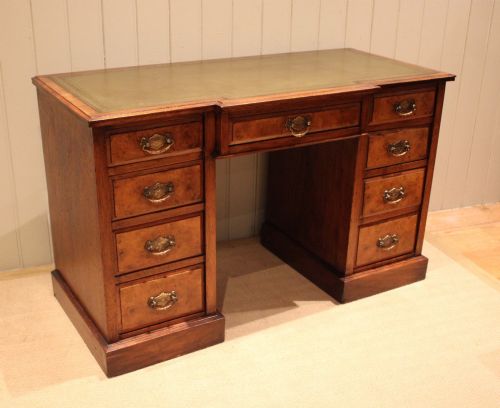
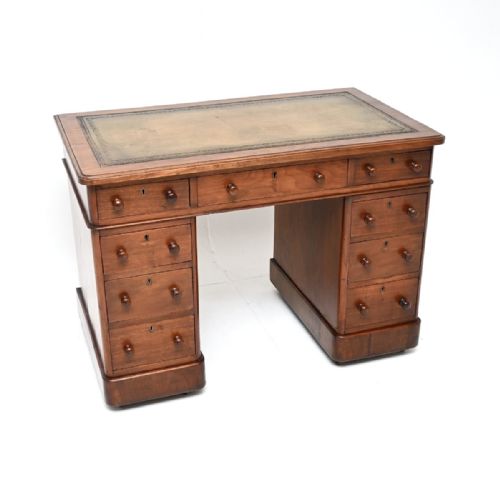
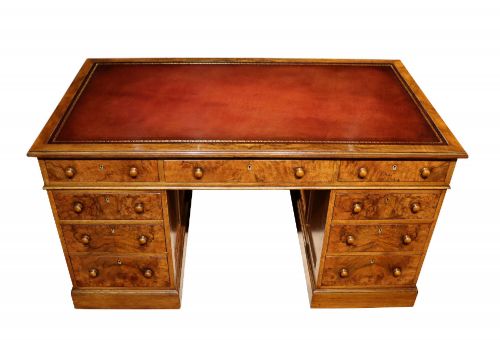
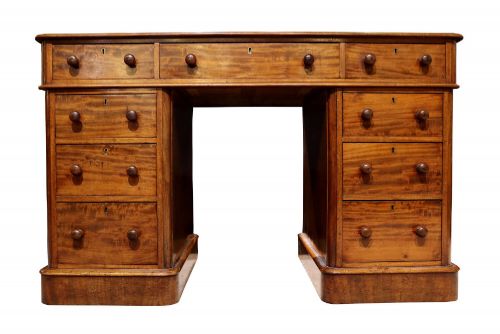
A victorian nine drawer desk typically takes the form of a twin pedestal writing table, featuring a central kneehole flanked by two stacks of drawers. These pieces date across the nineteenth century, with examples emerging from the eighteen fifties onwards through to the late nineteenth century.
Makers constructed these desks in variations ranging from compact kneehole formats to large breakfront configurations. Woods span from traditional timbers such as mahogany and oak to more decorative veneers like burr walnut and satin birch.
Materials and construction
Cabinet makers built the carcases using solid timbers including mahogany, oak, ash, and pine, often applying figured veneers such as burr walnut or curl mahogany to the primary surfaces. Many examples incorporate inset leather writing surfaces framed by timber borders.
Drawer construction relied on traditional joinery techniques, housed within twin pedestals supporting a central top section. Brass hardware and original handles frequently complete the assembly, alongside fitted interiors designed for correspondence and paperwork.
Period examples span from the mid nineteenth century through to the end of the Victorian era.
Assessing the range
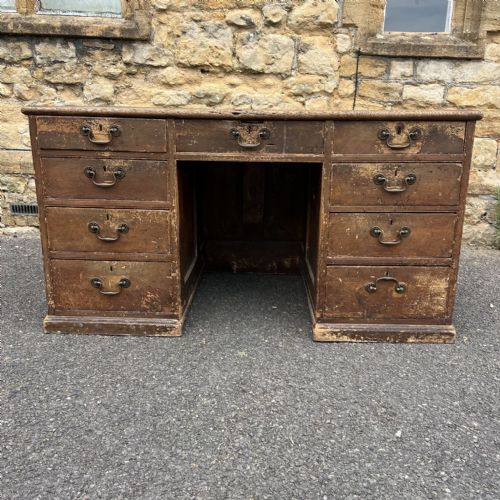
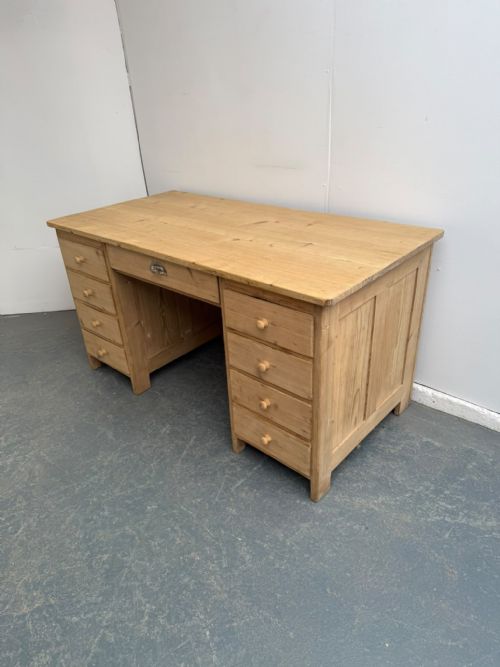
Quality separates through the choice of timber veneer, the crispness of applied mouldings, and the selection of secondary woods used internally. Desks featuring matched burr walnut or satin birch sit at a different level from utilitarian pine estate pieces.
The integration of original brass hardware, retained leather writing surfaces, and branded maker stamps elevates certain pieces above standard workshop production. Proportions and the careful handling of timber grain dictate the distinction between ordinary and superior examples.
Edwards and Roberts·Heal and Son·Maple and Co
The Victorian Nine Drawer Desk Glossary
- Pedestal desk
- A freestanding writing table comprising two freestanding drawer columns supporting a single desktop. This configuration provides ample storage flanking a central kneehole space.
- Kneehole
- The central recessed space beneath the desktop designed for the user's legs. It is often flanked by single or multiple drawer stacks.
- Breakfront
- A piece of furniture where the central section projects forward from the flanking pedestals. This architectural arrangement adds visual depth to large desks.
- Burr walnut
- A highly figured timber veneer sliced from the knot growths of walnut trees. It exhibits intricate, swirling grain patterns prized for decorative desk surfaces.
- Satin birch
- A pale, light-reflecting hardwood used for cabinet making during the nineteenth century. It produces a smooth, lustrous finish when polished.
Victorian Nine Drawer Desk: Frequently Asked Questions
What is a nine drawer desk?
A nine drawer desk is a pedestal writing table featuring a central drawer above the kneehole, flanked by two vertical columns of four drawers each. This layout provides balanced storage across the structure.
Such furniture served as functional office and study desks throughout the nineteenth century, accommodating ledgers and writing materials.
How do I identify a Victorian desk?
Identification relies on observing construction methods, timber choices, and hardware styles consistent with the nineteenth century. Look for traditional dovetail joinery and characteristic timber ageing.
Certain pieces carry stamps or brass plaques from known nineteenth century retail firms and cabinet makers to confirm origin.
Are these desks freestanding?
Most pedestal desks are finished on all sides to allow placement in the centre of a room rather than strictly against a wall. Panelled backs are common on superior examples.
Freestanding capability made these tables suitable for executive offices and libraries where the back of the desk remains visible.
What woods were used?
Mahogany and oak form the primary structural timbers for the majority of these pieces. Cabinet makers also utilised pine for secondary framing and interior elements.
Decorative surfaces frequently showcase burr walnut, curl mahogany, satin birch, and ash veneers to provide varied visual textures.