



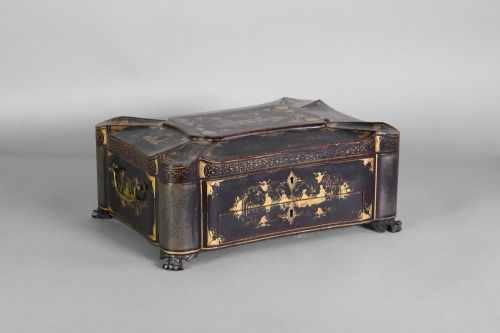


Victorian Needlework Casket
A victorian needlework casket is a decorative box built to hold threads and tools, bringing domestic refinement to any table.
Victorian Needlework Casket
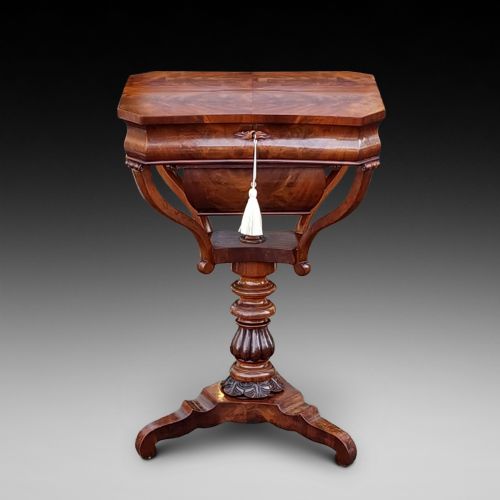
A victorian needlework casket is a dedicated container for sewing implements, designed to keep threads, needles, and small tools orderly and protected. These objects range from compact tabletop containers to larger work tables standing on pedestals.
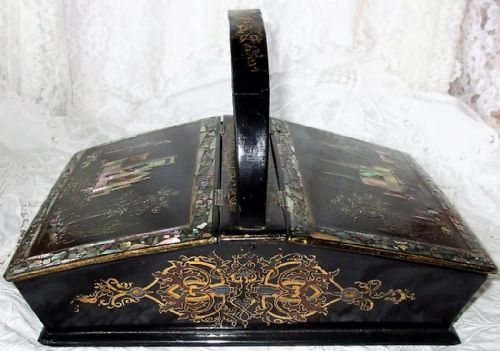
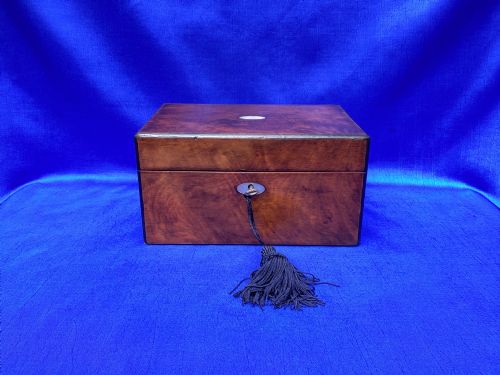
The pieces on this page span the nineteenth century, taking forms such as sewing boxes, work boxes, and caskets. Materials include rosewood, walnut, coromandel, papier-mâché, and lacquer, reflecting the varied tastes of the period.
Regency pieces also appear among the Victorian examples, showing earlier influences in chinoiserie styles and simpler sewing boxes. Buyers most frequently encounter wooden boxes inlaid with mother-of-pearl or decorated with Tunbridge ware.
How they were made
Cabinetmakers constructed these caskets using dense timbers like rosewood, walnut, and coromandel, often applying marquetry inlay or figured veneers to the exterior surfaces. Papier-mâché and lacquered wood provide alternative bodies finished with smooth painted or polished coats.
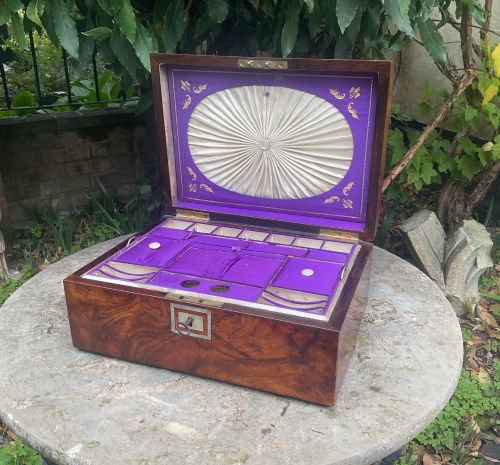
Interiors feature fitted compartments lined with silk, designed to hold spools, thimbles, and bodkins securely in place. Mother-of-pearl inlay and delicate Tunbridge ware mosaic panels add surface ornamentation to the wooden frameworks.
Victorian Needlework Casket Retail Price Guide 2026
Typical asking prices for victorian needlework casket among the pieces listed under this phrase on Sellingantiques today, from the lower quarter to the upper quarter. They describe what is for sale here now, not the wider market.
What varies in quality
Quality rests in the precision of the exterior woodwork, where tight marquetry and smooth veneers distinguish finer pieces from simpler containers. The choice of primary material also plays a role, with coromandel and tortoise shell sitting at the higher end of the range alongside elaborate mother-of-pearl work.
Internal organisation demonstrates the maker's attention to detail, particularly in the fitted silk compartments and custom recesses built for individual tools. Tunbridge ware examples rely on the intricacy of their mosaic patterns to mark out superior craftsmanship.
The Victorian Needlework Casket Glossary
- Tunbridge ware
- A form of woodwork decorated with tiny wooden mosaic tiles that form pictorial or geometric patterns. This technique originates from the town of Tunbridge Wells in Kent.
- Marquetry
- The art of applying decorative pieces of veneer to a structural surface to form intricate designs. Cabinetmakers use contrasting timbers to achieve pictorial depth.
- Coromandel
- A dense, heavily grained cabinet wood imported from Asia, valued for its rich dark colour and contrasting pale streaks. It appears frequently on luxury nineteenth-century boxes.
- Work table
- A freestanding piece of furniture incorporating a storage box or fabric bag for sewing materials beneath the main surface. These tables combine utility with decorative presence in a room.
- Papier-mâché
- A composite material made from paper pulp or layers of paper bonded with glue, then pressed and dried into a rigid shape. It accepts lacquer and paint finishes smoothly.
Victorian Needlework Casket: Frequently Asked Questions
What fits inside a needlework casket?
These boxes accommodate spools of thread, needles, small scissors, thimbles, and other implements required for hand sewing. Fitted internal trays keep these delicate items separated and secure during transport or storage.
Larger work boxes and tables provide additional depth for fabric scraps and unfinished embroidery projects alongside the smaller accessory compartments.
How are Regency and Victorian boxes different?
Regency pieces often display neoclassical lines or chinoiserie decoration, reflecting tastes from the early part of the nineteenth century. Victorian examples tend to feature heavier timbers, elaborate marquetry, and mother-of-pearl inlay.
Both styles serve the same practical purpose for needlework, but the decorative vocabulary shifts as the century progresses toward denser ornamentation.
Can I use these boxes for modern sewing tools?
Modern pins, measuring tapes, and synthetic threads fit comfortably into the traditional compartments designed for nineteenth-century equivalents. The internal layouts adapt well to contemporary notions of craft organisation.
Care should be taken with modern damp-sensitive items to ensure the historic wood and silk linings remain protected from moisture.
Where should I place a work box at home?
Tabletop caskets suit placement on sideboards, desks, or dressing tables where their decorative exteriors can be appreciated. Freestanding work tables find a natural home beside armchairs or in sitting rooms.
Direct sunlight and extreme temperature changes should be avoided to protect the delicate wood veneers and historic silk interiors.