




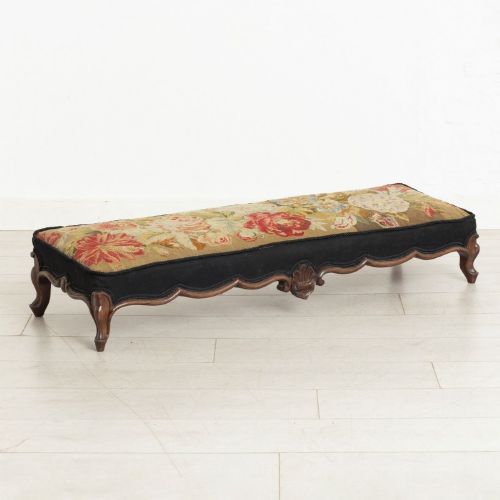


Victorian Needlepoint Ottoman
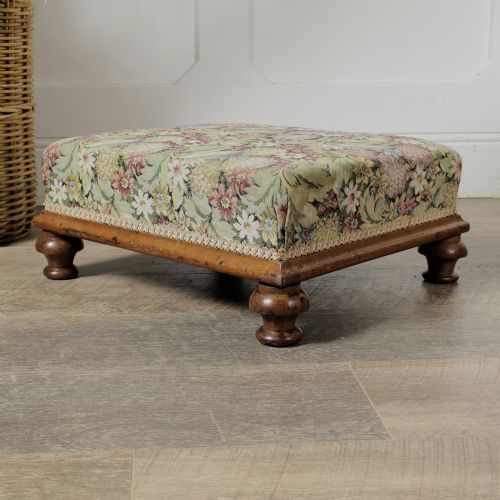
These victorian needlepoint ottoman pieces combine low seating with textured wool work, offering a traditional footrest for fireside rooms.
Victorian Needlepoint Ottoman
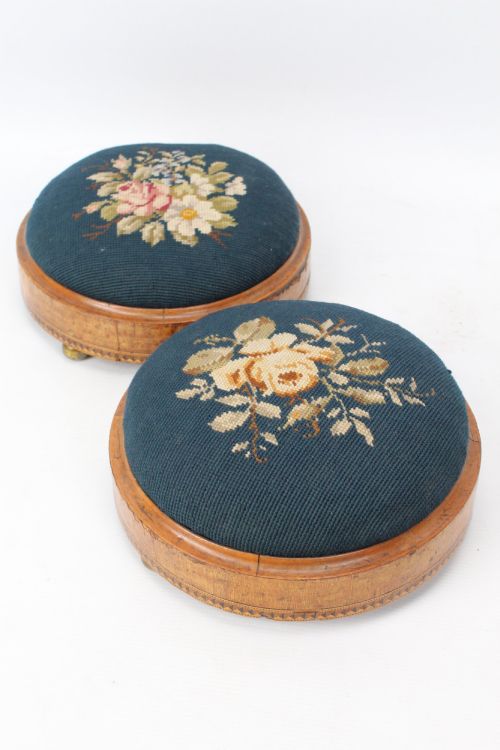
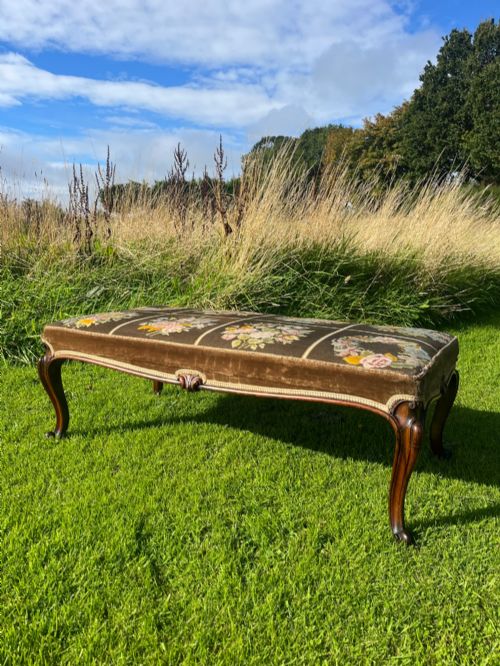
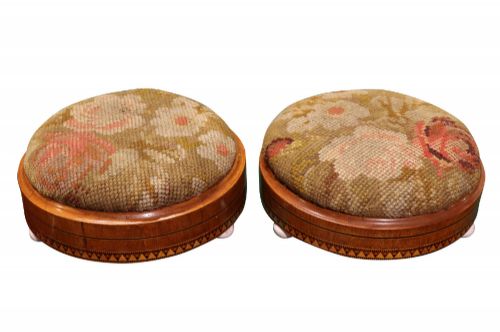
A victorian needlepoint ottoman serves as a low seat or footrest, appearing across the nineteenth century in various compact shapes. Buyers encounter round footstools, low dressing stools, and larger framed ottoman seats designed for the fireside or parlour.
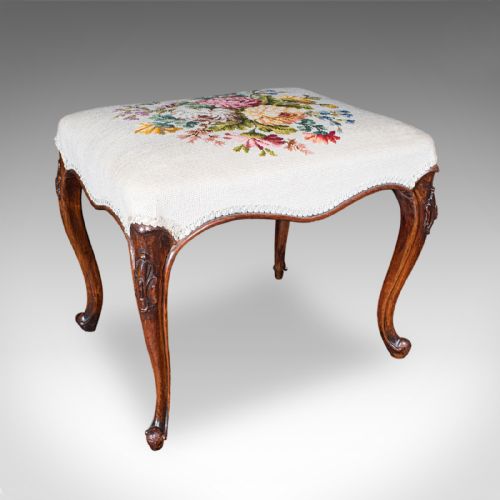
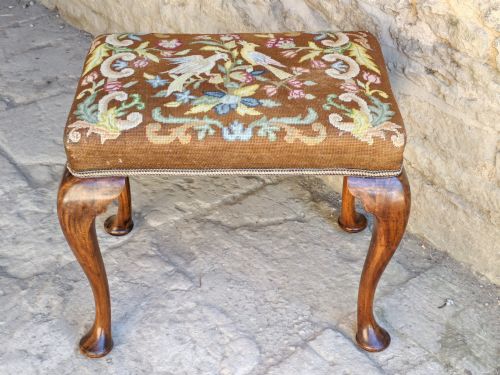
The materials span walnut, mahogany, rosewood, oak, and ebony, supporting wool tapestry, gros-point, and velvet upholstery. Many pieces retain original needlework tops featuring geometric kilim patterns or floral needlepoint designs.
Construction and Materials
Carpenters shaped the timber frames from dense hardwoods like walnut and mahogany, occasionally employing ebonising, carving, or inlay such as Tunbridge ware. These sturdy frames support upholstered tops built with textile needlepoint, tapestry, and wool.
The needlework itself utilises durable wool threads worked onto canvas grounds in gros-point or finer tapestry stitches. Brass elements and original fabric survive on select examples from the period.
Victorian Needlepoint Ottoman Retail Price Guide 2026
Typical asking prices for victorian needlepoint ottoman among the pieces listed under this phrase on Sellingantiques today, from the lower quarter to the upper quarter. They describe what is for sale here now, not the wider market.
Geometric kilim patterns and tiny Tunbridge ware wooden mosaics hide among the floral wool tapestries.
Judging Quality
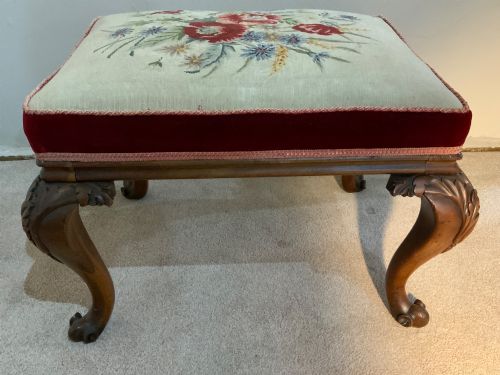
Quality rests in the crispness of the timber carving and the complexity of the wood framing, from simple turned legs to intricate Victorian Rococo Revival or Scottish Baronial details. Finer frames show superior joinery and cabinetmaker execution.
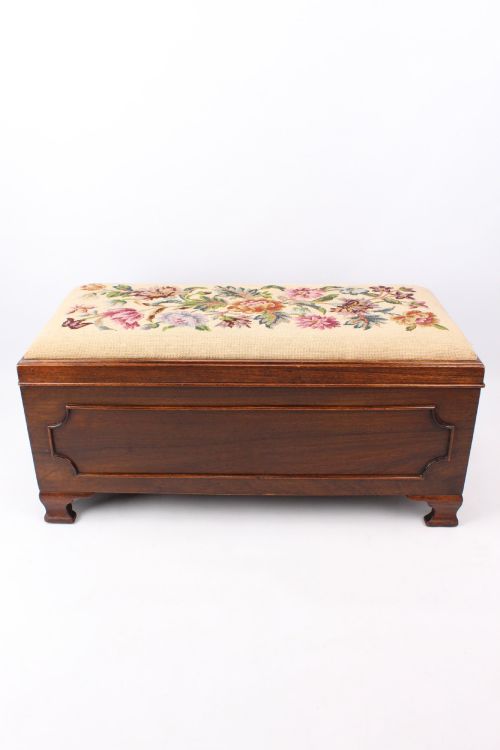
The needlepoint top dictates much of the character, where tight, even wool stitching and well-preserved geometric or floral tapestry designs elevate the piece. Intact original upholstery and specialised forms like storage ottomans or inlaid walnut add distinction.
The Victorian Needlepoint Ottoman Glossary
- Needlepoint
- A type of canvas work embroidery stitched by hand using wool threads to form dense decorative patterns. It provides the durable, textured surface seen on nineteenth-century footstools.
- Gros-point
- A coarse form of needlepoint stitch worked on canvas, often utilised for heavy-wear upholstery on nineteenth-century ottomans. This technique creates a sturdy and pronounced surface texture.
- Tunbridge Ware
- A form of decorative woodwork featuring intricate mosaic patterns made from tiny wood blocks of various natural colours. This technique appears on specific Victorian items to ornament small surfaces.
- Cabriole leg
- A furniture leg featuring a double curve, bulging outward at the knee and tapering inward at the ankle. This stylistic form frequently supports Victorian walnut and mahogany stools.
- Ottoman
- A low upholstered seat or footstool typically lacking arms and a back. Nineteenth-century versions sometimes incorporated storage space or blanket boxes beneath the needlework top.
Victorian Needlepoint Ottoman: Frequently Asked Questions
What is a victorian needlepoint ottoman?
A victorian needlepoint ottoman is a low seat or footrest featuring a hand-stitched wool tapestry top. These pieces served nineteenth-century interiors as fireside stools, dressing seats, and occasional low furniture.
Makers built the supporting frames from timbers such as walnut, mahogany, and rosewood, often pairing them with intricate needlework or gros-point upholstery.
How do I date these stools?
Dating relies on stylistic clues like revival motifs, turned wooden legs, and timber choices typical of the nineteenth century. Pieces often date from the 1850s through the 1880s based on structural characteristics.
Cabinetmakers of the period utilised specific woods like walnut and mahogany, aligning construction methods with the broader Victorian design eras.
Did these pieces have storage?
Certain larger ottoman forms incorporated storage compartments beneath the upholstered needlework top, functioning as blanket boxes or chest seats. These dual-purpose items provided practical containment within Victorian parlours.
Smaller footstools and dressing stools remained solid frames without internal cavities, serving strictly as resting surfaces for the feet or low seating.
How do I care for wool tapestry?
Protect wool tapestry upholstery from direct sunlight to prevent the natural dyes from fading over time. Gentle brushing removes surface dust without stressing the delicate needlepoint fibres.
Avoid placing these textiles in damp environments, as the historic wool and canvas foundation requires dry conditions to remain preserved.