



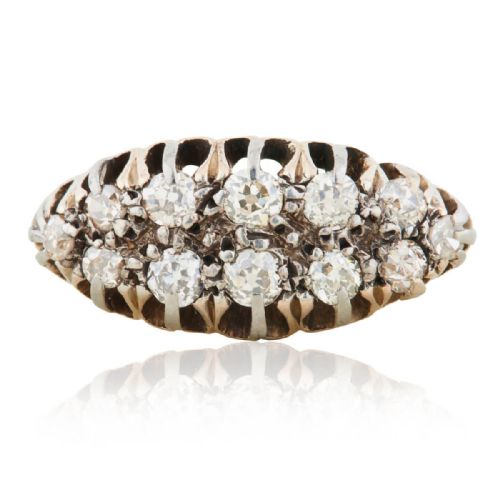
Victorian Navette Ring
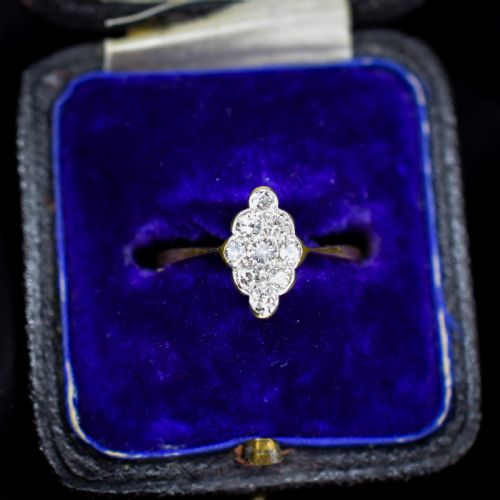
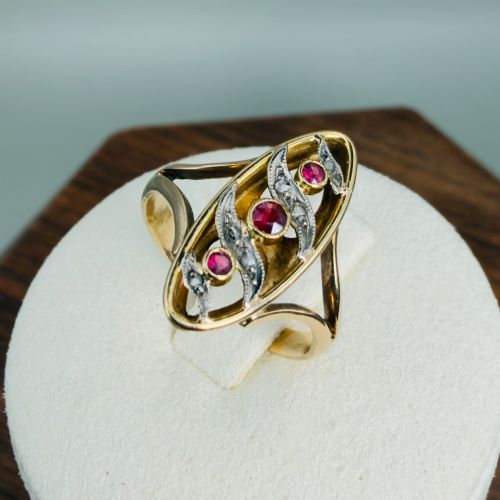
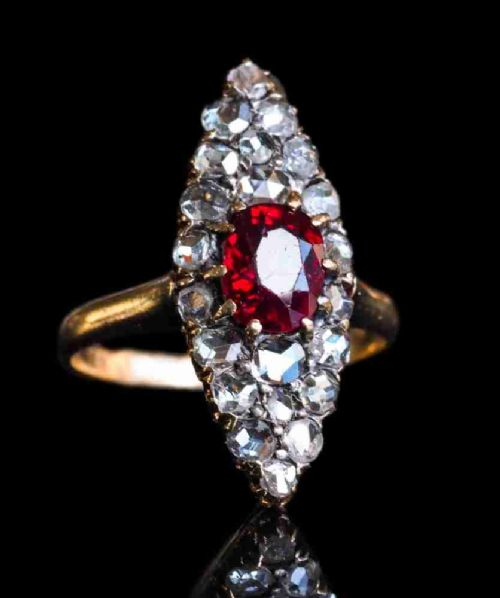
A victorian navette ring brings an elongated boat shape to the finger, combining old cut diamonds and coloured stones.
Victorian Navette Ring
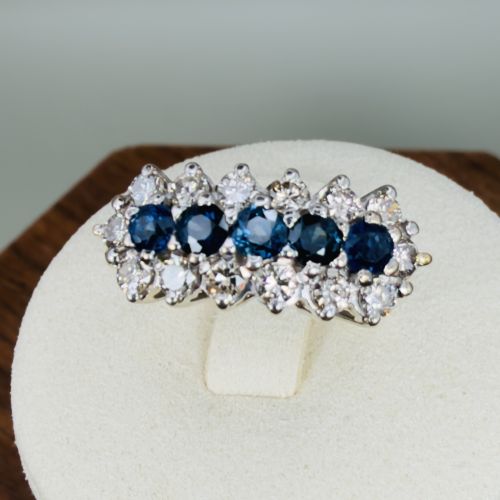
The victorian navette ring is defined by its pointed, boat-shaped silhouette that stretches lengthwise along the finger. Buyers encounter this form set with clusters of diamonds, rubies, emeralds or sapphires framed in gold.
Most examples originate from the nineteenth century, though the archive and current listings include related pieces spanning from the regency period through to the twentieth century. The signature marquise outline dominates both diamond-heavy clusters and multi-stone gemstone arrangements.
Makers utilised yellow gold, rose gold and platinum alongside silver settings to mount stones in these characteristic pointed outlines. The silhouette sits low to the hand, making it a distinct historical choice for daily wear.
Materials and construction methods
Goldsmiths worked primarily in eighteen-carat yellow gold and fifteen-carat gold, often backing silver onto gold to mount old cut and rose cut diamonds securely. Stones were hand-set into tight clusters that follow the tapering geometry of the boat shape.
The construction relies on detailed gallery work and claw or bezel settings that support clustered rubies, sapphires, emeralds, turquoise and pearls. Shank designs range from simple tapered bands to split shoulders integrated into the main cluster.
Victorian Navette Ring Retail Price Guide 2026
Typical asking prices for victorian navette ring among the pieces listed under this phrase on Sellingantiques today, from the lower quarter to the upper quarter. They describe what is for sale here now, not the wider market.
Gemstone combinations in the archive include turquoise, pearls, emeralds, sapphires and rubies alongside diamonds.
Judging quality in these rings
Quality rests on the crispness of the pointed silhouette and the harmony between the central stones and the surrounding gems. Superior examples maintain structural integrity in the delicate goldwork without thinning at the shoulders.
The grade of the diamonds, whether old mine cut, old European cut or rose cut, dictates the brilliance within the narrow frame. Matched coloured stones with deep saturation elevate an individual piece above standard production.
The Victorian Navette Ring Glossary
- Navette
- A boat-shaped or marquise outline with pointed ends, designed to create maximum finger coverage.
- Old cut diamond
- A hand-faceted diamond cut before the modern brilliant standard, featuring a small table and high crown.
- Rose cut diamond
- A stone with a flat base and a domed crown faceted with triangles, offering a softer reflection.
- Cluster ring
- A setting style where a central stone is surrounded by a tight halo of smaller gems.
- Mourning ring
- A memorial piece, sometimes incorporating enamel and pearls alongside hair beneath crystal.
Victorian Navette Ring: Frequently Asked Questions
How do I wear a navette ring safely?
The elongated shape sits flat along the finger, which helps prevent snagging on clothing during daily activities. Take care when wearing them alongside other bands to avoid rubbing against the pointed ends.
Remove the ring before heavy lifting or gardening to protect the delicate claw settings and softer gemstones like turquoise or pearls from impact.
What is the difference between a navette and a marquise?
Both terms describe the same pointed, boat-shaped outline that characterises these rings. The word navette translates from French as little ship, while marquise refers to the matching gemstone cut.
In historical listings, the terms are often used interchangeably to denote any ring featuring this elongated geometric form.
How can I tell the period of a ring?
Dating relies on the combination of gold fineness marks, stone-cutting styles and the construction of the gallery. Earlier nineteenth-century examples often feature closed-back settings and old mine cuts.
Later Victorian and Edwardian pieces shift towards platinum-topped gold and finer open-backed wirework supporting the cluster.