

Victorian Narrow Tallboy
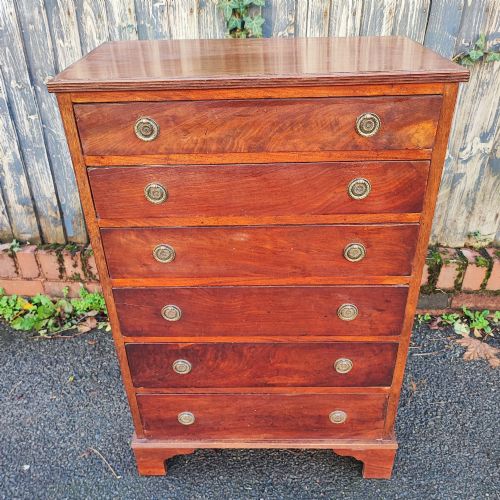
A victorian narrow tallboy offers vertical storage through stacked drawers, housing belongings cleanly in tight bedroom footprints.
Victorian Narrow Tallboy
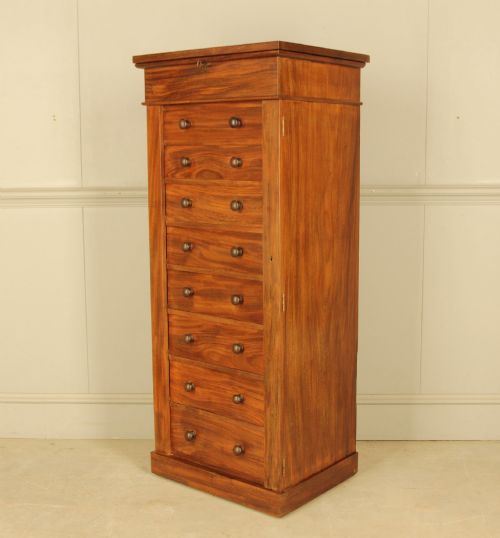
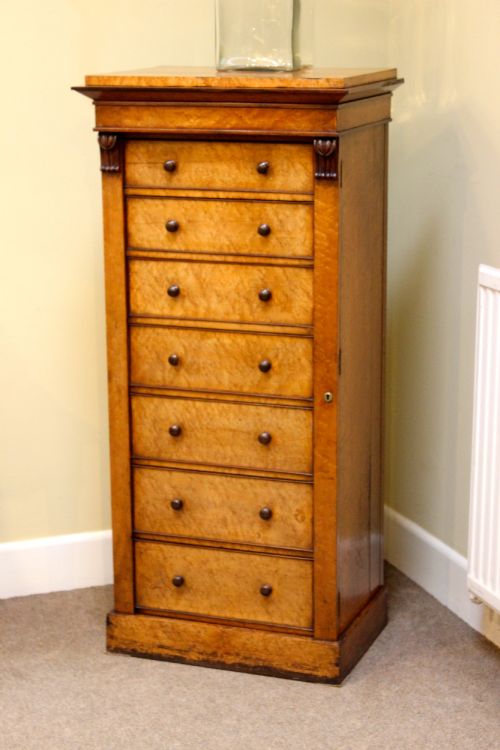
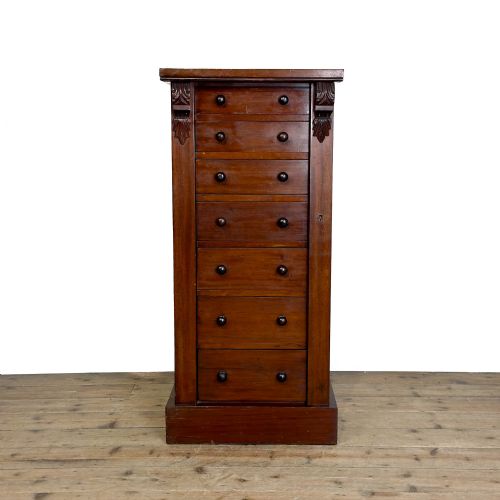
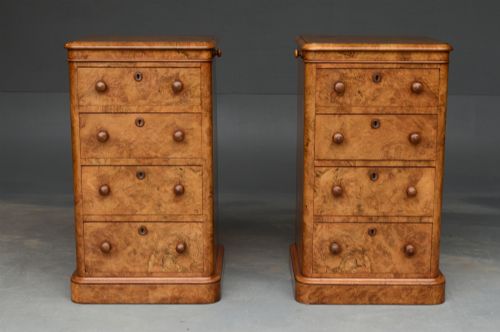
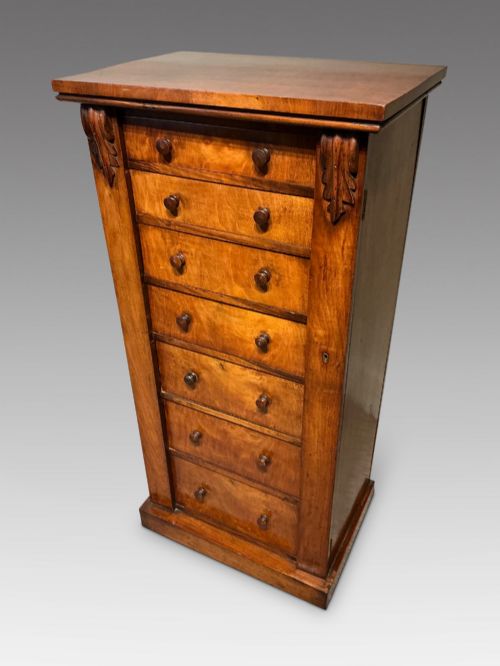
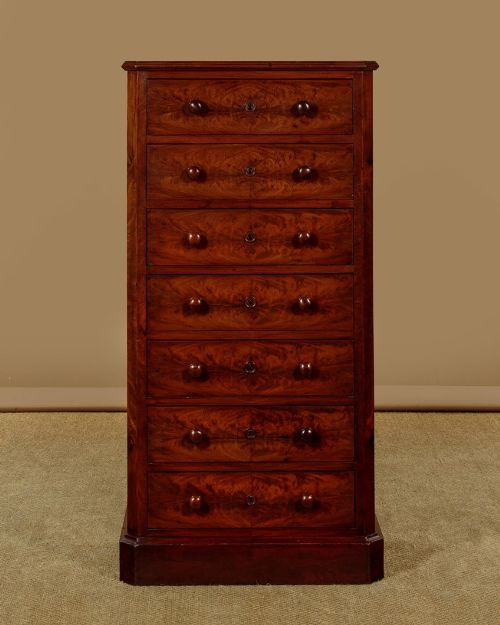
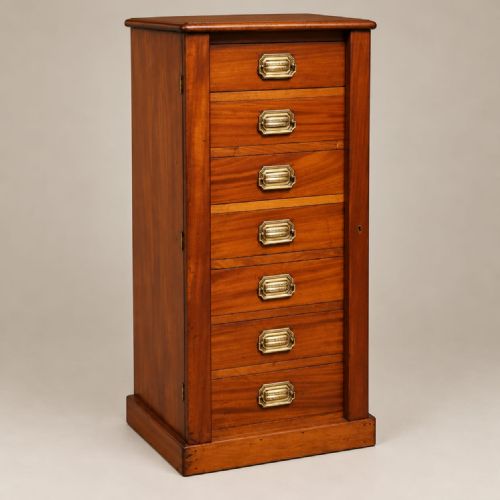
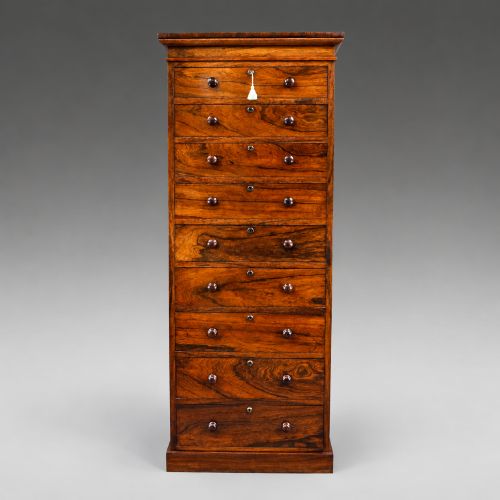
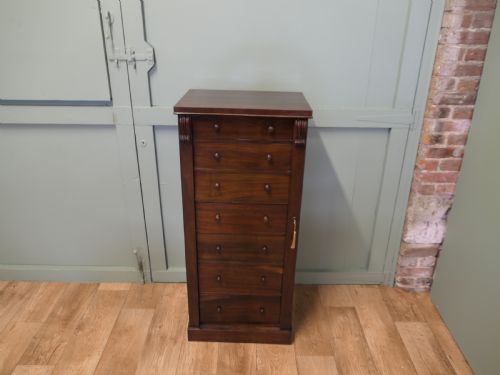
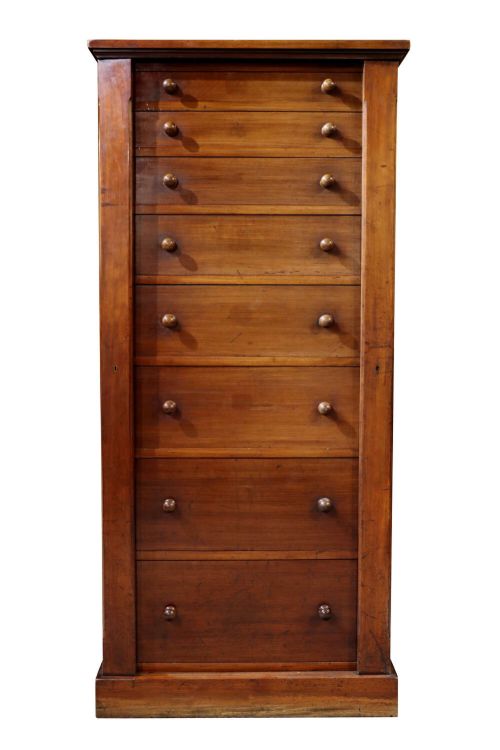
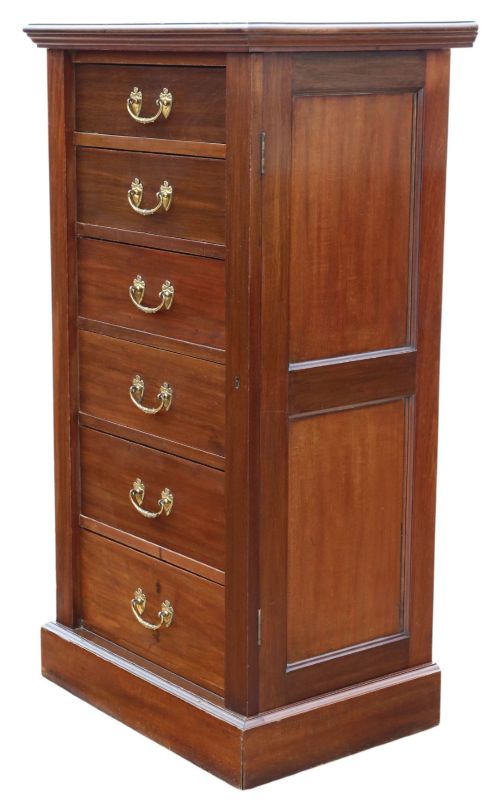
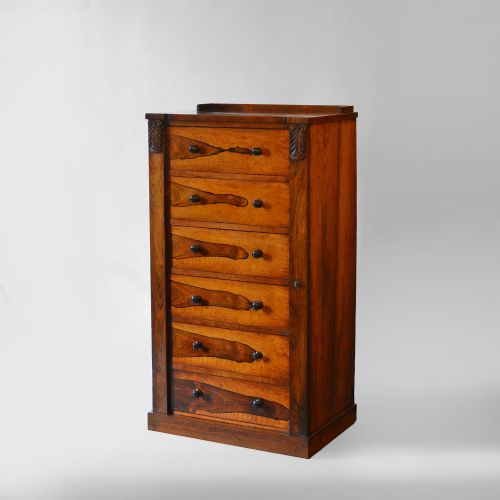
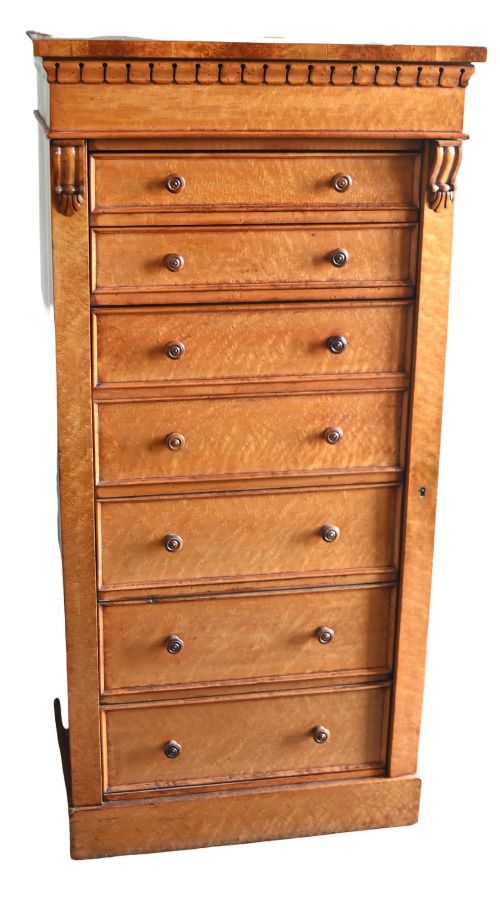
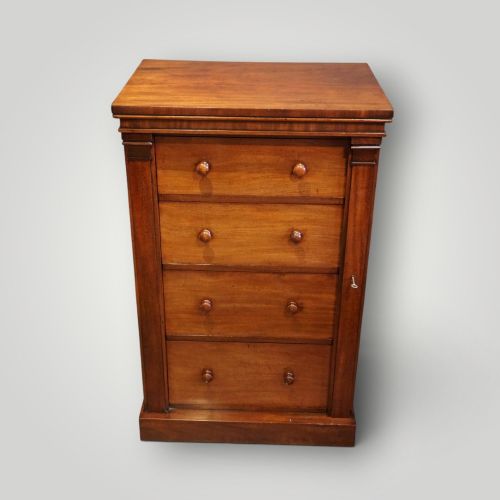
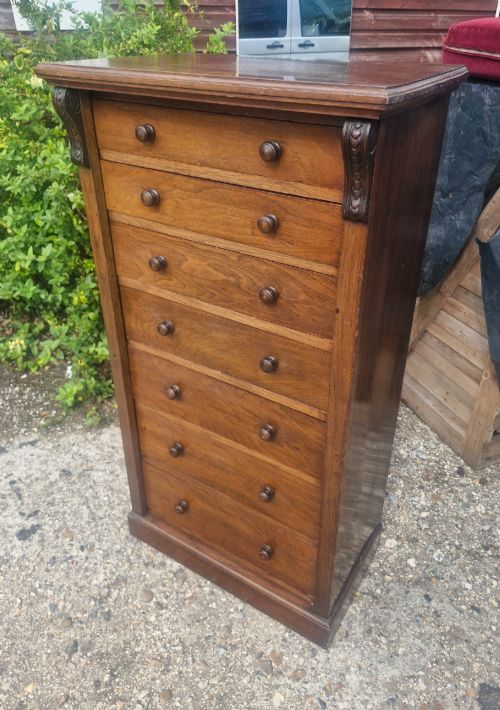
A victorian narrow tallboy primarily takes the form of a Wellington chest or a slim bedside chest, designed to maximise storage in limited floor space. These pieces emerge predominantly from nineteenth century workshops, spanning early Victorian, mid-period, and late Victorian eras.
The vertical proportions define the category, featuring multiple stacked drawers housed within upright timber carcases. Alongside traditional chests, buyers encounter related formats such as tall pedestal chests and music cabinets dating into the Edwardian period.
Makers constructed these tall forms to stand beside beds or fit into cramped dressing rooms where standard horizontal chests would not squeeze. The resulting furniture balances functional height with compact footprints.
How they were made
Cabinet makers utilised dense hardwoods such as mahogany, walnut, rosewood, and oak for structural integrity, often applying burr walnut or walnut veneer to visible drawer fronts. Pine served beneath applied finishes or for internal drawer construction.
Makers incorporated brass hardware, marquetry inlay, and specialised locking mechanisms like the hinged locking stile characteristic of Wellington chests. Surfaces received traditional wax polishing or country house scumble paint.
Victorian Narrow Tallboy Retail Price Guide 2026
Typical asking prices for victorian narrow tallboy among the pieces listed under this phrase on Sellingantiques today, from the lower quarter to the upper quarter. They describe what is for sale here now, not the wider market.
Listings feature Victorian, Edwardian, and nineteenth century periods utilising brass, mahogany, walnut, burr walnut, pine, oak, rosewood, and satin birch.
What varies in quality
The selection of timber grain sets the standard, with highly figured burr walnut and book-matched mahogany veneers commanding greater visual depth than plain pine or standard oak. Figured timbers demand precise matching across narrow drawer fronts.
Detailing on handles, locking stiles, and marquetry inlay distinguishes standard production from finer workshop output. Original turned knobs and intact locking mechanisms preserve the structural integrity intended by the maker.
Warings Liverpool·Gillows
The Victorian Narrow Tallboy Glossary
- Wellington chest
- A tall, narrow chest of drawers secured by a hinged vertical locking bar on one side. This locking stile fastens over the drawer edges to secure the entire stack.
- Semainier
- A French term for a tall narrow chest traditionally holding seven drawers, one for each day of the week. These pieces share the vertical proportions seen in English tallboys.
- Veneer
- A thin layer of figured timber applied over a secondary wood base to provide decorative grain patterns. Burr walnut and mahogany veneers create rich visual surfaces.
- Scumble paint
- A decorative surface treatment applied over timber to imitate more expensive wood grains or create patterned finishes. This technique appears on country house furniture.
- Marquetry
- The art of applying small pieces of veneer to form decorative patterns and pictures on furniture surfaces. Floral and geometric designs often adorn cabinet drawers.
Victorian Narrow Tallboy: Frequently Asked Questions
What is a Wellington chest?
A Wellington chest is a tall, narrow set of drawers featuring a hinged locking stile on one side. This wooden bar fastens over the drawer edges and locks with a key.
Cabinet makers designed these vertical chests to secure valuables in bedrooms while occupying minimal floor space.
How do I style a narrow tallboy?
Place a narrow tallboy in a compact bedroom or hallway where floor space is limited. The vertical height draws the eye upward without crowding the room.
Pair the piece with low bedside tables or use it as a standalone storage cabinet for folded garments.
What woods were used?
Makers utilised dense timbers including mahogany, walnut, rosewood, and oak. They frequently applied burr walnut or walnut veneers to create decorative drawer fronts.
Pine served as a secondary timber for carcases and drawer linings, occasionally receiving scumble paint.
How do I tell Victorian periods apart?
Early Victorian pieces often feature rich burr walnut and heavy mahogany construction with classic proportions. Late Victorian examples incorporate marquetry inlay and lighter satin birch or pine.
Edwardian tall cabinets introduce satinwood and simplified vertical pedestal forms.