


Victorian Music Chest
These victorian music chest pieces bring mechanical melody and sheet storage together with traditional craftsmanship.
Victorian Music Chest
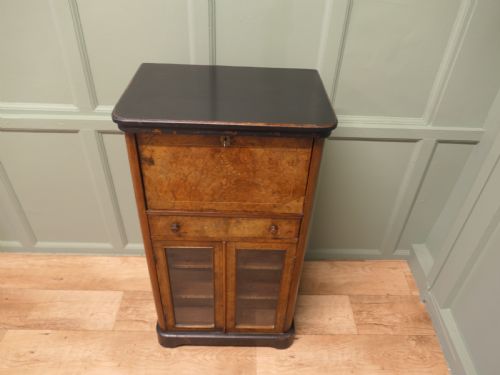
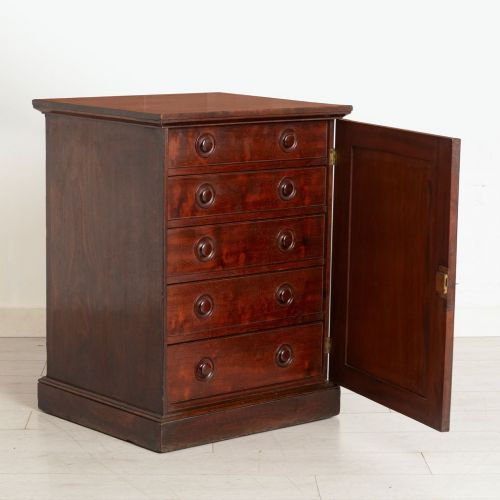
A victorian music chest serves the parlour by housing sheet scores or mechanical musical movements within a compact cabinet. The selection spans tall vertical filing units, side cabinets, and tabletop music boxes.
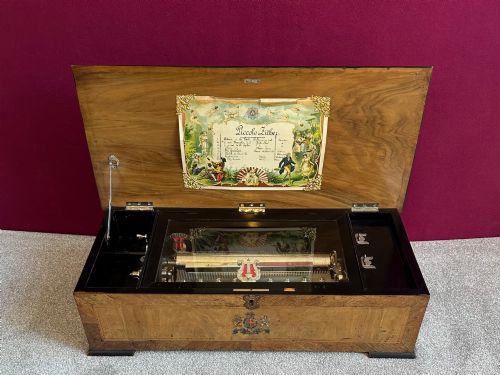
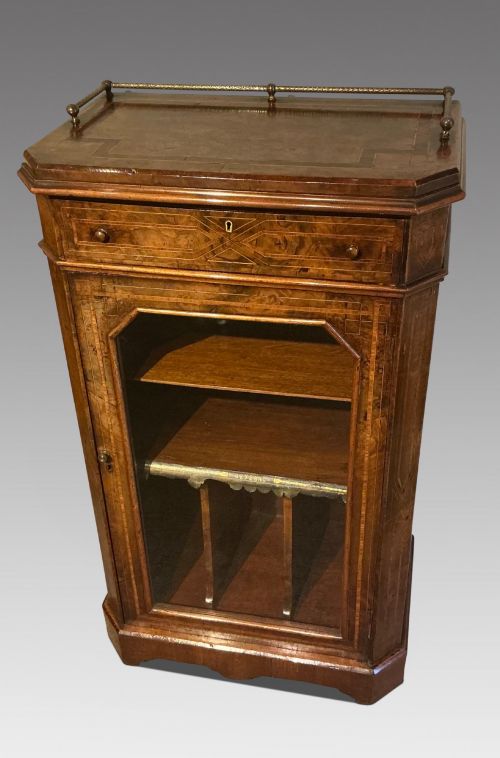
Cabinets feature drop fronts, glazed doors, or internal shelving designed specifically to keep scores flat and tidy. Alongside these stand musical boxes playing cylinders and discs, often housed in inlaid wood cases.
Most examples date to the nineteenth century, utilising dense timbers suited to domestic display. Edwardian additions and earlier Swiss mechanisms also appear among the records.
Materials and construction
Cabinet makers built these pieces using mahogany, walnut, burr walnut, and rosewood, frequently enhanced with contrasting marquetry inlays. Brass handles, hinges, and glazed panels add functional detail to the wooden carcases.
Internal musical mechanisms rely on steel combs and brass cylinders or metal discs driven by clockwork springs. Woodwork employs traditional joinery, with polished finishes highlighting the natural grain of the timber.
Some musical boxes feature visible bells that ring out merrily alongside the steel comb melodies.
Assessing quality
Quality rests upon the crispness of the cabinet woodwork and the sophistication of the musical movement within. Finer items display detailed marquetry, figured veneers, and robust brass fittings.
The complexity of the mechanism dictates the standard of a musical box, with multi-air cylinders, bells, or large discs representing superior manufacture. Cabinet versions separate by the elegance of their proportions and the integrity of their internal divisions.
Keeble London·Nicole Freres
The Victorian Music Chest Glossary
- Canterbury
- A low stand featuring partitions for holding sheet music or folios, often combined with a seat or drawer. They originated in the late eighteenth century and remained popular through the Victorian era.
- Cylinder
- The pinned metal barrel inside a mechanical music box that plucks the teeth of a steel comb to produce sound. Longer cylinders accommodate multiple musical tunes, known as airs.
- Marquetry
- Decorative veneer work arranged in pictorial or geometric patterns using various coloured woods. It adorns the lids and doors of better quality cabinets and boxes.
- Symphonium
- A large mechanical disc player that uses perforated metal discs to generate music. These table top instruments produce a rich, resonant tone.
Victorian Music Chest: Frequently Asked Questions
What is a music chest?
A music chest is a specialised piece of furniture designed to store sheet music or incorporate a mechanical musical movement. These cabinets keep scores organised and protected in a domestic setting.
They range from tall vertical sheet music cabinets with fall fronts to table top musical boxes and music canterburys. The form developed to serve the nineteenth century home where parlour music was common.
How do cylinder music boxes work?
Cylinder music boxes operate through a clockwork mechanism that rotates a pinned metal cylinder. As the cylinder turns, the pins pluck the tuned teeth of a steel comb to play a specific tune.
More advanced boxes include multiple airs on a single cylinder or incorporate miniature bells struck by hammers. The entire mechanism is housed within a resonant wooden case.
What wood was used for music cabinets?
Cabinet makers utilised dense hardwoods such as mahogany, walnut, burr walnut, and rosewood. These timbers provided the structural strength needed for housing heavy mechanisms and paper collections.
Many examples feature decorative veneers and marquetry inlay work to enhance their visual appeal in a drawing room. Ebonised wood and brass details also appear across the period styles.
How do I date a music cabinet?
Dating relies on stylistic clues, construction methods, and materials associated with specific decades of the nineteenth century. Victorian pieces often display rich burr veneers, Gothic revival motifs, or later Art Nouveau influences.
Mechanical components and paper labels inside musical boxes can provide more precise manufacturing origins. Comparing the hardware, such as brass handles and hinges, also helps confirm the period.