


Victorian Mother Children
These victorian mother children pieces capture familial affection in bronze, oil, and watercolour.
Victorian Mother Children
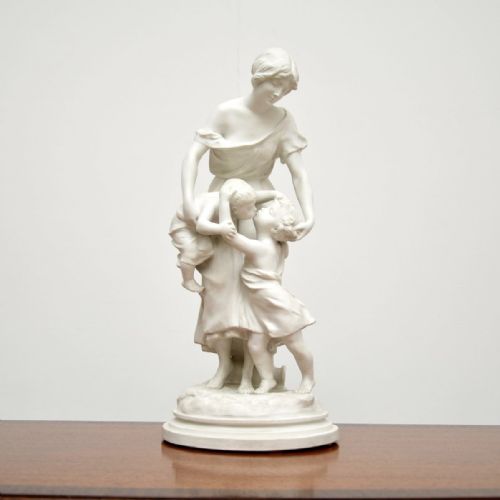
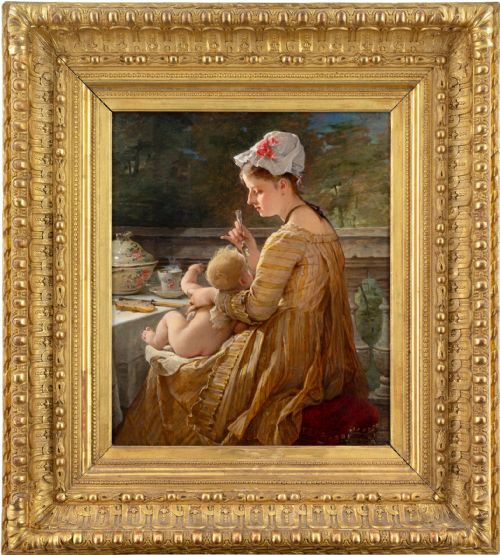
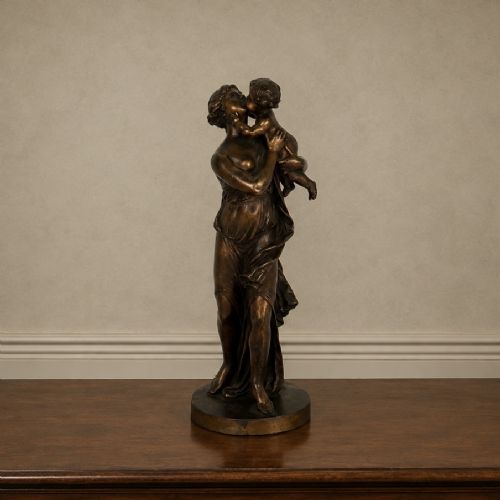
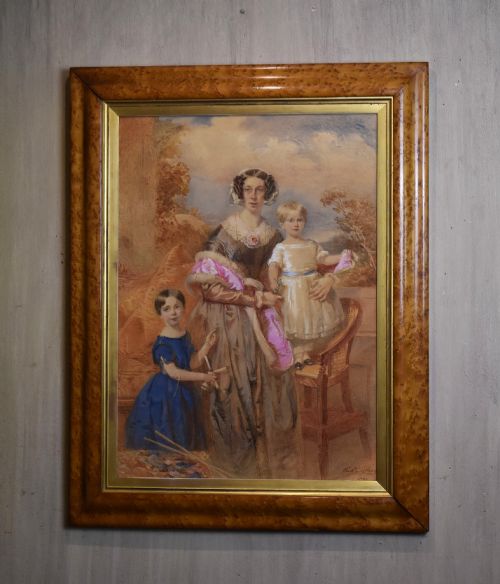
When you search for victorian mother children, you encounter artworks and decorative objects that centre on domestic bonds and familial care. The selection spans oil paintings on canvas, delicate watercolour paintings, and solid bronze sculptures representing maternal affection.
You are most likely to meet nineteenth-century oil paintings and cast bronze figures on this page. These works range from intimate framed art to large scale tabletop ornaments and classical groupings.
The objects cross several decades, drawing on nineteenth century realism, academic traditions, and impressionist approaches. Alongside British pieces, French nineteenth century works and grand tour sculptures appear frequently.
Materials and methods
The makers utilised bronze casting for sculptural groups and plaques, often capturing fine detail in patinated metal. Painters worked with oil on canvas or applied watercolour to paper, employing traditional layering and brushwork.
Frames and mounts incorporate gilt wood, giltwood, and precious metals such as nine-carat gold. Papier-mâché serves in structural items like decorative chairs, while shell forms provide a natural canvas for carved cameos.
Listings feature works spanning the eighteenth to the twentieth century, with a strong concentration of nineteenth century paintings and bronzes.
Judging quality
Quality rests in the precision of the medium, whether through the expressive brushstrokes of an oil painting or the crisp definition of a cast bronze figure. Superior works demonstrate anatomical accuracy and emotional resonance between the figures.
The handling of secondary materials, from heavy gilt wood frames to expertly mounted shell cameos, indicates the overall standard of the piece. Provenance and exhibition history, such as Royal Academy inclusion, elevate the standing of paintings.
Adelaïde Salles Wagner·Frederick Tatham·George Smith·Helena Maguire·Auguste Moreau·Lucien Madrassi·Coalbrookdale·Richard Buckner·Charles Lewis
The Victorian Mother Children Glossary
- Grand tour
- A cultural journey undertaken by wealthy Europeans that popularised classical sculpture and bronze souvenirs. These pieces often replicate classical motifs.
- Genre painting
- Artwork depicting scenes from everyday life, typically focusing on domestic subjects and ordinary people. These works provide insight into nineteenth century social history.
- Cameo
- A method of carving an object such as a shell or stone where a relief image stands out from a background. High quality examples show intricate layered detail.
- Patina
- The surface sheen or coloration that develops on bronze over time through age and handling. A well-preserved patina enhances the depth of sculptural metalwork.
Victorian Mother Children: Frequently Asked Questions
What materials are common?
Bronze is the primary medium for sculptural representations of maternal groups, offering durability and fine detail. Paintings utilise oil on canvas or watercolour on paper.
Additional materials include gilt wood frames, nine-carat gold mounts, and carved shell cameos.
How were these used?
Paintings hung in domestic interiors as family portraits or genre scenes celebrating household life. Bronzes and cameos served as tabletop ornaments and decorative display pieces.
Papier-mâché chairs functioned as both practical seating and decorative furnishings within Victorian parlours.
How do I date them?
Dating relies on stylistic markers such as nineteenth century academic realism or impressionist brush techniques. Inscribed dates, artist signatures, and framing materials provide further chronological context.
Victorian pieces often reflect the domestic ideals and artistic conventions of the decades between eighteen seventy and nineteen hundred.
Are bronze works British?
Many bronze sculptures originate from French workshops and renowned continental founders. The grand tour tradition brought classical Greek and Roman influences into these European pieces.
British artists and manufacturers, such as Coalbrookdale, also produced notable metal plaques and figures.