
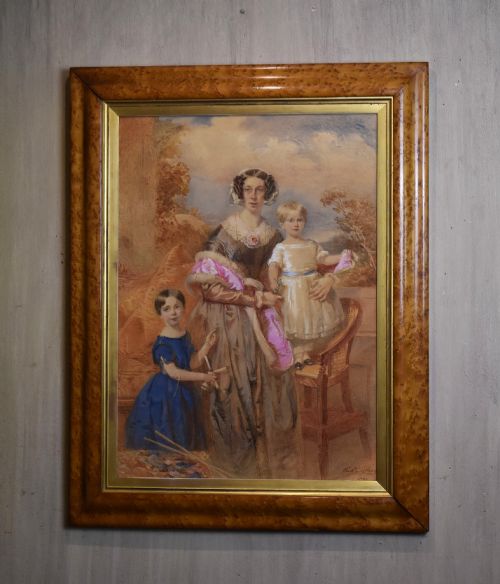


Antique Family Group Art
Antique family group art brings together painted portraits, silhouettes, and carved figures that capture domestic lineages from the eighteenth, nineteenth, and early twentieth centuries.
Antique Family Group Art
Antique family group art encompasses a diverse range of depictions showing multiple related individuals, spanning from formal oil paintings to intimate silhouette portraits and sculptural groups. These works document domestic lineage through various mediums produced across the eighteenth, nineteenth, and early twentieth centuries.
Buyers will most frequently encounter nineteenth-century works on this page, particularly Victorian watercolours and framed silhouette conversation pieces. Examples range from British school watercolours of children to detailed oil paintings attributed to named artists.
The selection also extends to specialised forms such as portrait miniatures, carved olive wood ecclesiastical figures, and Chinese ancestor group portraits. Each piece offers a tangible link to domestic history, executed in styles from the Georgian period through to Art Deco.
How they were made
The physical construction of these pieces relies heavily on traditional painting and drawing materials, with artists working in oil, watercolour, and ink on paper or canvas. Frames often incorporate giltwood, maple veneer, and plain wood to house the artwork.
Sculptural and silhouette items demonstrate alternative techniques, including carved olive wood figures and detailed silhouette cutting mounted within glazed frames. Mixed media approaches also appear, combining photographic or painted elements.
Listings feature works from the 18th century, Victorian period, and early 20th century, utilising paper, glass, watercolour, oil, and carved olive wood.
What varies in quality
Quality in these works is dictated by the precision of the draughtsmanship and the psychological depth captured in the faces of the group members. Finer execution in portraiture preserves individual likeness and character rather than relying on generic formulas.
The integrity of the framing and the preservation of the primary medium significantly influence the overall standard of a piece. Original mounts, untouched canvas surfaces, and well-preserved watercolours distinguish superior examples.
Frederick Tatham·Charles Hayter·Carl Adolf Mende·P. Sega·K & K Hof Atelier Pietzner·William Egley·Alfred Darbyshire·Charles Philips
The Antique Family Group Art Glossary
- Silhouette
- A portrait cut from paper or painted in solid black profile against a pale background. This technique gained immense popularity in the Georgian and Victorian eras for capturing likenesses quickly.
- Portrait miniature
- A small, highly detailed painting, often executed on ivory, vellum, or card during the eighteenth and nineteenth centuries. These intimate works were designed to be held or worn.
- Conversation piece
- An informal group portrait, popular in the eighteenth and nineteenth centuries, showing a family or circle of friends engaged in conversation or a shared activity.
- Mixed media
- An artwork utilising more than one medium or material, combining techniques such as paint, ink, and photographic bases. This approach appears in later nineteenth and early twentieth-century works.
Antique Family Group Art: Frequently Asked Questions
What periods do these pieces date from?
The works span from the eighteenth century through the Victorian era and into the early twentieth century. Most examples originate from the nineteenth century.
Styles represented include Georgian, Victorian, Biedermeier, and Art Deco, reflecting the changing aesthetic preferences of domestic portraiture over three centuries.
How were silhouette portraits made?
Silhouettes were typically created by cutting black paper by hand or by painting a profile directly onto card or plaster. They recorded the outlines of family members before photography became widespread.
Many were framed as conversation pieces, depicting multiple family members interacting within a domestic interior or garden setting.
What mediums are used in these works?
Artists employed oil paint on canvas, watercolour and ink on paper, and mixed media techniques. Sculptural groups carved from olive wood also form part of the selection.
Frames frequently feature materials such as giltwood, maple veneer, and traditional timber, often protected beneath glass.
How do I display antique family art?
These framed artworks and small sculptures suit traditional and contemporary interiors alike, functioning well as focal points on living room or hallway walls. Grouping smaller silhouettes together creates a striking gallery effect.
Keep pieces away from direct sunlight to protect delicate watercolours, paper silhouettes, and antique pigments from fading over time.