


Victorian Mother and Child
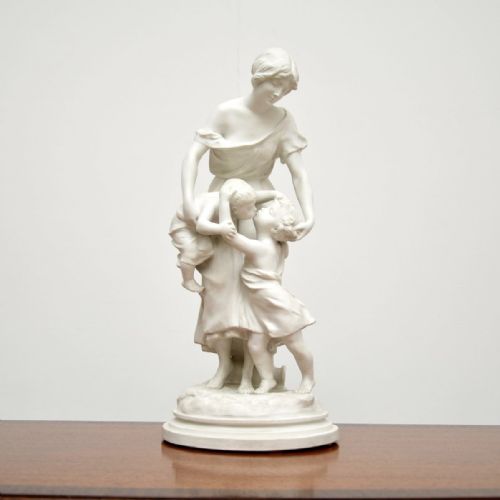
When you encounter a Victorian mother and child piece, you are looking at domestic portraiture and classical sculpture celebrating familial bonds.
Victorian Mother and Child
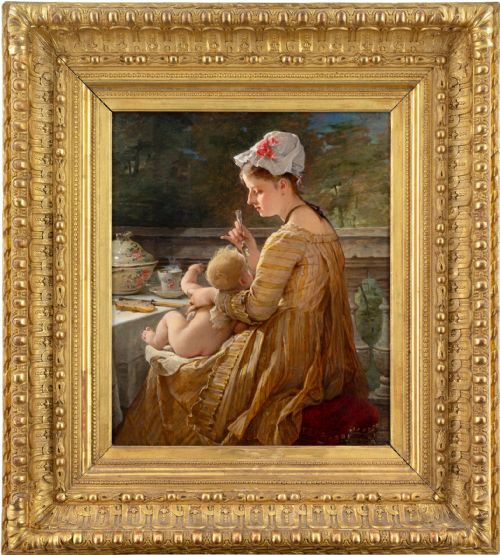
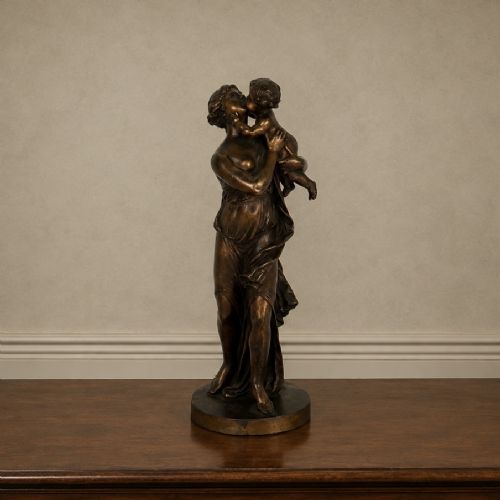
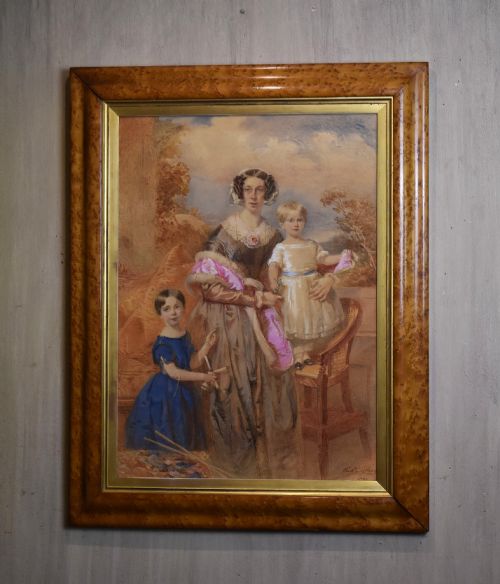
A Victorian mother and child piece encompasses oil paintings, watercolours, and bronze sculptures dating primarily from the nineteenth century. These works capture intimate domestic scenes, family portraits, and classical groupings executed in styles ranging from academic realism to impressionist oil on canvas.
The most common examples on this page are framed oil paintings and bronze figures. They reflect both British and continental European workmanship, utilising media such as paper, canvas, and gilt wood to frame the domestic subject matter.
Materials and Methods
Sculptural pieces rely on cast bronze, sometimes mounted on giltwood or combined with shell cameos, while flat works utilise oil and watercolour upon canvas and paper. These materials reflect nineteenth-century studio practices across Britain and France.
Painters applied pigment to primed canvas or absorbent paper to achieve layered depth in drapery and skin tones. Sculptors utilised lost-wax casting methods to render bronze figures with detailed surface textures.
Listings feature works spanning the nineteenth century alongside Georgian and mid-twentieth-century pieces, executed in oil, watercolour, bronze, and shell cameo.
Assessing Quality
The distinction between tiers of work rests upon the anatomical precision and expressive capability of the maker. Finer bronze castings retain crisp chisel work and subtle patination, whilst superior paintings demonstrate confident brushwork and nuanced handling of light.
Scale and ambition separate standard decorative items from significant studio pieces. Larger formats and signed works by exhibited artists command greater attention through their compositional complexity and material presence.
Frederick Tatham·George Smith·Helena Maguire·Auguste Moreau·Lucien Madrassi·Richard Buckner·Charles Lewis
The Victorian Mother and Child Glossary
- Bronze
- An alloy of copper and tin utilised for sculptural casting. It allows for patination ranging from dark brown to golden tones.
- Watercolour
- A paint medium consisting of water-soluble pigments on paper. It requires a translucent application to achieve luminosity.
- Giltwood
- Timber treated with gold leaf or powder. This finish enhances decorative frames and sculptural mounts.
- Genre painting
- The pictorial representation of scenes from everyday life. These works depict domestic narratives rather than historical events.
Victorian Mother and Child: Frequently Asked Questions
What periods do these pieces span?
The available selection primarily encompasses nineteenth-century production, notably the Victorian era alongside concurrent European movements. Occasional pieces extend into adjacent periods.
Items date from the Georgian era through to later nineteenth-century academic and impressionist phases.
How were these artworks displayed originally?
Paintings were typically hung within domestic parlours in gilded wooden frames, while bronzes served as tabletop ornaments. They formed part of private interior decoration.
Larger sculptures occupied prominent spaces in drawing rooms as focal points of nineteenth-century interior design.
What subjects appear alongside mothers and children?
Compositions frequently incorporate domestic animals, domestic architecture like cottage doors, and classical motifs. Some examples introduce narrative elements such as reading or pastoral labour.
Equestrian additions and canine companions also feature within the broader portraiture traditions represented here.
How do I distinguish bronze plaques from free-standing sculptures?
Plaques are relief-cast pieces designed for wall mounting or integration into decorative mountings. Free-standing figures are fully rendered in the round.
Cast bronze plaques often originate from foundries such as Coalbrookdale, whereas figures represent independent sculptural groups.