



Victorian Mini Chest Drawers
These compact pieces of miniature furniture, known to collectors as victorian mini chest drawers, bring domestic scale cabinet-making into any room.
Victorian Mini Chest Drawers
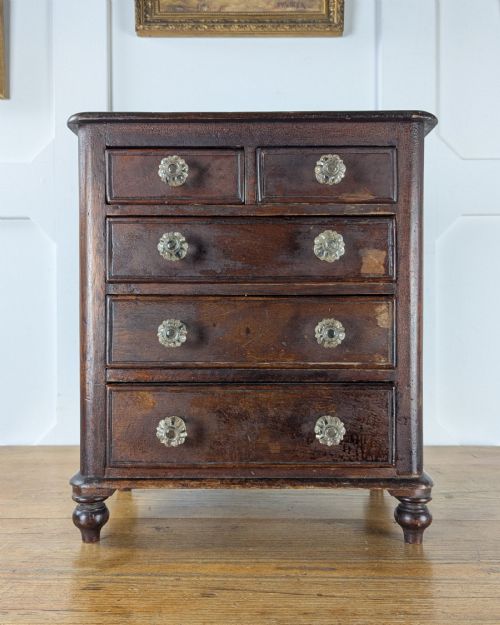
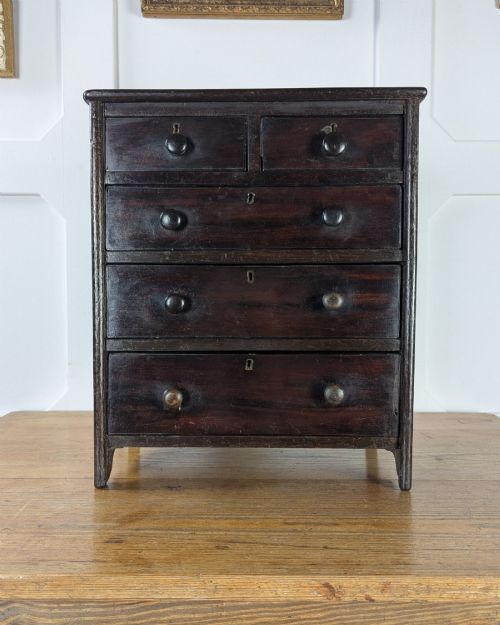
When you search for victorian mini chest drawers, you encounter a variety of small-scale case furniture produced during the nineteenth century. These items include apprentice pieces, salesman samples, jewellery chests, and small collector cabinets intended for desk or tabletop use.
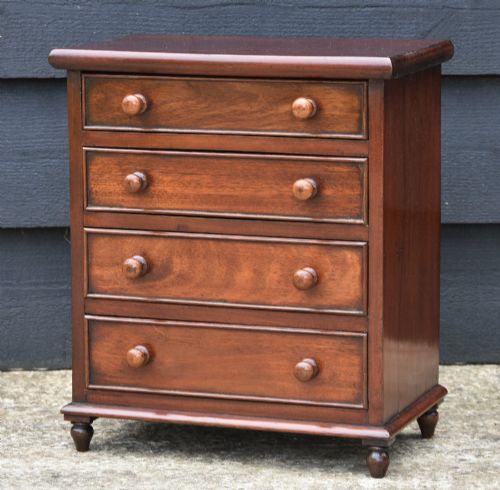
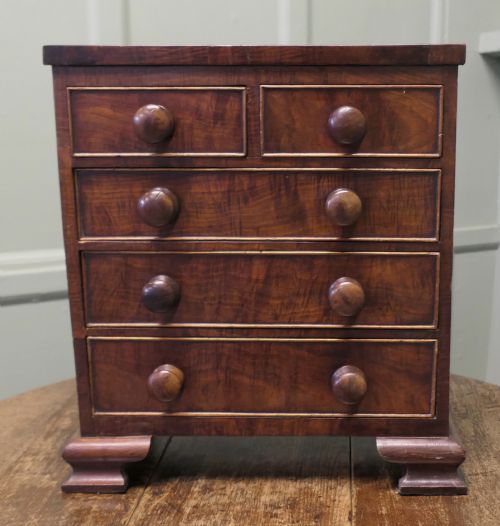
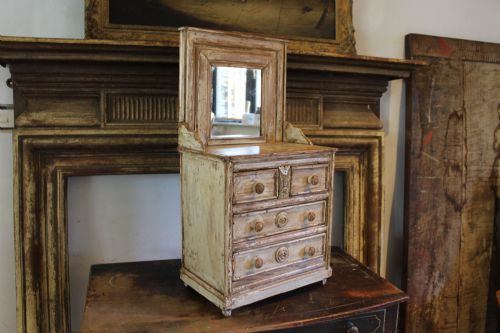
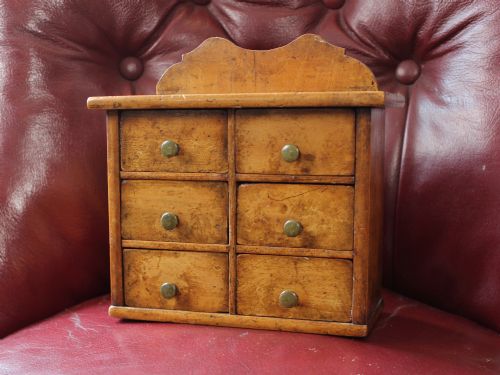
The most common examples on this page are mahogany miniature chests of drawers dating from the mid to late Victorian period. You also find alternatives in walnut, burr walnut, pine, oak, and fruitwood, often featuring fitted drawers or bow-front profiles.
How they were made
Cabinet-makers constructed these small chests using dense hardwoods such as mahogany and walnut, alongside softer timbers like pine and oak. Drawer linings often use secondary woods, while brass handles, glass pulls, and turned wooden feet complete the construction.
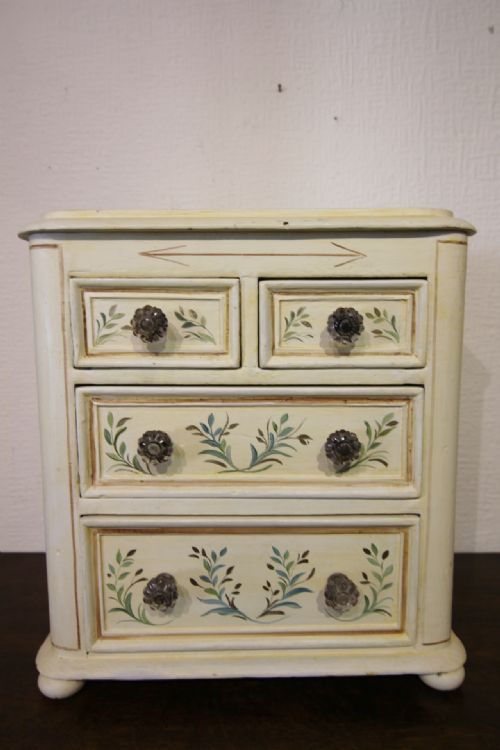
Joinery techniques mirror full-sized furniture of the nineteenth century, utilising dovetail joints for the small drawers and delicate mouldings around the top and base. Selected pieces incorporate inlaid details, painted surfaces, or ebonised accents.
At least one tiny chest of drawers hides secret compartments beneath its miniature mouldings.
What varies in quality
Quality rests upon the crispness of the miniature proportions and the selection of timber veneers, such as figured mahogany or burr walnut. Superior examples display fine patination, carefully dovetailed drawer construction, and original hardware rather than later replacements.
Simpler pine or painted country versions contrast with finely polished urban pieces that replicate every detail of a full-size chest. The complexity of the carcass, from standard straight fronts to bow fronts and campaign styles, dictates the standard of manufacture.
The Victorian Mini Chest Drawers Glossary
- Apprentice piece
- A small item of furniture made by a trainee craftsman to demonstrate mastery of joinery skills before admission to a guild.
- Bow front
- A convex curved cabinet front that swells outward at the centre, popular in nineteenth-century case furniture.
- Specimen case
- A small cabinet with shallow drawers designed for storing natural history samples, coins, or geological finds.
- Campaign style
- Portable furniture constructed in sections with brass corners and recessed handles, designed for easy transport on military campaigns.
- Parquetry
- Geometric patterns formed by fitting small pieces of wood veneer together on a surface.
Victorian Mini Chest Drawers: Frequently Asked Questions
What were miniature chests used for?
These small chests served multiple domestic purposes in the nineteenth century, functioning as jewellery boxes, desktop organisers, or receptacles for small personal items. Many were also created as portfolio pieces by craftsmen.
Cabinet-makers and trainees built them to show prospective employers their skill with dovetails, turned feet, and miniature mouldings.
How do I date a miniature chest?
Dating relies on identifying timber choices, handles, and structural characteristics typical of specific decades. Mahogany and early Regency-style proportions usually indicate the earlier part of the century.
Later Victorian pieces often incorporate burr walnut veneers, ebonised mouldings, or pitch pine, reflecting the changing tastes of the late nineteenth century.
Are apprentice pieces genuine?
Many small nineteenth-century chests carry the traditional label of apprentice or salesman pieces. Cabinet-makers genuinely produced these items to demonstrate technique or pitch designs to customers.
While some attribution remains traditional, the quality of construction and timber age confirm their nineteenth-century origin.
Where should I place a mini chest?
Their compact dimensions make these chests suitable for tabletops, sideboards, desks, or dressing tables. They require minimal surface area while offering practical storage for small keepsakes.
Keep them away from direct heat sources and strong sunlight to protect the polish and prevent timber shrinkage.