


Victorian Metal Hearth Bucket
A victorian metal hearth bucket brings practical warmth and character to the fireside through robust construction and enduring design.
Victorian Metal Hearth Bucket
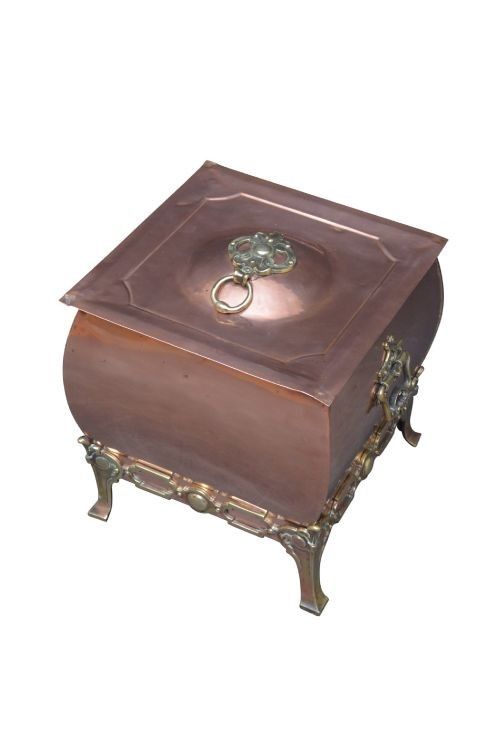
When you search for a victorian metal hearth bucket, you encounter heavy fuel containers designed to hold coal and logs by the fireplace. The selection on this page centres on 19th-century and Victorian forms, alongside Arts and Crafts and Art Nouveau interpretations.
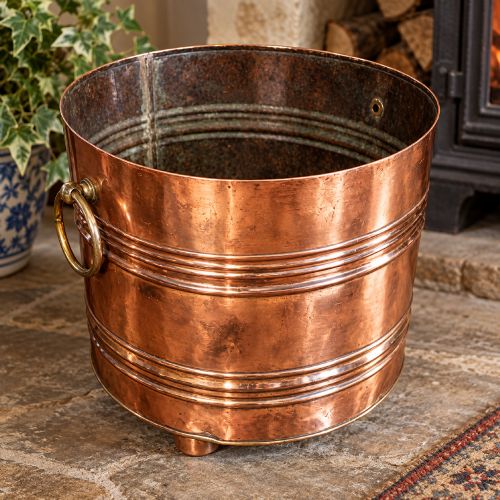
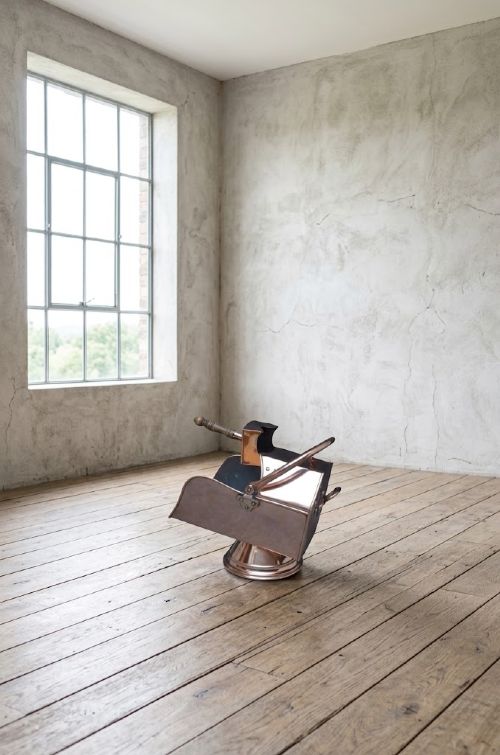
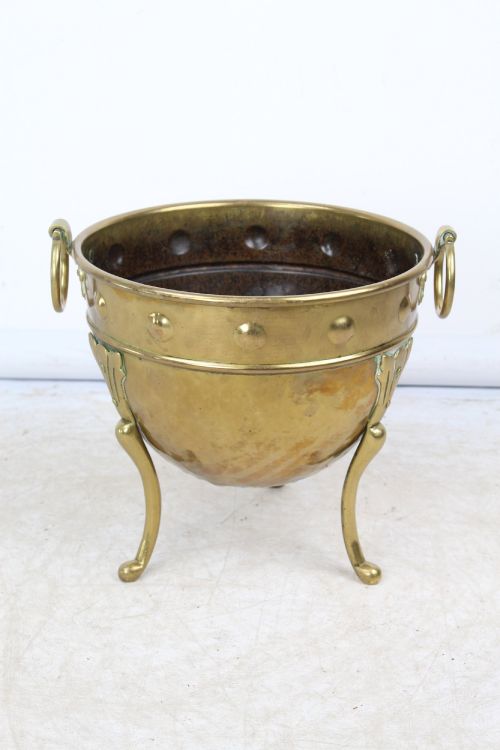
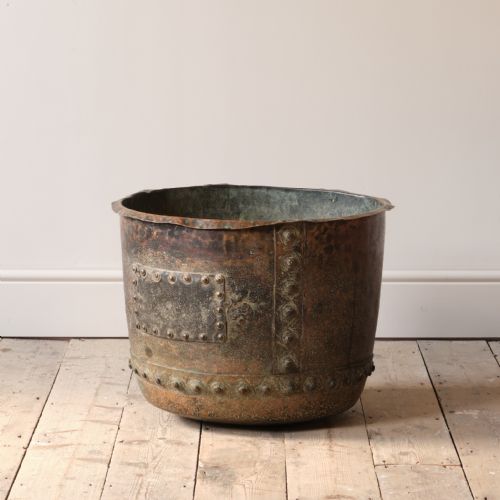
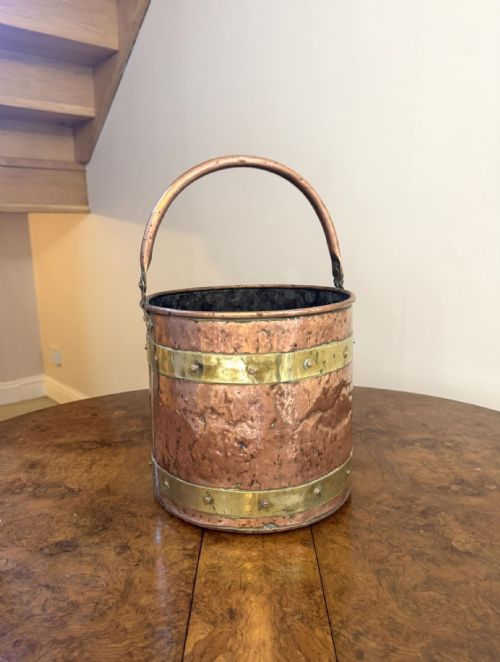
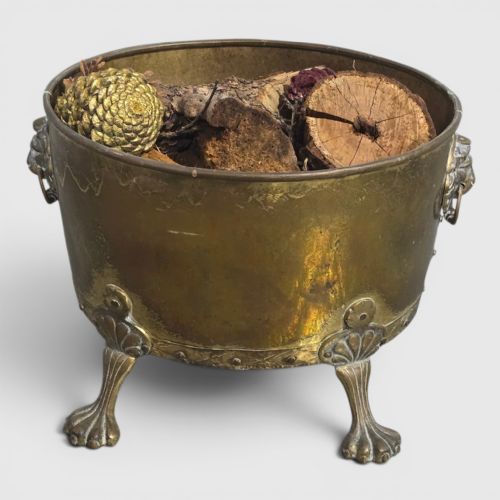
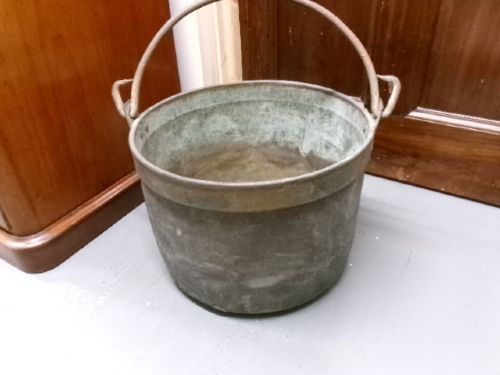
The most common examples you are likely to meet include copper and brass coal helmets, riveted log bins, and swing-handled cauldrons. Makers often combined materials, pairing copper bodies with brass bands or mounting them on sturdy metal feet.
Beyond standard domestic fuel storage, the evidence shows these pieces doubling as planters or grain measures. Their utilitarian origins mean many survive in robust forms suited to modern hearths.
Materials and construction
Makers relied heavily on sheet copper and brass, shaping the metal into helmets, cylinders, and cauldrons. Rivets feature prominently, holding seams together securely on heavy-duty coal buckets and boilers.
Iron and wrought iron appear frequently for handles and structural reinforcement, adding necessary weight and durability. Some refined pieces incorporate wooden elements, such as mahogany bodies fitted with metal liners and scoops.
Some brass coal buckets feature spirited tavern scenes embossed into the metal, keeping the pub atmosphere alive while you tend the fire.
Distinctions in quality
The standard of workmanship shows clearly in the weight of the metal and the precision of the riveting. Heavier copper and thick brass walls separate substantial vessels from lighter domesticware.
Design execution dictates the upper range, where hand-be hammered Arts and Crafts surfaces or detailed tavern scenes on brass elevate utilitarian objects into decorative art.
Henry Loveridge·Petrus Ramus·William Soutter & Sons
The Victorian Metal Hearth Bucket Glossary
- Coal helmet
- A traditional coal scuttle shaped with a flared lip resembling a classical helmet, designed for pouring fuel cleanly.
- Cauldron
- A deep, round vessel with a curved bottom and a swing handle, often rendered in heavy riveted copper.
- Log bin
- A wide cylindrical container intended for storing firewood beside the hearth rather than granular fuel like coal.
- Riveted
- A method of fastening overlapping metal sheets with cylindrical pins, common on industrial and 19th-century copper vessels.
- Arts and Crafts
- A design movement prioritising traditional craftsmanship, visible texture, and honest materials over mass production.
Victorian Metal Hearth Bucket: Frequently Asked Questions
What is a victorian metal hearth bucket used for?
These pieces served as functional containers for holding coal, logs, and kindling beside household fireplaces. They kept fuel close to the fire while containing dust and debris.
Today, buyers frequently utilise them for their original purpose or repurpose them as large indoor plant holders.
How do I tell an Arts and Crafts bucket apart?
Arts and Crafts examples typically display hand-beaten surfaces, exposed riveted seams, and stylised botanical motifs. They reflect a shift away from ornate Victorian styles toward honest construction.
Look for plain circular bodies in copper or brass that emphasise the texture of the worked metal.
Are these buckets made of solid copper?
Most surviving examples utilise heavy sheet copper or brass for the main body. Iron and wrought iron frequently appear on handles and internal fittings for added strength.
Some variations also incorporate wooden components, such as mahogany, paired with removable metal liners.
How do I clean a brass or copper bucket?
Maintenance depends entirely on whether you prefer a bright polished finish or a deep, aged patina. Many collectors choose to leave the natural oxidation undisturbed to preserve historical character.
If cleaning is necessary, use a mild metal cleaner suitable for copper or brass without abrasive pads.