





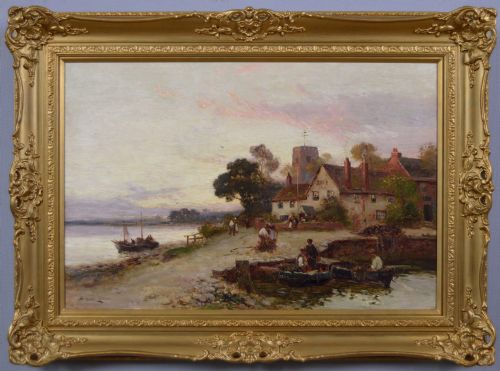

Victorian Maritime River Scene
These Victorian maritime river scene works capture bustling nineteenth-century waterways with sailing craft and city architecture, offering an evocative window into Britain's historic commercial navigation.
Victorian Maritime River Scene
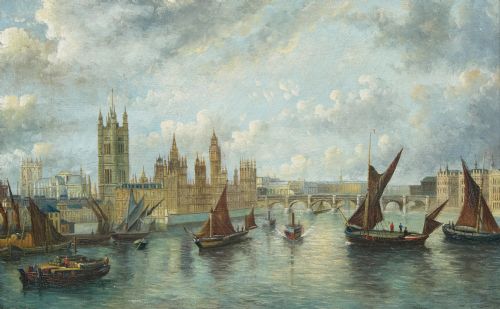
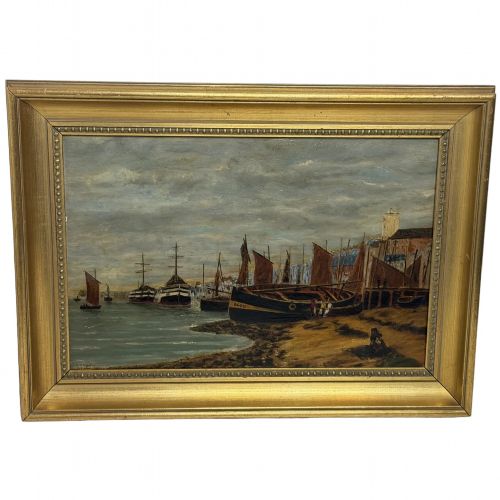
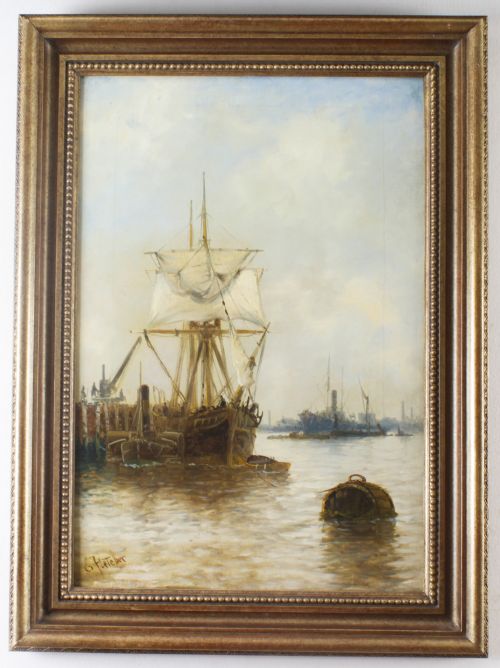
When you search for a victorian maritime river scene, you are looking at nineteenth-century paintings depicting busy waterways, coastal harbours, and tidal rivers filled with traditional vessels. These works document the commercial life of rivers such as the Thames, the Tyne, and the Medway during a period of immense industrial and maritime expansion.
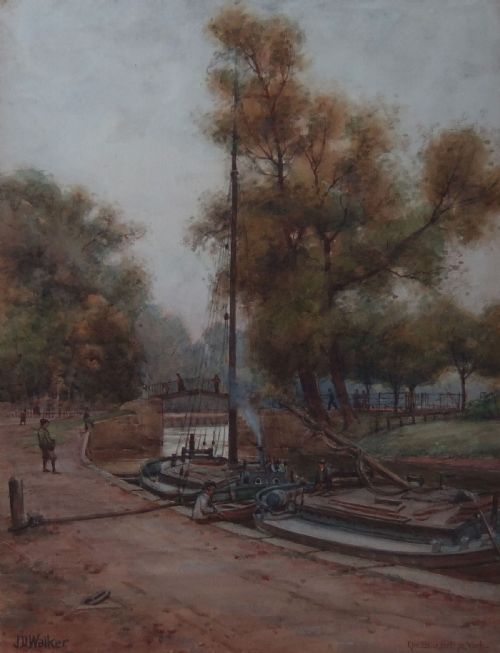
On this page, you are most likely to meet framed oil paintings on canvas and delicate watercolours on paper produced between the mid-nineteenth century and the Edwardian era. The subjects range from moonlight shipping and quiet Norfolk broads to grand London vistas featuring landmarks like St Paul's Cathedral and the Houses of Parliament.
The creators of these pieces recorded specific geographical locations, from North Shields Harbour to Polbathwick in Cornwall, often capturing the changing light on water and the daily toil of river craft. Collectors value them both for their topographical accuracy and for the atmospheric sense of place they preserve.
How they were made
The works rely upon oil paint applied to stretched canvas or watercolour pigments worked onto paper, often housed in traditional wooden and giltwood frames. Artists utilised fluid brushwork and transparent washes to render the shifting effects of light, shadow, and reflection upon tidal waters.
Canvas supports provided a robust foundation for rich oil compositions involving shipping in moonlight or busy river traffic, whilst paper suited the immediacy and fine detail of plein-air watercolour studies. Masterful handling of pigment allowed painters to convey the texture of billowing sails, stone bridges, and murky river currents.
Listings feature works spanning the nineteenth and early twentieth centuries, with a strong concentration of Victorian oil paintings and Edwardian watercolours.
What varies in quality
Quality in these river scenes rests upon the artist's command of atmospheric perspective, the convincing rendering of water reflections, and the anatomical accuracy of the vessels depicted. Stronger compositions balance the architectural elements, such as distant bridges and cathedrals, with the dynamic movement of working boats on the water.
The handling of light distinguishes the finest works, particularly where moonlight or overcast daylight creates subtle tonal shifts across the surface of the river. Finer examples exhibit confident, assured brushwork that defines the rigging and hulls of ships without descending into stiff mechanical illustration.
Thomas Bush Hardy·Charles Harmony Harrison·Edward Fletcher·Stuart Lloyd·Frank William Scarbrough
The Victorian Maritime River Scene Glossary
- Giltwood
- Carved wood finished with a thin layer of gold leaf, commonly found on the ornate frames enclosing nineteenth-century oil paintings.
- Watercolour pigments
- Finely ground colour particles suspended in a water-soluble binder, applied to paper to create translucent washes and delicate details.
- Oil on canvas
- A painting medium consisting of pigments suspended in drying oils, spread across a woven fabric support stretched over a wooden frame.
- Marine painting
- Artistic representation of ships, coastal scenes, and maritime activities, encompassing both open seas and tidal river navigation.
Victorian Maritime River Scene: Frequently Asked Questions
How do I care for antique watercolours?
Watercolour pigments on paper are sensitive to ultraviolet light and excessive moisture, meaning they require careful placement away from direct sunlight. Framing under conservation glass with acid-free mounts protects the delicate paper from degradation.
Maintaining stable indoor humidity prevents warping of the paper and stops mould growth from damaging the pigments over decades of display.
What subjects are most common?
The most frequent subjects include bustling commercial traffic on the River Thames, historic sailing barges near London landmarks, and quiet regional harbours in Cornwall or Norfolk. Artists frequently focused on the interplay between historic bridges, maritime trade, and changing weather conditions.
Industrial expansion along rivers also inspired scenes of wharves, lighthouses, and moonlight shipping across British and European waterways.
How do I distinguish oil from watercolour?
Oil paintings feature textured brushstrokes and thick layers of pigment built upon a stretched canvas support, often finished with a protective varnish layer. They possess a rich depth of colour and a lustrous sheen characteristic of drying oils.
Watercolours present a flat, smooth surface on paper without heavy impasto, relying on the white of the paper to shine through translucent pigment washes.