


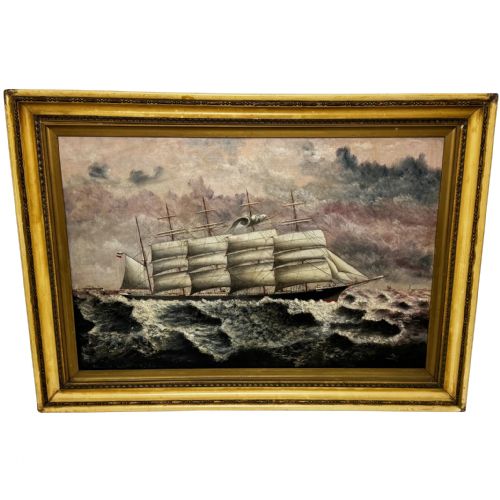


Gilded Wood Maritime Painting
These gilded wood maritime painting selections bring coastal seascapes and shipping scenes into a room through oil on canvas and wood frames.
Gilded Wood Maritime Painting
A gilded wood maritime painting brings together coastal views, marine shipping, and carved wooden frames from periods such as the nineteenth century and the Edwardian era. You find works depicting boats off the coast of Whitby, harbours in Italy, and Dutch coastal waters framed in giltwood.
The selections on this page include oil paintings on canvas and panel, alongside watercolour paintings and related trumeau mirrors. Artists represented across the listings include Fred Waugh, George Dodgson Callow, and Charles Martin Powell.
Most examples originate from nineteenth-century European, Dutch, and British schools. They capture maritime subjects ranging from large five-masted ships to calmer coastal scenes with fishermen.
How they were made
Makers utilised oil paint and watercolour on supports such as canvas, wood panel, and board. These mediums allowed artists to capture the shifting light of the sea and the texture of coastal skies.
Frames are constructed from wood and finished with gilt or giltwood to accentuate the artwork within. Surviving pieces pair these carved and gilded frames directly with nineteenth-century and early twentieth-century marine paintings.
Materials across these listings include oil on canvas, wood, glass, watercolour, and giltwood.
What varies in quality
The standard of a gilded wood maritime painting depends on the precision of the brushwork in capturing maritime rigging, water movement, and atmospheric coastal light. Stronger works demonstrate a confident hand in rendering complex vessels like the five-masted ship Potosi.
The finish and preservation of the giltwood frame also affect the overall character of the piece. Frames with crisp carved detail and original gilding complement the artistic merit of the oil or watercolour within.
Fred Waugh·George Dodgson Callow·Charles France·Charles Martin Powell·Francis Moltino·Stephen Brownlow
The Gilded Wood Maritime Painting Glossary
- Giltwood
- Wood that has been coated with gold leaf or a similar thin metallic finish. This technique highlights the carved details of frames surrounding maritime paintings.
- Trumeau
- An architectural wall mirror or panel featuring a painted scene above the glass. These items often incorporate gilded wooden surrounds.
- Seascape
- A work of art depicting the sea, coastlines, or maritime shipping. These subjects form the core of marine painting traditions.
- Panel
- A flat piece of wood used as a rigid support for oil painting. Panels were frequently utilised by nineteenth-century artists before painting on canvas became standard.
Gilded Wood Maritime Painting: Frequently Asked Questions
What periods do these paintings come from?
The listings span the nineteenth century, including the Edwardian period and the year 1930. Most works originate from the eighteen-hundreds.
These dates reflect European painting traditions and framing styles associated with maritime art.
Are the frames original to the paintings?
Many pieces retain their period wooden and gilded frames, such as nineteenth-century French trumeau mirrors and giltwood surrounds.
Frames were chosen to complement the marine subject matter and enhance the visual depth of the canvas.
What subjects appear in these maritime works?
Common subjects include shipping off Dutch and British coasts, Italian harbours, and large sailing vessels navigating open water.
Artists also depicted coastal figures such as fishermen talking by stormy shores alongside London Thames scenes.
How should I display a gilded wood frame?
Hang these pieces away from direct sunlight and excessive moisture to protect the oil paint and the delicate giltwood surface.
Ensure the wall fixings can support the weight of the wood frame and canvas combination.