

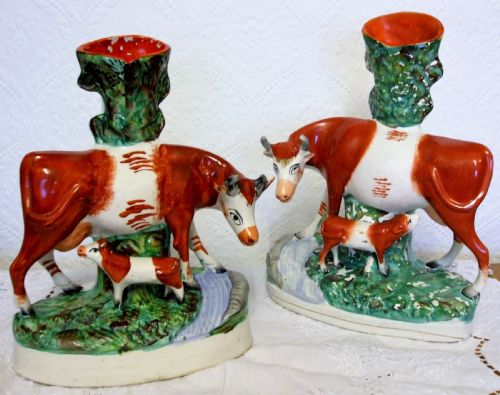


Victorian Mantle Pottery
Victorian mantle pottery brings character to a room, offering figures, spill vases, and clocks shaped by nineteenth century makers.
Victorian Mantle Pottery
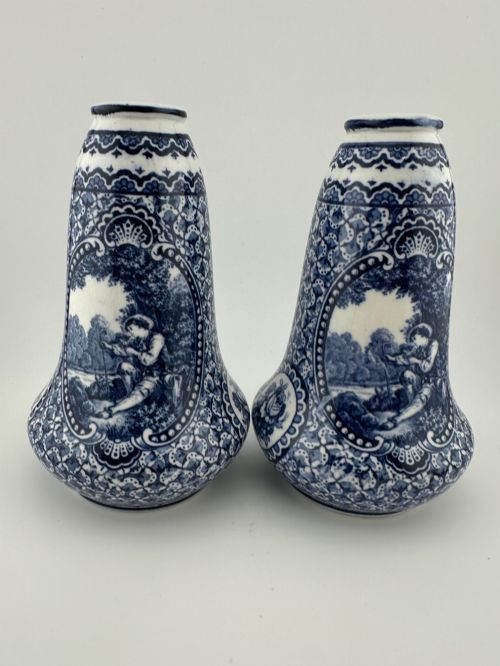
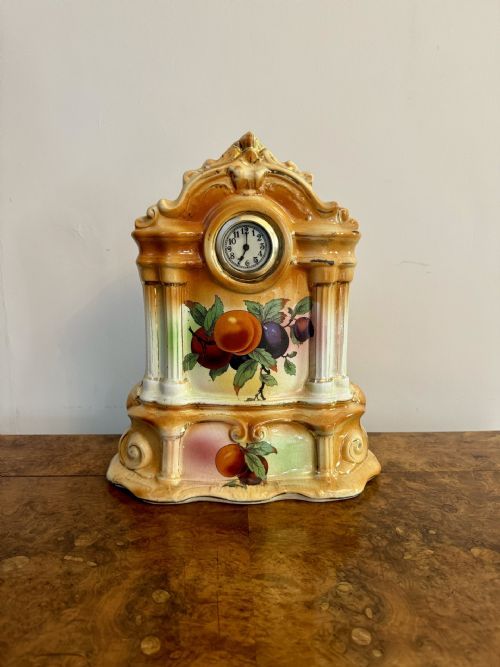
Victorian mantle pottery comprises decorative figures, spill vases, and mantel clocks designed to sit upon fireplace ledges and shelves. The pieces appearing here span the nineteenth century, including specific dates such as eighteen eighty and nineteen hundred alongside broader period groupings.
Buyers seeking Victorian mantle pottery most frequently encounter earthenware and ceramic figures modelled as pairs of dogs, royal portraits, and spill vases depicting animals or characters. These ornaments capture the domestic tastes of the period through moulded forms and painted details.
The selections on this page draw upon nineteenth century production from English potteries, showcasing flatback figures intended to be viewed from the front against a wall. Such items reflect the decorative style of British homes during the Victorian era.
How they were made
Potters shaped Victorian mantle pottery using earthenware and porcelain, employing moulds to create figures, animals, and architectural clock cases. These ceramic bodies received lead glaze or enamel colours before firing in kilns.
Victorian Mantle Pottery Retail Price Guide 2026
Typical asking prices for victorian mantle pottery among the pieces listed under this phrase on Sellingantiques today, from the lower quarter to the upper quarter. They describe what is for sale here now, not the wider market.
Pugs and spaniels stare steadfastly from nineteenth century mantelpieces, having faithfully guarded hearths against drafty rooms for generations.
What varies in quality
The preservation of the original glaze, enamel colours, and gilt accents distinguishes finer pieces from those that have suffered heavy wear. Pairs and matched sets also hold distinct qualities compared to single items separated from their counterparts.
The Victorian Mantle Pottery Glossary
- Earthenware
- A porous pottery fired at lower temperatures, commonly used for nineteenth century figures and glazed with lead. It forms the base body for the majority of Staffordshire mantle pieces.
- Spill vase
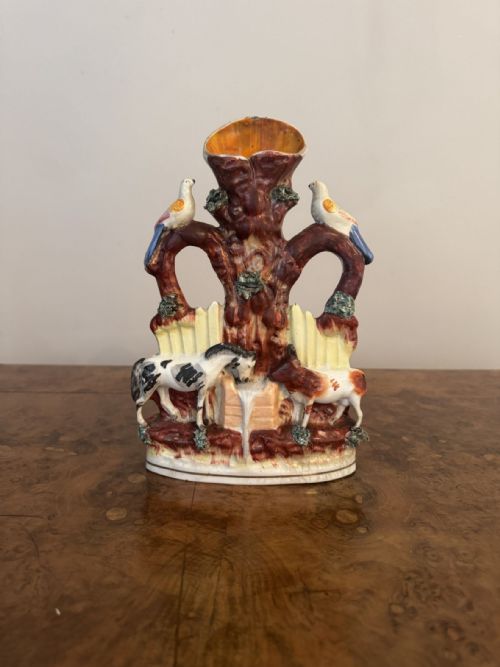
- A hollow ceramic holder designed to keep wooden spills used for lighting pipes and fires. These vessels often take the form of tree trunks beside animal or human figures.
- Flatback
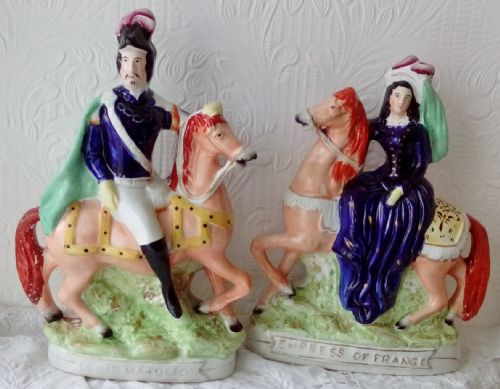
- A figure moulded with a finished front and a plain, unadorned rear designed to stand against a wall or mantelpiece. This method saved time and materials during production.
- Enamel
- Coloured vitreous material applied over the glaze and fired at a low temperature to add bright hues to pottery figures. It provides the reds, blues, and blacks seen on nineteenth century subjects.
- Gilt
- A thin layer of gold applied to ceramic surfaces for ornamentation. It highlights details on clothing, bases, and clock surrounds.
Victorian Mantle Pottery: Frequently Asked Questions
What is a flatback figure?
A flatback figure is a ceramic ornament moulded with detail on the front and a flat, unpainted back designed to sit flush against a wall.
These pieces were specifically created to adorn nineteenth century mantelpieces where space was limited.
How were spill vases used?
Spill vases held thin wooden tapers used to transfer flames from a fireplace to candles or lamps.
They combined practical utility with ornamental design by incorporating figures and animals into the vessel body.
What subjects appear on these figures?
Common subjects include pairs of spaniels, pugs, cows, sheep, and literary or historical characters such as Napoleon and Red Riding Hood.
Potters drew inspiration from popular culture, royalty, and domestic animals of the nineteenth century.
How do I care for antique pottery?
Antique pottery requires gentle dusting with a dry cloth and protection from direct sunlight and moisture.
Keeping glazed earthenware away from temperature extremes helps preserve the enamel colours and ceramic body.