




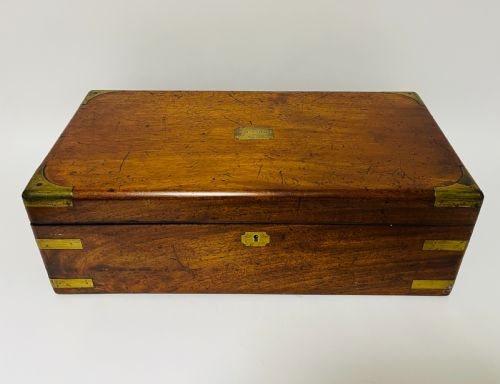


Victorian Mahogany Writing Box
A victorian mahogany writing box is a portable desk built for travel, offering fitted compartments for correspondence and ink.
Victorian Mahogany Writing Box
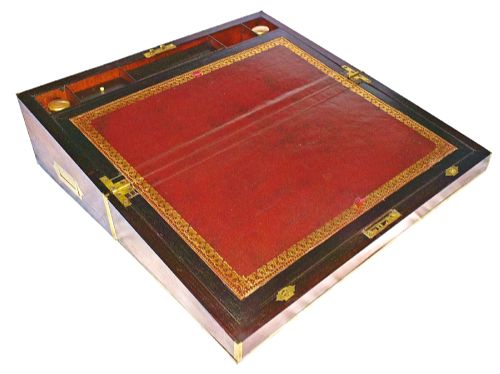
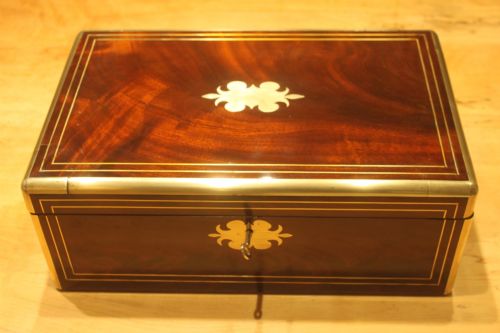
A victorian mahogany writing box is a portable desk designed for correspondence, fitted with sloping writing surfaces and compartments for ink and paper. The pieces on this page span the nineteenth century, including examples from the Georgian and Regency periods alongside Victorian forms.
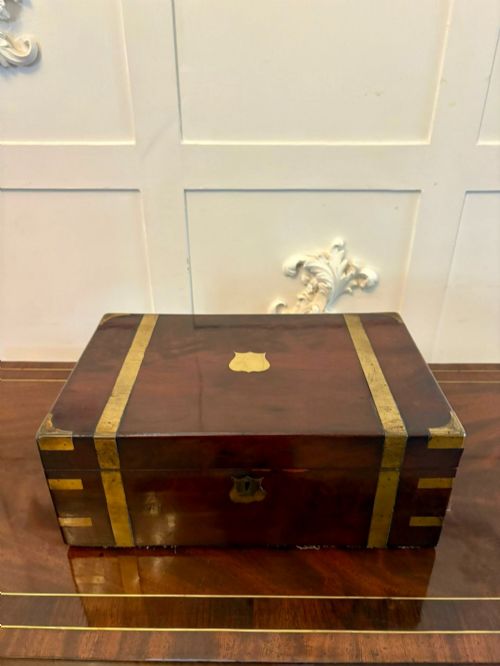
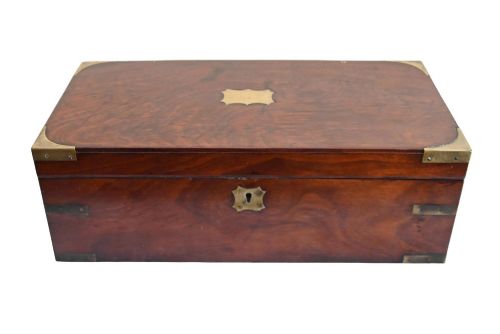
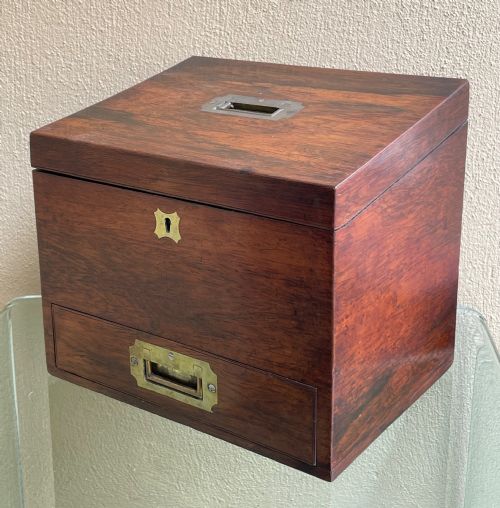
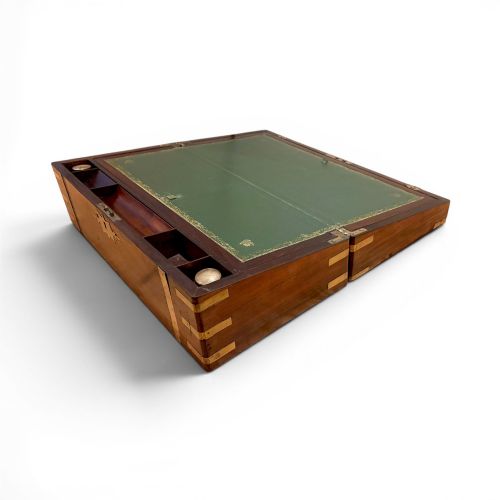
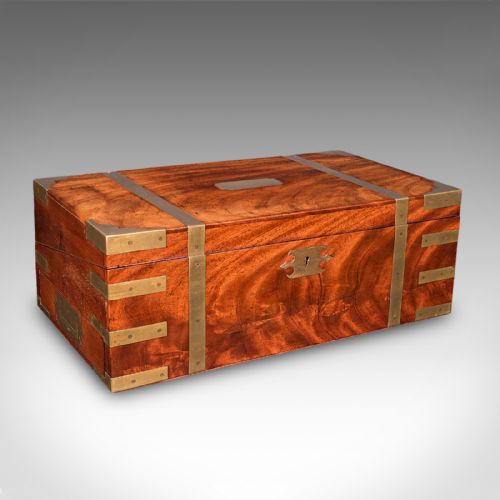
The selection here encompasses traditional writing slopes, folding campaign desks, correspondence boxes, and stationery cabinets. Many pieces exhibit campaign styling with brass binding and inset corner pieces intended for travel.
How they were made
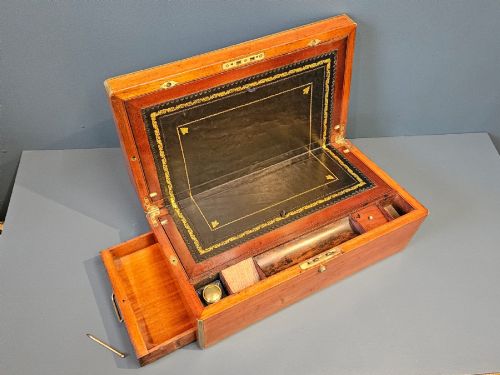
Cabinet makers utilised solid mahogany and mahogany veneer, often incorporating brass corners, straps, and escutcheons to reinforce the corners for transport. Interiors frequently feature contrasting secondary timbers such as satinwood, alongside fitted compartments lined with leather.
Construction techniques include secret drawers accessed by removing internal panels, spring-loaded mechanisms, and folding bi-fold or double-opening configurations designed to maximise utility in a compact portable footprint.
Victorian Mahogany Writing Box Retail Price Guide 2026
Typical asking prices for victorian mahogany writing box among the pieces listed under this phrase on Sellingantiques today, from the lower quarter to the upper quarter. They describe what is for sale here now, not the wider market.
Object forms include stationery cabinets, lecterns, despatch boxes, and bi-fold campaign desks.
What varies in quality
The standard of a victorian mahogany writing box is defined by the crispness of its brass joinery, the integration of secret compartments, and the preservation of original leather writing surfaces. Superior examples demonstrate thoughtful internal arrangement, such as integrated candle sconces, pen trays, and dedicated sovereign sections.
Cabinet work quality is visible in the alignment of veneer grains, the smoothness of folding mechanisms, and the presence of working locks with original keys. Maker signatures or stamps elevate certain pieces through documented provenance.
Mappin & Webb·Fisher
The Victorian Mahogany Writing Box Glossary
- Writing slope
- A portable box with a hinged lid that opens to form an angled writing surface lined with leather or velvet. Inside, partitioned spaces hold inkwells and nibs.
- Campaign style
- Furniture constructed for military travel, characterised by brass corners, flush recessed carrying handles, and sturdy mahogany or hardwood construction. These items were built to withstand frequent relocation.
- Escutcheon
- A protective brass plate surrounding a keyhole, designed to prevent the surrounding mahogany from splitting around the lock. They range from plain shield shapes to elaborate engraved designs.
- Secret drawers
- Hidden compartments concealed behind false panels or accessed by removing the pen tray. They served to secure valuables and private correspondence during travel.
Victorian Mahogany Writing Box: Frequently Asked Questions
How do I open hidden drawers?
Hidden drawers in a victorian mahogany writing box are usually accessed by removing the internal pen tray or sliding out a vertical divider panel. Pressing spring-released catches inside the stationery section can also reveal concealed compartments.
Take care when examining these mechanisms, as aged wood and dried adhesives can cause internal elements to stick.
Were these boxes used by the military?
Many campaign boxes were purchased by officers, diplomats, and naval architects who required a portable desk while travelling. The brass binding and sturdy mahogany construction protected the contents during transit on ships and campaigns.
Non-campaign domestic variants lack the heavy brass strapping and were designed for stationary use in Victorian homes.
How should I care for the leather interior?
Leather writing surfaces benefit from gentle dusting with a dry cloth and protection from direct sunlight to prevent drying and fading. Avoid using modern liquid cleaners or excessive moisture on nineteenth-century leather and wood.
Application of appropriate conservation wax helps maintain the mahogany exterior without harming historical finishes.