




Victorian Mahogany Umbrella Stand
A victorian mahogany umbrella stand combines deep timber with practical brass and iron to anchor a hallway with period purpose.
Victorian Mahogany Umbrella Stand
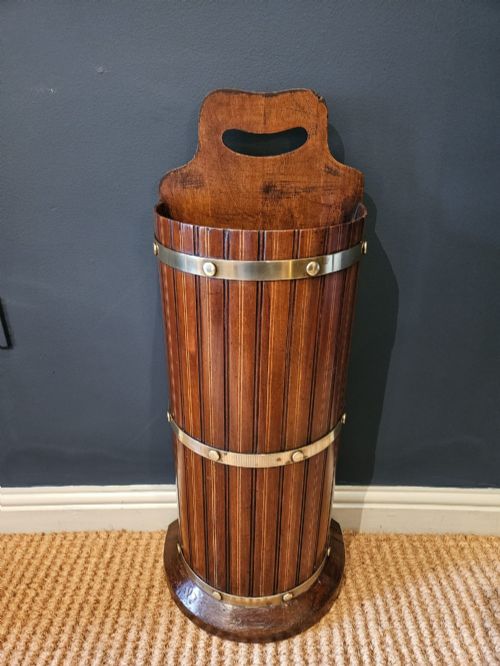
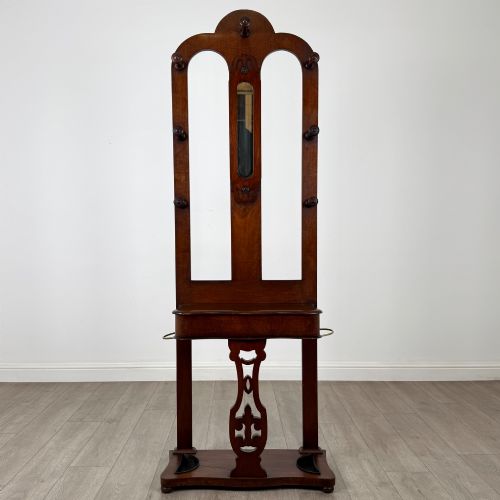
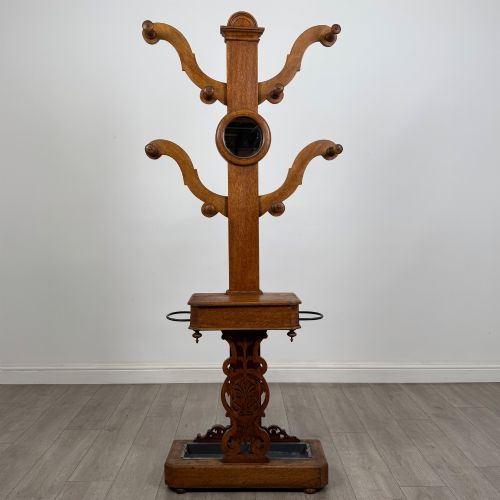
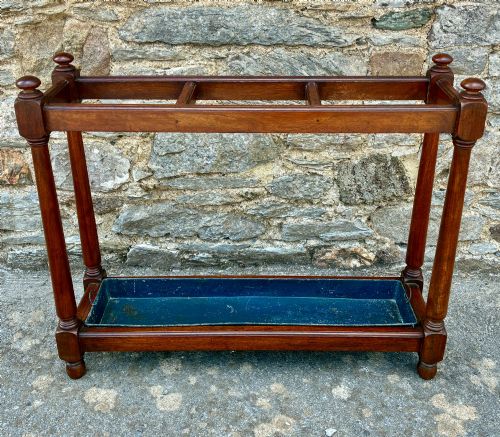
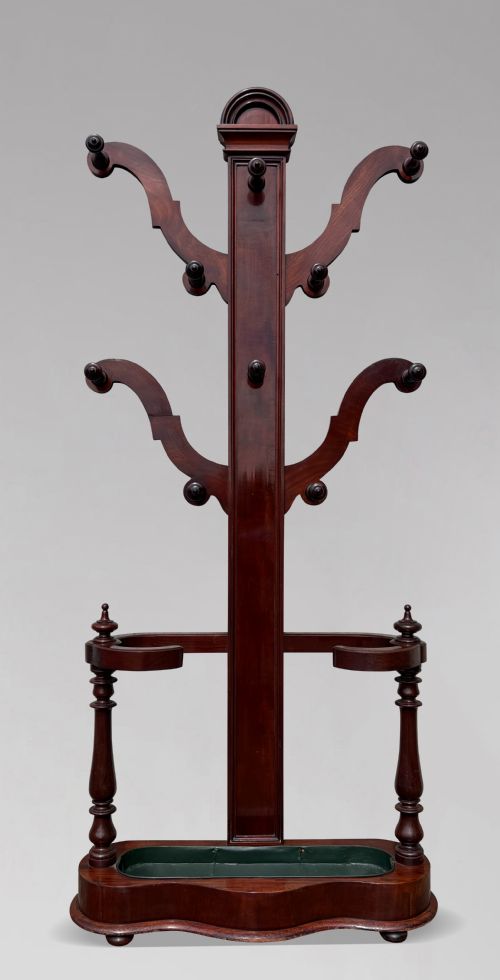
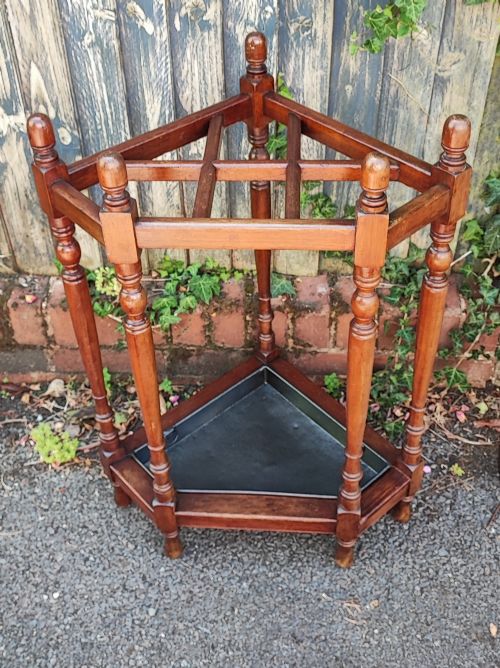
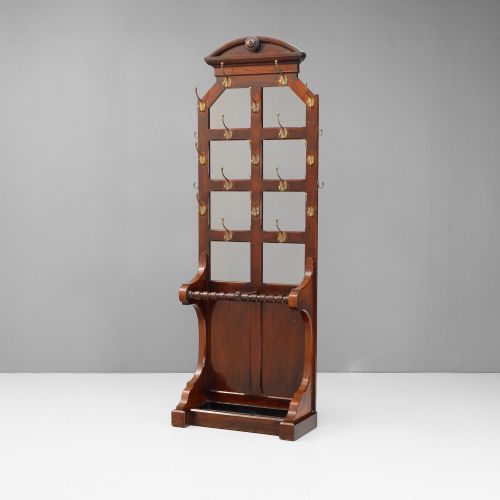
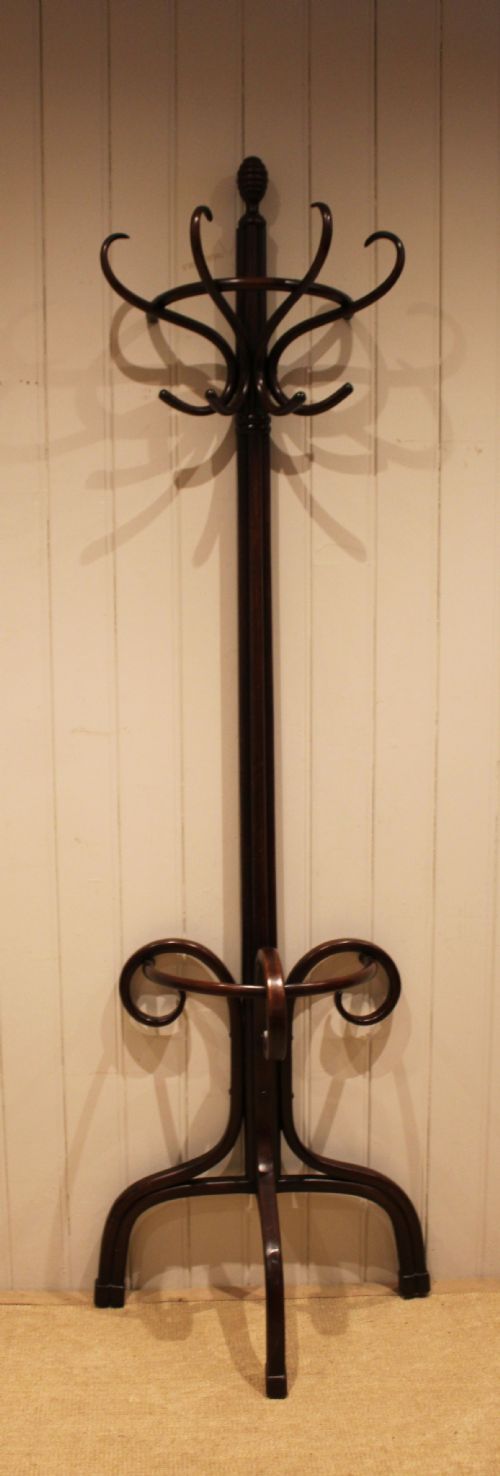
A victorian mahogany umbrella stand appears in several distinct forms across this selection, ranging from dedicated circular stick holders to substantial architectural hall stands incorporating coat hooks and mirrors. The core purpose remains the containment of wet weather gear and walking canes in the entrance hall of a period property.
Most examples originate from the nineteenth century, built to serve domestic households by keeping wet canes and umbrellas organised near the front door. The surviving pieces demonstrate the high standard of joinery typical of the period, often integrating metal drip pans to protect the wooden bases from moisture.
Buyers seeking a victorian mahogany umbrella stand will encounter both compact barrel-shaped stick holders and larger combined hallstands that feature carved timber panels and umbrella compartments side by side.
How they were made
Makers utilised solid mahogany and sturdy veneers, shaping the timber through traditional turning and joinery techniques to withstand heavy daily use. The wood gains its structure from deep framing, while turned columns and moulded cornices provide the characteristic nineteenth-century silhouette.
Brass bands, cast iron liners, and metal mounts reinforce the wooden frames, providing necessary protection against constant dampness from wet umbrellas. These metal additions range from simple strapwork to heavy cast elements secured with visible screws.
Several stands double as snooker cue holders, proving Victorians took both weather protection and evening billiards very seriously indeed.
What varies in quality
The degree of carving and the integration of secondary materials dictate the distinction between standard utilitarian items and finer commissions. Elaborate architectural mouldings, inset mirrors, and original marble shelves separate more ambitious hall furniture from simple domestic stick holders.
Survival of original components such as internal metal drip trays, brass retainer rings, and matched coat hooks substantially elevates the integrity of any individual stand. Replacements or missing hardware alter the overall balance of the piece.
Shoolbred·Ellen E. Houghton of Minton
The Victorian Mahogany Umbrella Stand Glossary
- Hall stand
- A large piece of entrance furniture combining umbrella storage, coat hooks, and frequently a mirror or glove drawer. These items formed the central functional hub of a Victorian hallway.
- Stick stand
- A compact container designed specifically for walking canes and umbrellas rather than heavy garments. They typically take circular, square, or corner-fitting forms.
- Drip pan
- A removable metal tray placed at the base of a stand to catch water from wet umbrellas. These components protect the surrounding mahogany from rot and staining.
- Brass bound
- A construction method where metal strips wrap around the wooden body to add structural strength. This detail frequently appears on circular coopered umbrella containers.
Victorian Mahogany Umbrella Stand: Frequently Asked Questions
Where should I put a victorian mahogany umbrella stand?
These pieces suit entrance halls and boot rooms where coats and wet items accumulate. Placing them near the primary entryway allows practical use while displaying the timber grain.
Ensure adequate ventilation around the timber to prevent moisture damage from damp umbrellas stored inside the compartments.
Did all these stands include mirrors?
Mirrors appear primarily on larger combined hall stands rather than dedicated circular stick holders. Plate glass additions became common during the later nineteenth century to allow last-minute checks before leaving the house.
Smaller cylindrical or square stick stands rely entirely on turned wooden uprights and brass rings without glass elements.
How do I tell an 1870 stand from a later one?
Earlier examples from the mid-nineteenth century often display simpler, heavier solid timber construction with hand-turned members. Later Victorian and Arts and Crafts pieces introduce more stylised brackets or integrated metalwork.
Examining the fixings, screw types, and backboards helps determine the exact period of manufacture.