
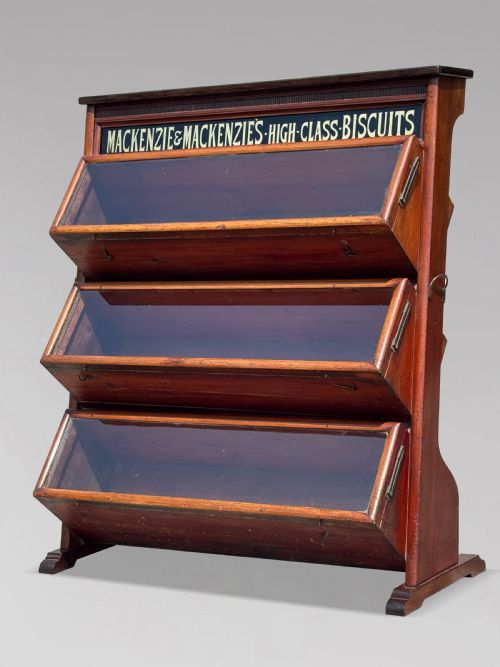


Victorian Mahogany Shop Display
Victorian mahogany shop display pieces are utilitarian cabinets, counters, and vitrines built to sell goods, now prized for domestic display and trade history.
Victorian Mahogany Shop Display
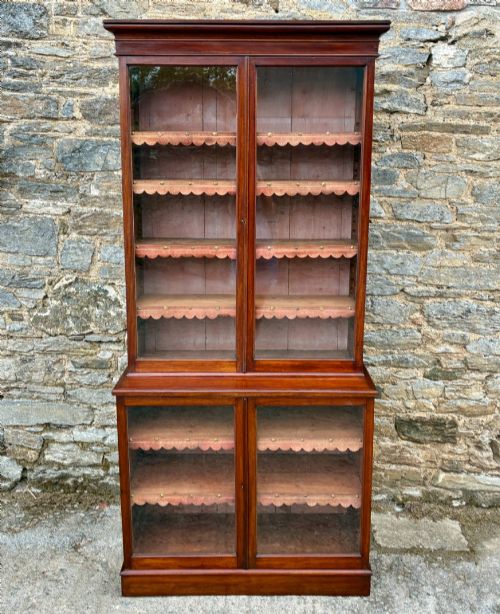
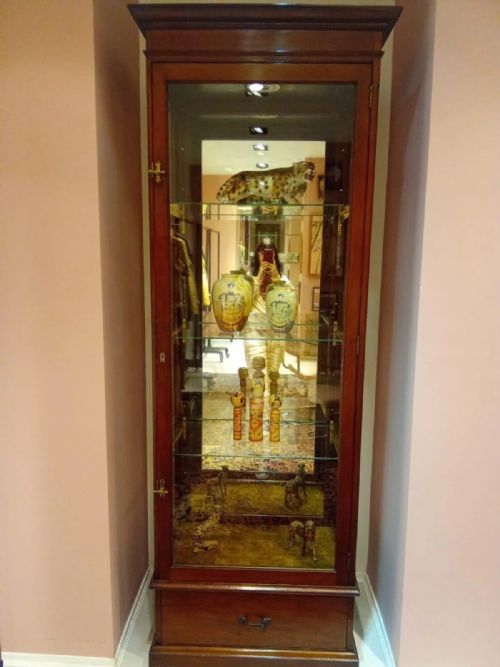
Victorian mahogany shop display items encompass sturdy counters, countertop vitrines, tall cabinets, and banks of drawers originally designed for 19th-century retail trades. Buyers searching this phrase meet glazed cases and specialised fittings engineered to showcase everything from haberdashery and cotton reels to biscuits and apothecary goods.
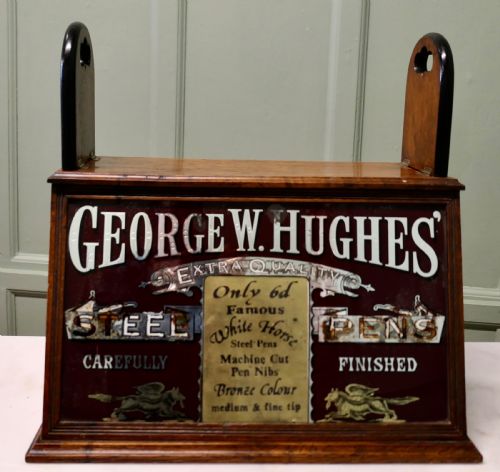
The surviving pieces frequently bear the marks of commercial utility, including hand sign-written advertising for chocolate, tea, and tobacco, alongside adjustable glass shelves. These items bridge the gap between heavy commercial architecture and domestic interior furnishing, often taking the form of wall-hanging cases or bow-fronted table-top boxes.
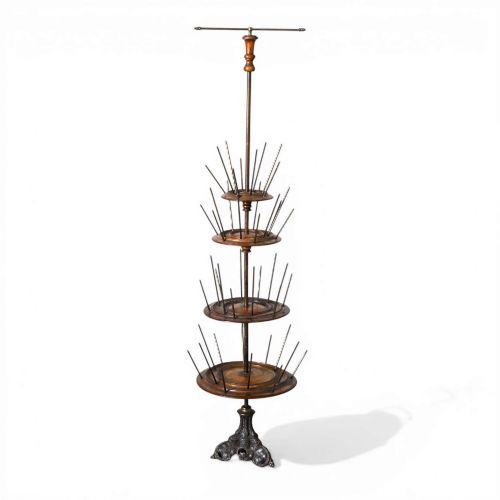
Most examples hail from the Victorian and Edwardian eras, reflecting a period when shop fittings were built to last from solid timber and clear glass. The selection ranges from tabletop sewing cotton holders and apothecary display boxes to large floor-standing counters used in chemists, drapers, and grocers.
How they were made
Makers constructed these commercial display pieces primarily using solid mahogany and pine frames fitted with large sheets of glass to maximise visibility for merchandise. Brass hinges, handles, and adjustable shelf brackets provided the necessary mechanical strength for frequent daily use in busy shops.
Interiors often incorporated mirrored glass backs to reflect light through the display shelves, while sign-writing was applied by hand directly to the wood or glass surfaces for brand advertising. Structural longevity was achieved through dense timber framing, drawer dovetailing, and careful glazing techniques designed to protect delicate wares.
The selection includes specialised shop fittings branded for confectioners, chemists, and gentleman's outfitters from the nineteenth and early twentieth centuries.
What varies in quality
The distinction between standard commercial fittings and top-tier retail display pieces rests on the choice of materials, such as the use of solid mahogany versus secondary woods, and the refinement of the joinery. Superior examples feature curved or bow glass fronts, fine ormolu mounts, and intact original mirrored interiors rather than plain timber panels.
Original hand sign-writing and retained maker branding from period firms elevate the historical interest and execution of a piece. The presence of sophisticated hardware, adjustable shelving mechanisms, and clean structural proportions separates utilitarian storage from exceptional shop architecture.
Mackenzie's Biscuits·Robert West Gunsmith·Kemps Pharmacy·John Stow Ltd of Bradford·Ermen & Roby·John Piggott & Co Ltd·John Sharpe Leicester·Cadbury's
The Victorian Mahogany Shop Display Glossary
- Haberdashery cabinet
- A specialised multi-drawer storage and display unit designed for selling small sewing items like buttons, ribbons, and cottons. These often feature glass fronts or pull-out trays.
- Vitrine
- A glass-sided display case or cabinet used to exhibit precious objects, jewellery, or fine goods. In a commercial context, these protected delicate wares while keeping them visible to customers.
- Shop fitting
- Fixtures and furniture built specifically for the interior of a retail shop, including counters, shelving units, and display cases. They were constructed to withstand heavy commercial use.
- Sign-written
- The traditional craft of applying hand-painted lettering and brand advertising directly to the surface of wood or glass. This technique identified the merchant or the specific product sold within.
Victorian Mahogany Shop Display: Frequently Asked Questions
What were Victorian shop display cabinets used for?
These cabinets served as secure, dust-free enclosures on counters and shop floors to exhibit small, valuable, or perishable goods to the public. Retailers used them to merchandise items like sewing cottons, tobacco, pharmaceuticals, and confectionery.
By placing goods at eye level behind glass, shopkeepers protected their stock from handling while encouraging customer purchases through clear visual merchandising.
How can I tell a genuine Victorian shop display case?
Authentic pieces typically show period construction methods, including hand-cut dovetails, heavy mahogany framing, and older glass panes with natural surface imperfections. Look for signs of genuine commercial wear and structural hardware appropriate to the nineteenth century.
Many examples also feature authentic hand sign-writing or period maker labels associated with nineteenth-century merchants and drapers.
Where do I put a shop display cabinet at home?
These cabinets suit living rooms, dining spaces, and hallways where their glazed fronts can showcase collections of ceramics, glassware, or books. Countertop models fit neatly onto sideboards or desks to provide elevated enclosed storage.
Their slim profiles and glass panels allow them to introduce period character into modern interiors without overwhelming the floor space.
What is a haberdashery cabinet?
A haberdashery cabinet is a specific retail furniture form featuring numerous shallow drawers, often with glass panels or fronts, designed to organise small sewing goods. Shop assistants used them to store ribbons, buttons, and threads systematically.
Today, collectors value these multi-drawer units for organising small household items while retaining their distinctive commercial aesthetic.