

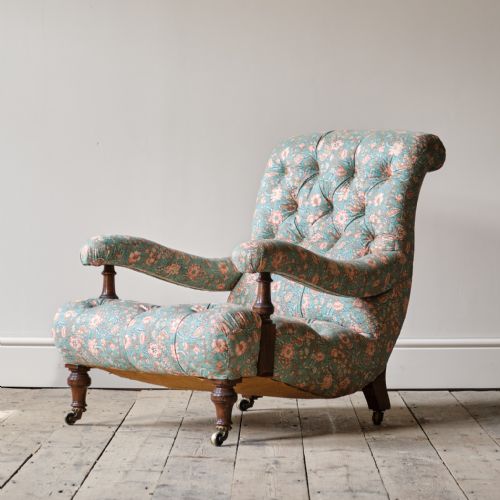
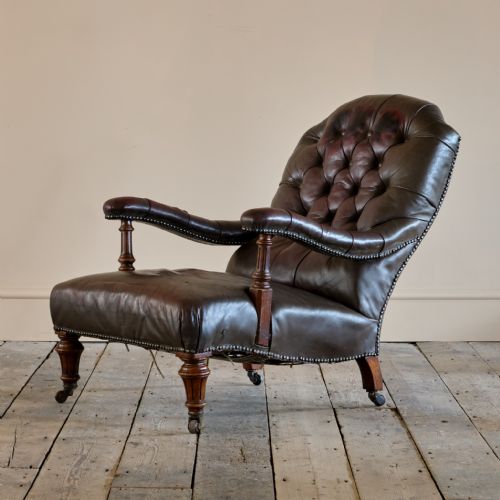
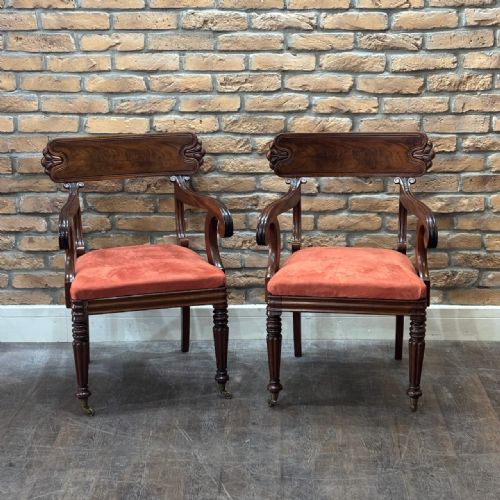
Victorian Mahogany Open Armchair
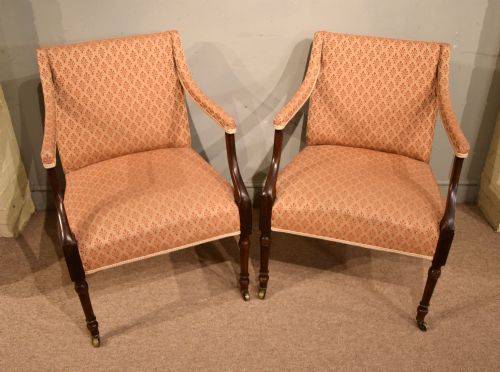
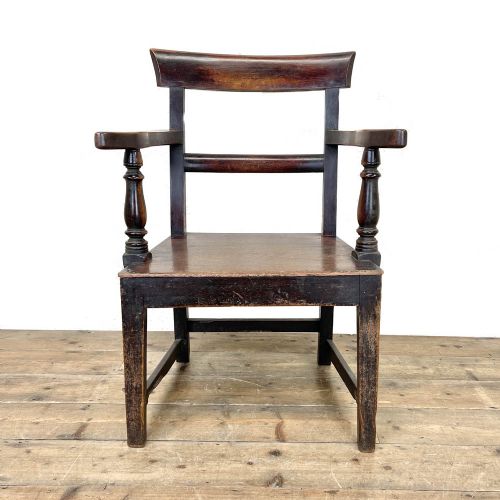
A victorian mahogany open armchair offers sturdy timber frames and accessible upholstered seats, grounding a room with nineteenth-century character.
Victorian Mahogany Open Armchair
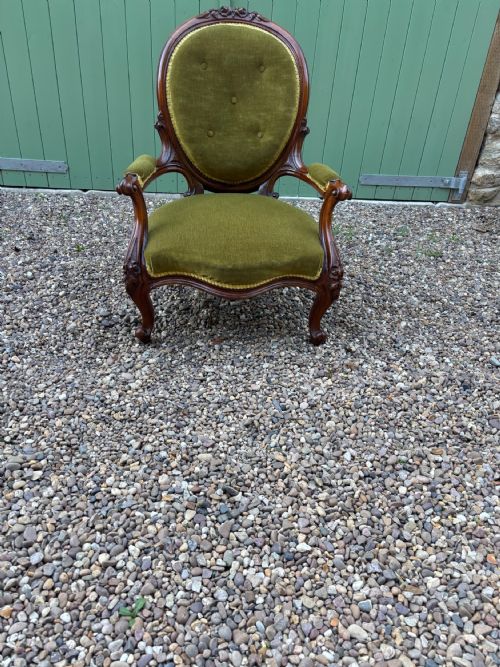
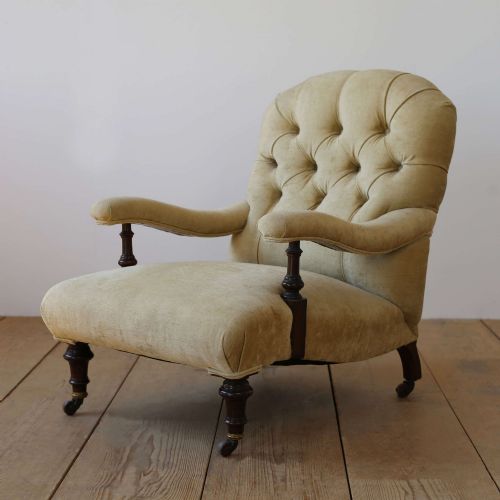
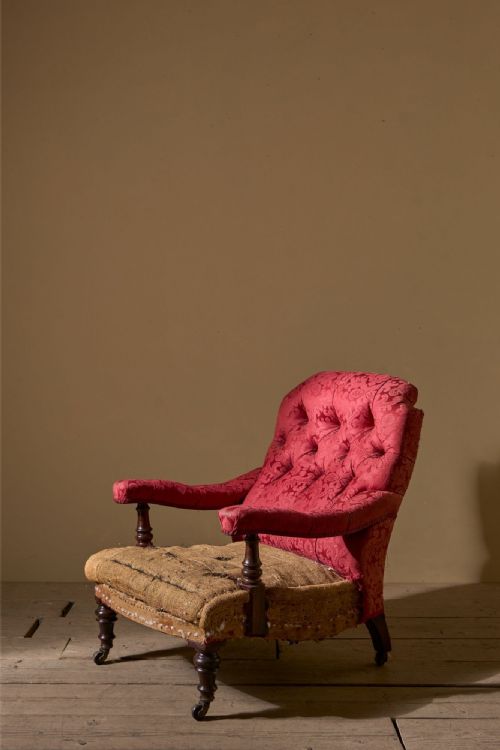
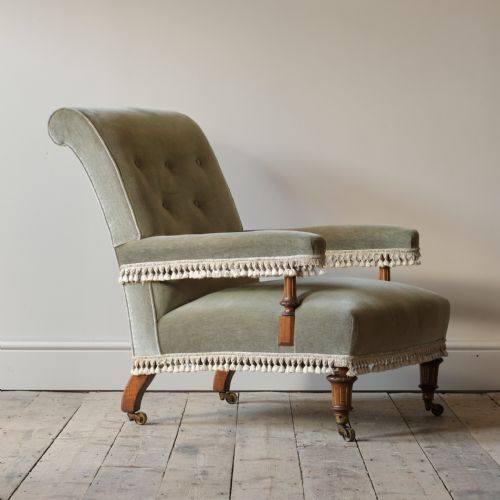
A victorian mahogany open armchair bridges practical seating and nineteenth-century cabinet-making, appearing across library, desk, and fireside variants. Buyers meet everything from button-backed reading chairs to spindle-backed and lyre-backed elbow chairs.
The material record spans the nineteenth century, including specific decades such as eighteen-eighty and eighteen-ninety alongside broader Victorian and Edwardian periods. Pieces emerge from English country houses and cabinet makers, taking forms like gentleman's chairs, library chairs, and pairs of carvers.
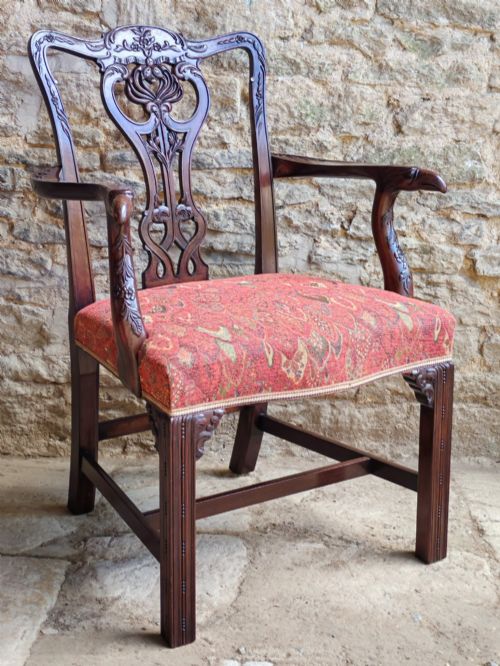
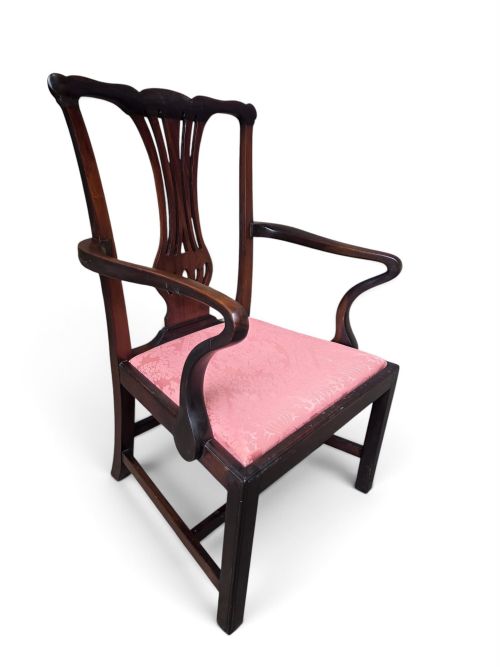
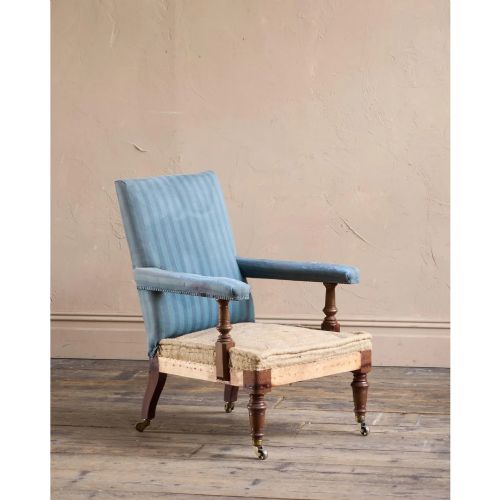
Styles range from straightforward show-wood frames to revivals drawing on Chippendale, Georgian, and Regency precedents. Some examples arrive ready for reupholstery in calico or hessian, while others retain velvet, leather, or woven cane seats.
Materials and construction
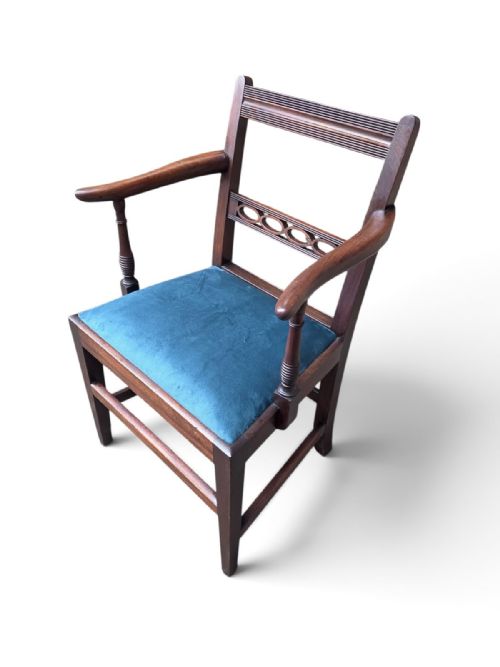
Solid mahogany forms the structural show-frame of these chairs, complemented by secondary timbers and brass details on specific library or desk variants. Carved ornamentation, reeded mouldings, and inlaid patterns demonstrate the joinery standards of nineteenth-century workshops.
Upholstery techniques rely on internal webbing, stuffing, and textile covers including velvet, leather, and upholstery fabric. Frames often expose finished mahogany show-wood around padded button-backs, scrolled arms, and open sides.
Listings span the nineteenth century, including specific dates from eighteen-forty to nineteen-ten alongside Victorian and Edwardian periods.
Distinguishing quality
Subtlety in carved detail and crispness of timber moulding separate standard workshop production from finer examples bearing maker attributions. Proportions, from oversized library chairs to small child's bergere seats, reflect the ambition of the original commission.
The integrity of the mahogany frame, the retention of original show-wood finishes, and the presence of documented maker stamps indicate upper tiers of craftsmanship. Revival styles vary according to how closely their proportions and joinery follow eighteenth-century models.
Howard and Sons·Gillows·Morison and Co·Holland and Sons·Robert Strahan
The Victorian Mahogany Open Armchair Glossary
- Mahogany
- A durable tropical hardwood prized for its rich reddish-brown tone and stability in carved furniture frames. It forms the primary structural material across nineteenth-century seating.
- Show-wood
- Exposed polished timber on an upholstered chair frame where the wood grain remains visible around cushions and padding. This surface defines the visual character of Victorian open armchairs.
- Carver
- An armchair designed with open arms, often produced alongside matching single chairs for dining or library use. These pieces provide broader proportions than standard side chairs.
- Bergere
- An upholstered chair featuring enclosed cane panels on the sides or back, combining timber frames with woven support. Examples appear in various nineteenth-century room settings.
- Spindle back
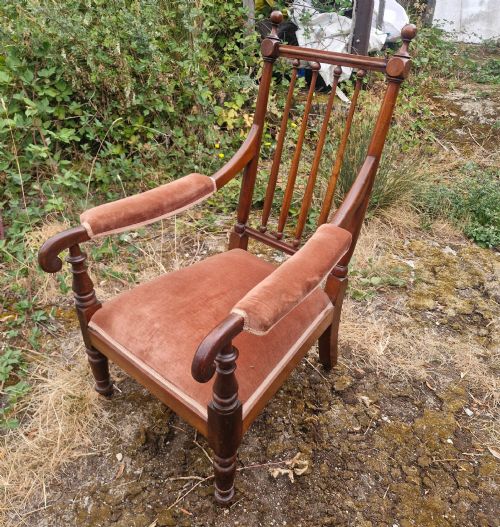
- A chair back constructed from vertical turned wooden rods or spindles. This traditional method offers lighter visual weight than solid upholstered panels.
Victorian Mahogany Open Armchair: Frequently Asked Questions
How do I identify a library chair?
Library chairs usually feature sturdy mahogany frames, padded upholstered seats, and open arms designed for extended reading.
Many examples include low profiles or wider proportions suited to nineteenth-century studies and country house libraries.
What is a show-wood frame?
Show-wood describes the polished mahogany sections left visible around the upholstered padding of an armchair.
Carvers and cabinet-makers used this technique to display the grain and carved details of the timber.
Are these chairs suitable for daily use?
Nineteenth-century armchairs are built with solid mahogany frames that withstand regular seating when structurally sound.
Pieces requiring reupholstery often benefit from modern internal webbing while preserving the historic timber exterior.
How do revival styles differ from Victorian originals?
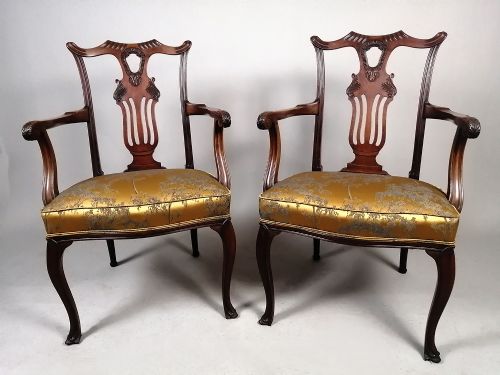
Revival pieces incorporate eighteenth-century Chippendale, Georgian, or Regency design motifs into nineteenth-century manufacturing contexts.
Makers replicated earlier carved splats and open arm geometries while employing contemporary Victorian workshop techniques.